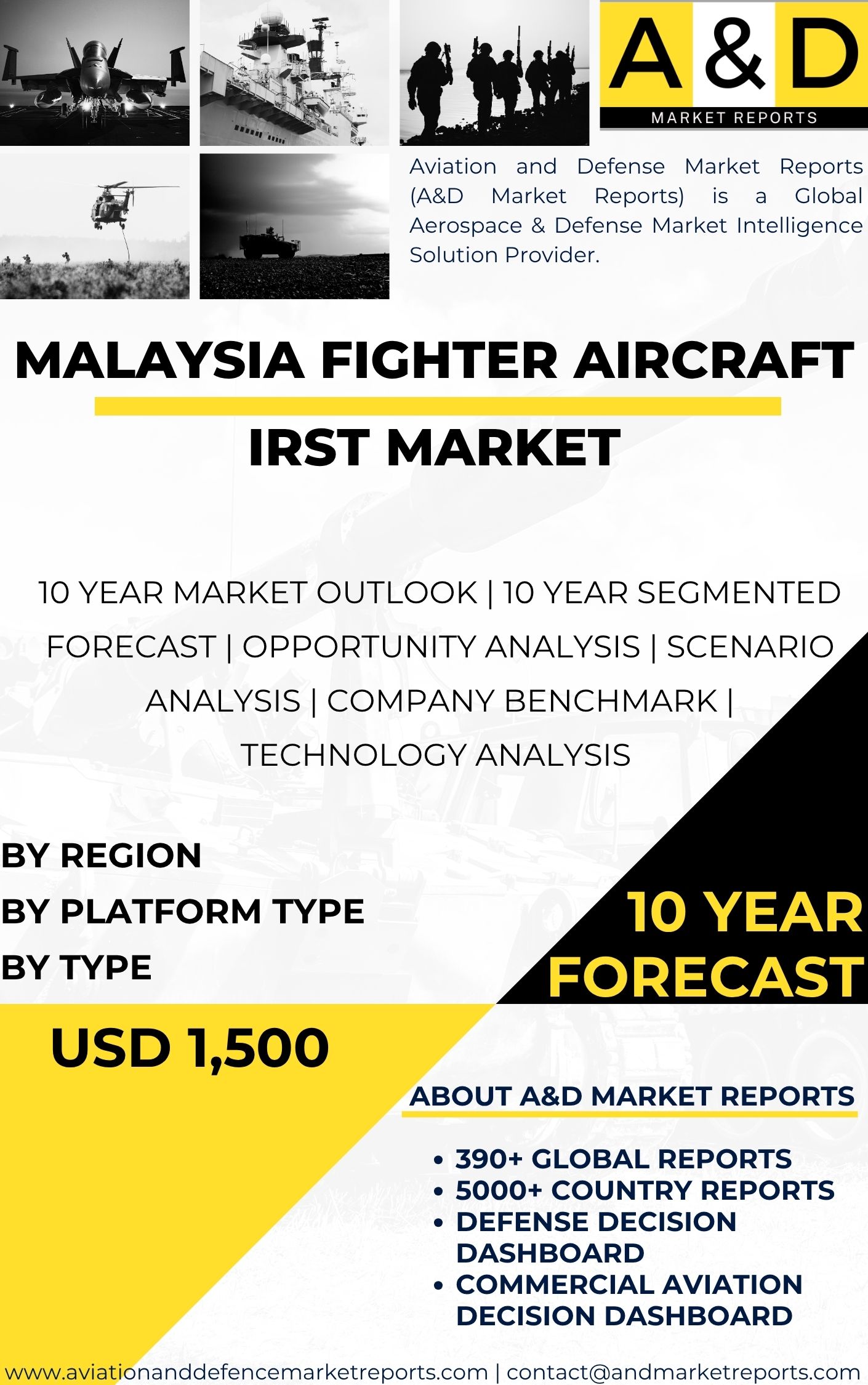
Malaysia Fighter Aircraft IRST

$1,500.00

Enquire Now
Category: Tag: Report ID: ANDCMY0193

Fighter aircraft Infrared Search and Track (IRST) systems have gained important ground in Malaysia’s defense modernization efforts, particularly as the Royal Malaysian Air Force seeks to strengthen airspace security and enhance tactical capabilities across its combat fleet. IRST technology offers passive detection of airborne threats by sensing the infrared signatures emitted by aircraft and missiles, thus providing a significant advantage in contemporary aerial warfare where radar stealth and electronic countermeasures are increasingly prevalent. With a focus on both survivability and lethality, Malaysia has sought to integrate IRST into upcoming acquisitions and upgrades for its tactical fighter aircraft, recognizing its value in environments where radar systems might be degraded or compromised by enemy measures.

Go To Global Report Page Track this market real time on DDD

Description

Fighter Aircraft IRST Growing Importance of IRST in Malaysia’s Air Defense

Fighter Aircraft IRST are becoming increasingly important in Malaysia’s defense modernization plans. As the Royal Malaysian Air Force (RMAF) works to strengthen airspace security, IRST offers a major advantage by detecting threats passively through infrared signatures from aircraft and missiles. This is critical in modern air warfare, where radar stealth and electronic countermeasures can reduce the effectiveness of traditional sensors. Malaysia sees IRST as a key tool for improving survivability and lethality across its fighter fleet, especially in situations where radar performance is degraded or compromised.

Fighter Aircraft IRST Integration Acquisitions

A major step in Malaysia’s modernization is the acquisition of the FA-50M light combat aircraft. The aircraft features the PhantomStrike AESA radar and the Sniper Advanced Targeting Pod as its primary sensors. However, Malaysia is also evaluating options to add an integrated IRST system in the future. Whether installed from the start or added as a modular upgrade, IRST would expand the FA-50M’s sensor suite and support multi-spectral sensor fusion. Combining radar, optical, and infrared data increases situational awareness, improves target recognition, and enhances performance against stealthy or low-observable threats that are difficult to detect on radar alone.

Fighter Aircraft IRST Operational Advantages in Southeast Asia

IRST is particularly valuable in Southeast Asia’s dense and competitive airspace. The technology allows Malaysian fighters to detect and track targets beyond visual range without emitting radar signals, reducing the risk of revealing their position. This supports both interception and surveillance missions. IRST-equipped fighters can also work with other assets through secure networks such as Link 16, which is part of the FA-50M program.
The Sniper targeting pod further boosts capability through high-resolution FLIR, an HDTV sensor, laser rangefinding, and precision-strike support. Although not a traditional IRST, it provides many similar functions and can be paired with a dedicated IRST to enhance detection.

Experience from Legacy Platforms

Malaysia’s Su-30MKM already demonstrates the operational benefits of IRST. Its OLS-30 system allows pilots to locate and track airborne and surface threats while maintaining radar silence or operating in heavy jamming environments. This reduces reliance on active radar and supports passive patrol operations. The performance of the OLS-30 has influenced both tactical doctrine and technical requirements for future fighter upgrades within the RMAF.

Aligning with Global Air Combat Trends

Malaysia’s growing focus on IRST mirrors global trends where passive infrared tracking is now considered essential for air dominance. Modern IRST systems offer longer detection ranges, better resolution, and stronger resistance to countermeasures. As Malaysia inducts new fighters and upgrades older ones, IRST is expected to play a larger role in national air defense. Mastering its full potential will require continuous training, updated tactics, and improved coordination within Malaysia’s integrated air defense network.

Conclusion

Malaysia is integrating IRST technology as a core component of its modern fighter capability. Through platforms like the FA-50M and the Su-30MKM—and with future requirements in mind—the RMAF is building a force prepared for electronic warfare, stealth threats, and the complex demands of airspace security. IRST is not simply an add-on but a fundamental part of Malaysia’s evolving air combat doctrine and operational readiness.
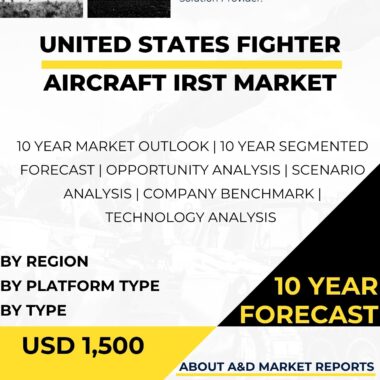
Table of content

Table Of Contents

1 Market Introduction

1.1 Market Introduction
1.2 Market Definition
1.3 Market Segmentation
1.4 10 Year Market Outlook

2 Market Technologies

3 Global Market Forecast

3.1 Global Market Forecast
3.2 By Platform
3.3 By Type

4 APAC Market Trends & Forecast

4.1 Drivers, Restraints And Challenges
4.2 PEST
4.3 Market Forecast
4.3.1 Market Forecast By Platform
4.3.2 Market Forecast By Type
4.4 Scenario Analysis
4.5 Key Companies& Profiling

5 Malasiya Analysis

5.1 Current Levels Of Technology Maturation In This Market
5.2 Market Forecast
5.2.1 Market Forecast By Type
5.2.2 Market Forecast By Platform
5.3 Scenario Analysis
5.4 Country Defense Budget (Historical and 10- year forecast)
5.5 Defense Budget Category Spending- 10- year forecast
5.6 Procurement Analysis
5.7 EXIM Data
5.8 Patents

6 Opportunity Matrix

6.1 By Platform
6.2 By Type

7 Scenario Analysis

7.1 Scenario 1

7.1.1 By Platform (Scenario-1)
7.1.2 By Type (Scenario-1)

7.2 Scenario 2

7.2.1 By Platform (Scenario-2)
7.2.2 By Type (Scenario-2)

8 Company Benchmark

9 Strategic Conclusions

10 About Aviation And Defense Market Reports

Segments

By Type
By Platform Type

List of Tables

Table1: Global Market Forecast, Fighter Aircraft IRST
Table2: APAC Market Forecast, Fighter Aircraft IRST
Table3: APAC Market Forecast, By Type
Table4: APAC Market Forecast, By Platform Type
Table5: APAC, Scenario Analysis
Table6: Malasiya Market Forecast, Fighter Aircraft IRST
Table7: Malasiya Market Forecast, By Type
Table8: Malasiya Market Forecast, By Platform Type
Table9: Malasiya, Scenario Analysis
Table 10: Malasiya Defense Budget 10 Year Forecast
Table 11: Malasiya, Defense Budget Category Spending- 10- year forecast
Table 12: Malasiya, Procurement Analysis
Table 13: Malasiya, EXIM Data Analysis
Table 14: Malasiya, Opportunity Analysis, By Type
Table 15: Malasiya, Opportunity Analysis, By Platform Type
Table 16: Malasiya, Scenario Analysis, By Type
Table 17: Malasiya, Scenario Analysis, By Platform Type

List of Figures

Figure 1: Market Segmentation, Malasiya Fighter Aircraft IRST
Figure 2: Key Technology Analysis, Fighter Aircraft IRST
Figure 3: Global Market Forecast, Fighter Aircraft IRST
Figure 4: APAC, Market Forecast, Fighter Aircraft IRST
Figure 5: APAC, Market Forecast, By Type
Figure 6: APAC, Market Forecast, By Platform Type
Figure 7: APAC, Scenario Analysis
Figure 8: Malasiya, Market Forecast, Fighter Aircraft IRST
Figure 9: Malasiya, Market Forecast, By Type
Figure 10: Malasiya, Market Forecast, By Platform Type
Figure 11: Malasiya, Scenario Analysis
Figure 12: Malasiya, Defense Budget 10 Year Forecast
Figure 13: Malasiya, Defense Budget Category Spending- 10- year forecast
Figure 14: Malasiya, Procurement Analysis
Figure 15: Malasiya, EXIM Data Analysis
Figure 16: Malasiya, Opportunity Analysis, By Type
Figure 17: Malasiya, Opportunity Analysis, By Platform Type
Figure 18: Malasiya, Scenario Analysis, By Type
Figure 19: Malasiya, Scenario Analysis, By Platform Type
Figure 20: Company Benchmark

Aviation and Defense Market Reports


TPA | TIA | Consulting | Market Reports | Defense Decision Dashboard


Our Defense Report - Our Team Has Worked on More Than 250+ Individual Products / Markets