
Description
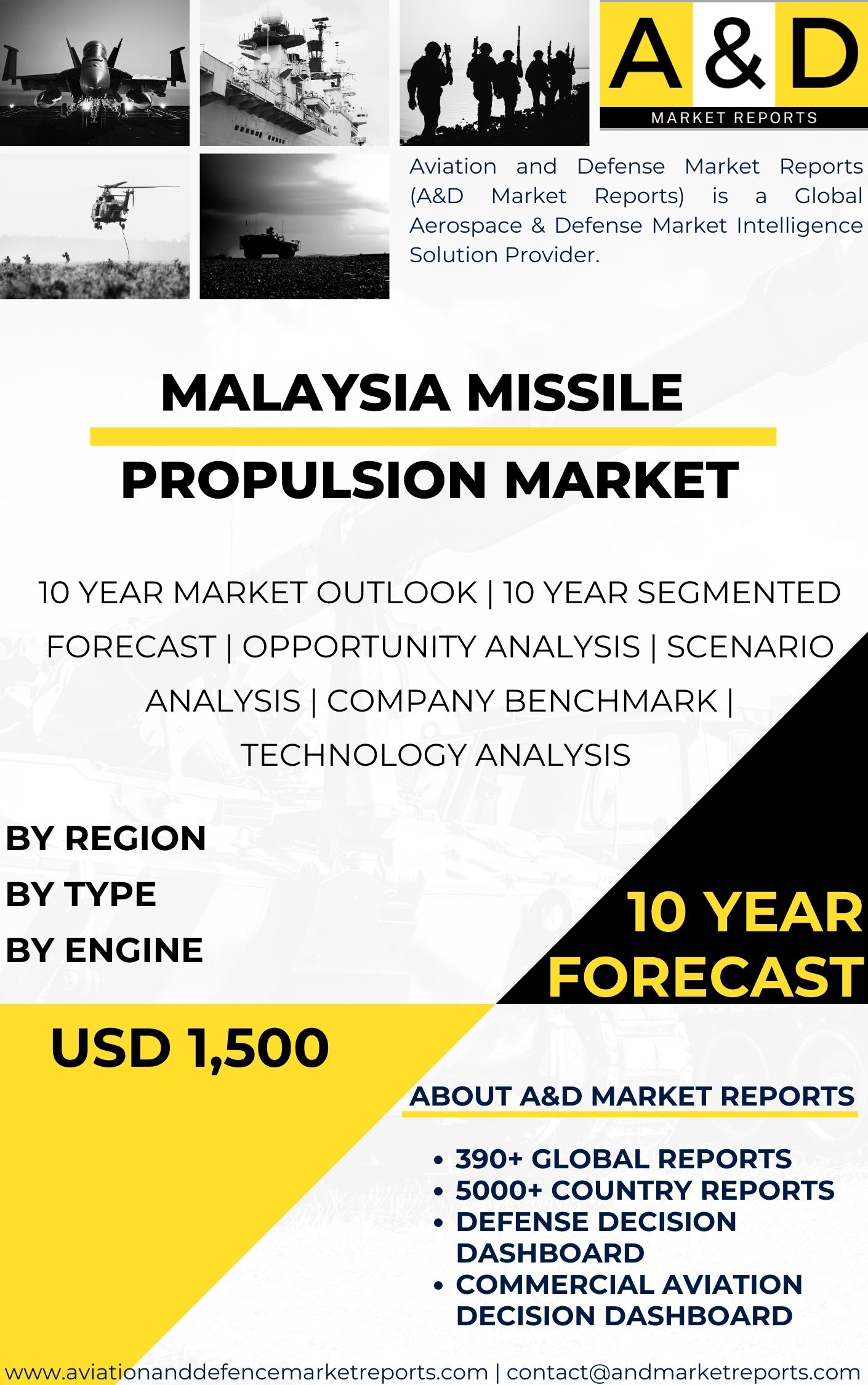
Missile Propulsion market in Malaysia has been witnessing significant advancements in recent years, reflecting the country’s strong commitment to enhancing its defense capabilities and improving overall military readiness. Missile propulsion technologies form the core of modern missile systems, providing the essential thrust needed to achieve the desired speed, range, altitude, and accuracy required for effective engagement across diverse operational scenarios.
Strategic Importance of the Malaysia Missile Propulsion Market
As a nation positioned in a geopolitically sensitive region in Southeast Asia, Malaysia faces various security challenges shaped by regional tensions, maritime disputes, and evolving threats from advanced weapon systems. The adoption of advanced missile propulsion technologies plays a crucial role in strengthening the nation’s deterrence posture. By integrating modern propulsion systems, Malaysia enhances both the offensive and defensive components of its missile arsenal, ensuring preparedness against external threats and contributing to long-term regional stability.
Technological Capabilities in the Malaysia Missile Propulsion Market
Modern missile propulsion systems offer a wide range of advantages. Advanced propulsion technologies such as solid-fuel engines, liquid-fuel engines, hybrid engines, and ramjet systems provide missiles with superior velocity, extended range, and enhanced precision. These propulsion choices allow Malaysia to expand its operational capabilities and tailor missile performance to specific mission requirements. The ability to select propulsion types based on mission profile, whether for air-defense operations, surface warfare, or land-based strike missions, significantly increases the versatility and effectiveness of Malaysia’s missile inventory.
Operational Applications within the Malaysia Missile Propulsion Market
Missile propulsion systems support the performance of multiple missile categories, including surface-to-surface, surface-to-air, air-to-surface, and anti-ship missiles. Each system is optimized with propulsion features suited to its intended environment, whether used from land platforms, naval vessels, or aircraft. Advanced propulsion designs also improve maneuverability, boost acceleration, and increase survivability against interception, allowing missiles to reach targets accurately even in the presence of sophisticated enemy defenses.
International Collaboration in the Malaysia Missile Propulsion Market
Malaysia continues to recognize the strategic importance of partnering with global defense leaders to access high-end missile propulsion technologies. International collaborations provide the country with opportunities for technology transfer, capability expansion, and knowledge sharing. These partnerships play a vital role in helping Malaysia adopt state-of-the-art propulsion systems while simultaneously strengthening domestic expertise and manufacturing potential in advanced defense technologies.
Indigenous Development Efforts in the Malaysia Missile Propulsion Market
Alongside international cooperation, Malaysia is investing in local research and development initiatives aimed at strengthening indigenous propulsion capabilities. By fostering homegrown innovation, developing advanced materials, and supporting specialized engineering training, Malaysia seeks to reduce dependency on foreign suppliers and move toward greater self-reliance in missile propulsion technology. These efforts align with national long-term goals of strengthening the defense industrial base and advancing technological sovereignty.
Challenges Facing the Malaysia Missile Propulsion Market
Despite strong momentum, the missile propulsion market in Malaysia faces challenges that must be managed carefully. Developing, testing, and producing advanced propulsion systems requires substantial financial investment, highly skilled engineering talent, and access to sophisticated manufacturing infrastructure. Budget constraints can slow procurement timelines, while strict performance and safety requirements add complexity to domestic development programs. Addressing technological hurdles related to advanced materials, fuel chemistry, and precision engineering remains essential to improving indigenous capabilities.
Future Outlook
The Malaysia Missile Propulsion market is poised for continued growth as the government remains committed to defense modernization and the adoption of advanced technologies. Evolving regional security dynamics and an increasing emphasis on interoperability with allied forces are expected to shape future propulsion requirements. As propulsion systems become more efficient, more compact, and more precise, Malaysia is likely to integrate next-generation technologies that enhance both strategic deterrence and operational flexibility.
Conclusion
In conclusion, the Missile Propulsion market in Malaysia has made substantial progress, supported by ongoing modernization efforts, strategic collaborations, and domestic R&D initiatives. Advanced propulsion systems have become essential for improving the performance, reach, and reliability of Malaysia’s missile capabilities. Although challenges related to cost, technology, safety, and specialized expertise remain, proactive investment and long-term planning will play a critical role in sustaining momentum. By continuing to strengthen its missile propulsion capabilities, Malaysia enhances its defense posture, reinforces national security, and positions itself as an emerging participant in the global missile propulsion landscape.