
Description
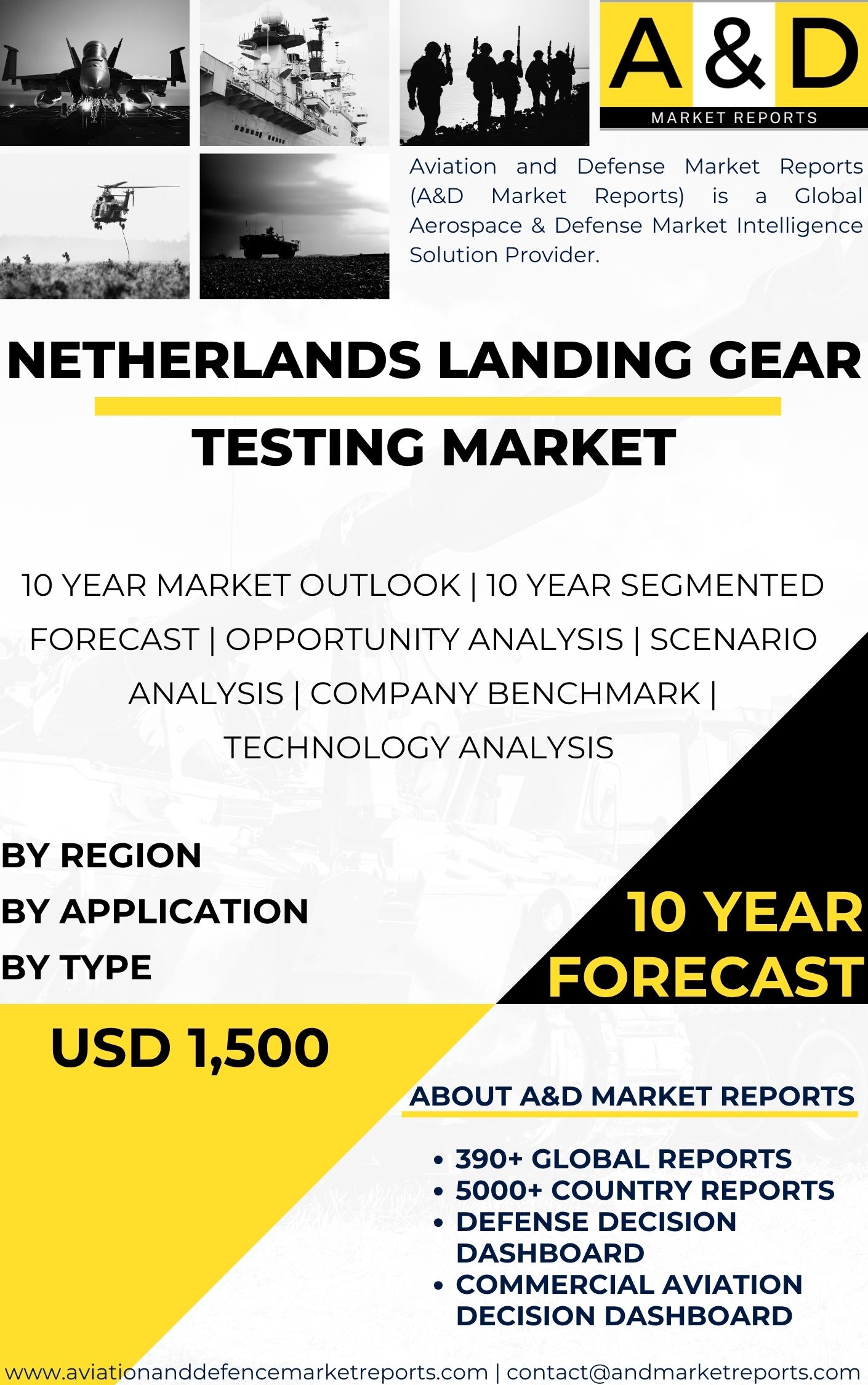
The Netherlands landing gear testing market plays a critical role in ensuring the safety, reliability, and performance of aircraft landing systems within the country?s aerospace and defense sector. Landing gear is one of the most mechanically complex and high-stress subsystems of any aircraft, supporting takeoff, landing, and ground operations while absorbing impact loads and providing stability. For the Netherlands, which operates advanced fighter jets, transport aircraft, helicopters, and unmanned aerial systems, landing gear testing is essential for verifying functionality, structural integrity, and operational safety before deployment.
Landing gear testing involves evaluating mechanical strength, hydraulic performance, extension and retraction mechanisms, load distribution, vibration tolerance, and braking efficiency under real-world operational conditions. Test procedures often replicate dynamic stresses experienced during takeoff, landing, taxiing, and emergency operations. In defense applications, where aircraft may operate on unprepared or rough terrain, landing gear must withstand extreme loads and repeated cycles without failure. Dutch defense and aerospace organizations rely on specialized test rigs and simulators to perform these critical evaluations.
The market growth is driven by increasing complexity and innovation in aircraft platforms. Modern landing gear systems are often equipped with advanced shock absorbers, composite materials, retractable mechanisms, anti-skid braking systems, and integrated sensors for monitoring structural health. These innovations require highly sophisticated testing methodologies, which are supported by advanced instrumentation, real-time data acquisition systems, and predictive analytics. For the Netherlands, adherence to NATO standards and international aviation regulations further drives demand for rigorous testing.
Technological advancements are shaping this market by enabling more accurate, efficient, and predictive testing. High-fidelity hydraulic test rigs, robotic actuators, and multi-axis vibration systems replicate operational stresses with extreme precision. Integration with digital twin technologies allows engineers to simulate thousands of operational cycles and assess landing gear performance under various conditions without extensive physical testing. Data analytics and AI are increasingly used to interpret test results, predict potential failures, and optimize designs, reducing maintenance costs and enhancing reliability.
Operational efficiency and cost reduction are additional drivers. Effective landing gear testing prevents in-service failures, reduces unplanned maintenance, and extends component lifespan. For Dutch defense forces, this ensures aircraft are mission-ready while minimizing safety risks and operational downtime. Furthermore, testing supports the integration of new aircraft or upgraded gear systems, accelerating modernization programs and ensuring interoperability with allied forces.
Challenges in the market include the high cost of advanced testing systems, the complexity of simulating real-world operational conditions, and the requirement for highly skilled personnel. Maintaining test infrastructure capable of accommodating a variety of aircraft types, from helicopters to fighter jets, requires significant investment. Additionally, emerging materials and hybrid landing gear technologies demand continuous adaptation of testing methodologies and equipment.
Looking ahead, the Netherlands landing gear testing market is expected to expand with ongoing fleet modernization, adoption of next-generation aircraft, and the increasing use of autonomous and unmanned systems. Future systems will likely emphasize automation, predictive diagnostics, and digital integration, allowing faster, safer, and more efficient testing. Investments in landing gear testing will ensure Dutch aerospace and defense platforms maintain high reliability, operational readiness, and compliance with international safety standards.