
Description
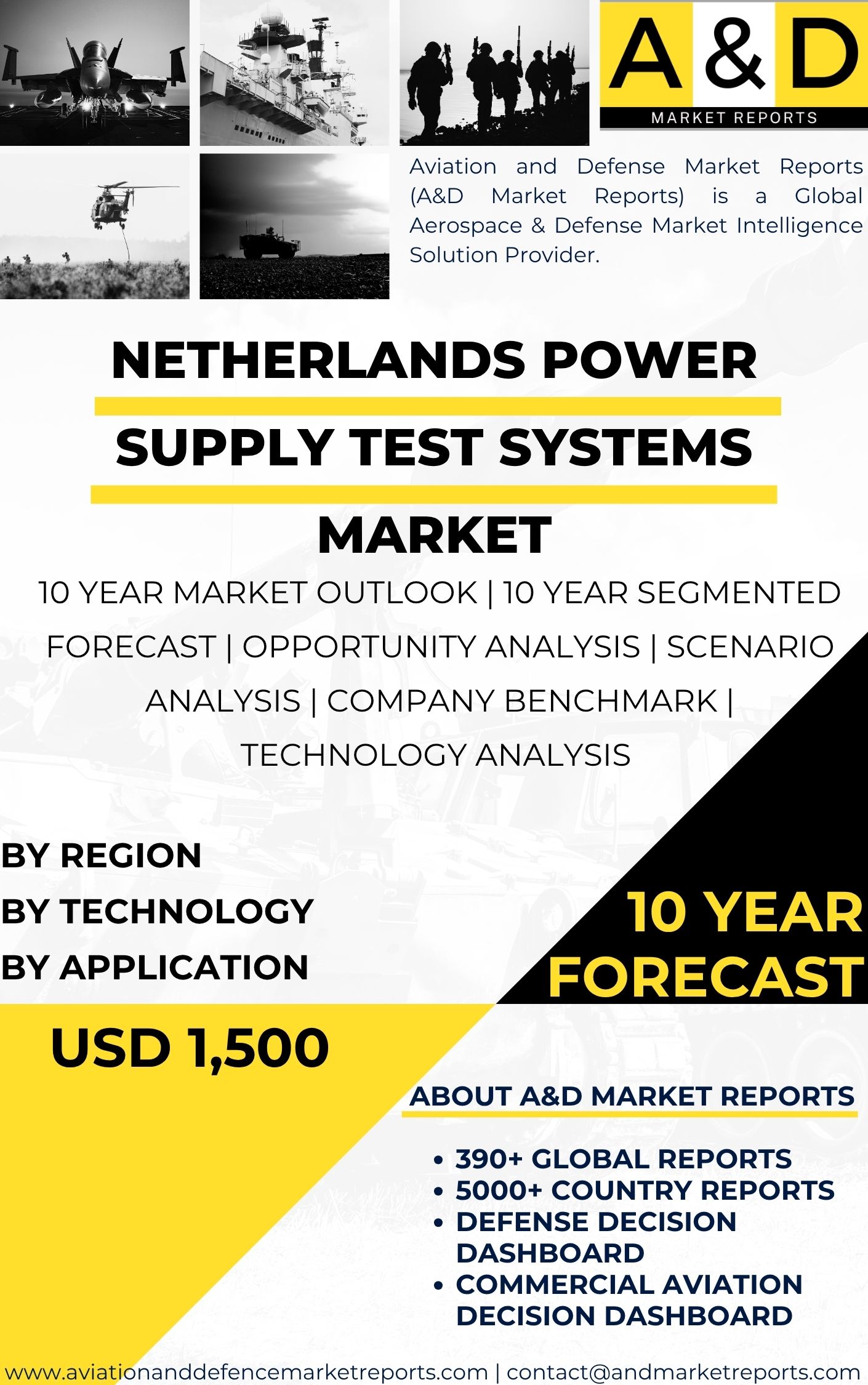
The Netherlands power supply test systems market is an important component of the country?s defense and aerospace industries, ensuring that electrical systems and subsystems operate reliably under demanding conditions. Power supplies are central to virtually every platform, from aircraft and naval vessels to ground vehicles and communication systems. Testing these systems is critical to guarantee their safety, performance, and compliance with international standards, particularly in defense applications where mission success often depends on uninterrupted power.
Power supply test systems evaluate the performance, durability, and reliability of electrical components by replicating real-world conditions. They test voltage stability, current handling, load response, and resistance to environmental factors such as temperature fluctuations, vibrations, and electromagnetic interference. For the Netherlands, with its strong defense manufacturing base and aerospace participation, such test systems play a crucial role in maintaining the integrity of advanced platforms.
In military applications, power supply reliability is especially vital. Aircraft avionics, naval radar systems, missile guidance electronics, and armored vehicle communication networks all rely on stable power sources. Power supply test systems ensure these functions remain operational even in extreme or hostile environments. By simulating demanding operational conditions, they identify vulnerabilities early and enable corrective measures before systems are deployed in the field.
The Dutch defense and aerospace industries are experiencing growing demand for advanced power supply test systems due to modernization programs and increasing reliance on electrification. New-generation aircraft, naval ships, and land systems incorporate more electronic systems than ever before, driving greater need for precise and robust power solutions. Testing systems must therefore adapt to these evolving requirements, supporting both legacy platforms and cutting-edge technologies.
Innovation is a key driver in this market. Automated test equipment, digital twins, and AI-driven diagnostics are making power supply testing more efficient and accurate. Modular test systems allow for scalability and adaptability to different platforms, while advanced software enables real-time data analysis and predictive maintenance. These technologies reduce downtime, improve system performance, and enhance safety.
The market also benefits from the Netherlands? role as a hub for European defense collaboration and aerospace innovation. Dutch companies contribute to multinational programs where rigorous testing standards are essential. Power supply test systems ensure compliance with NATO, EU, and international regulations, supporting the country?s reputation for reliability and technological excellence.
Challenges include the high cost of advanced testing equipment and the need for constant updates to keep pace with rapid technological changes. Cybersecurity is also a growing concern, as networked test systems must be protected from intrusions that could compromise sensitive data or system performance. Furthermore, balancing the need for high fidelity with affordability remains an ongoing issue.
Looking ahead, the Netherlands power supply test systems market is expected to grow as defense and aerospace platforms continue to evolve. Future systems will likely incorporate more AI for predictive analytics, enhanced modularity for flexible testing, and cloud-based solutions for remote operation and data sharing. Sustainability goals may also drive innovations in energy-efficient test systems. By investing in these advancements, the Netherlands ensures the reliability of critical defense and aerospace systems, reinforcing both operational readiness and technological leadership.