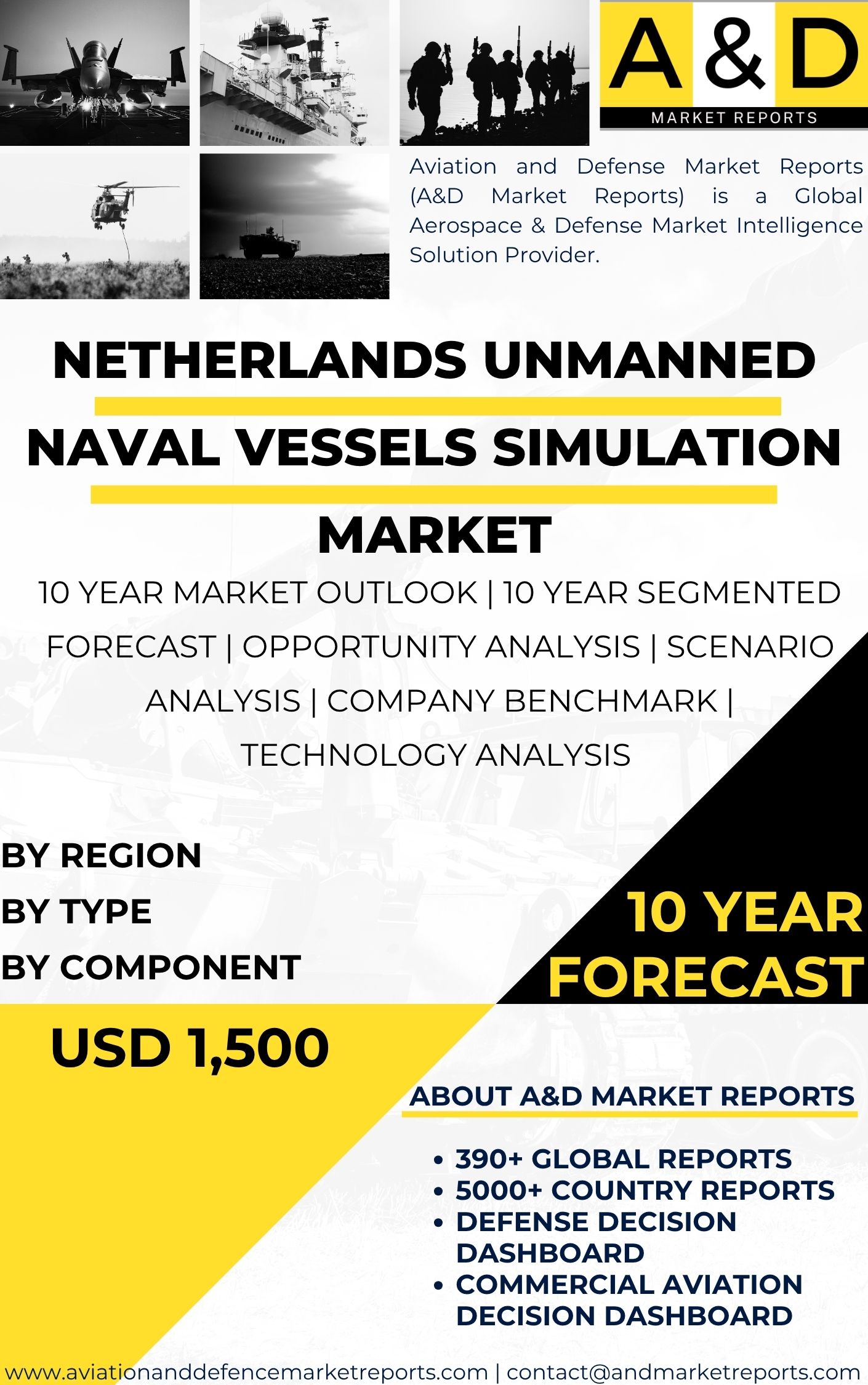
Netherlands Unmanned Naval vessels Simulation Market

$1,500.00

Enquire Now

The Netherlands unmanned naval vessels simulation market is emerging as a critical enabler of the country?s efforts to integrate autonomous technologies into maritime operations. Unmanned surface vessels (USVs) and unmanned underwater vehicles (UUVs) are increasingly important in naval strategies, supporting missions such as mine countermeasures, surveillance, reconnaissance, and logistics. For the Royal Netherlands Navy, which places strong emphasis on innovation and NATO interoperability, developing robust simulation systems for training and operational testing is vital to ensure the safe and effective deployment of these unmanned platforms.

Go To Global Report Page Track this market real time on DDD

Description

The Netherlands unmanned naval vessels simulation market is emerging as a critical enabler of the country?s efforts to integrate autonomous technologies into maritime operations. Unmanned surface vessels (USVs) and unmanned underwater vehicles (UUVs) are increasingly important in naval strategies, supporting missions such as mine countermeasures, surveillance, reconnaissance, and logistics. For the Royal Netherlands Navy, which places strong emphasis on innovation and NATO interoperability, developing robust simulation systems for training and operational testing is vital to ensure the safe and effective deployment of these unmanned platforms.

Unmanned naval vessel simulators replicate the operation and control of autonomous systems, allowing operators to train in realistic environments without exposing expensive platforms to operational risks. They provide training in navigation, mission planning, payload management, and remote control under diverse conditions. Simulation also allows operators to practice responses to unexpected scenarios, such as system malfunctions, hostile interference, or environmental hazards. This is particularly valuable for missions in contested environments where unmanned systems may face cyber threats, electronic warfare, or harsh weather conditions.

The growth of this market in the Netherlands is driven by the expanding role of unmanned systems in naval doctrine. USVs and UUVs reduce risks to human personnel by performing dangerous missions such as mine clearance or intelligence gathering in contested waters. They also provide force multiplication by extending the reach and persistence of naval forces. Training operators to maximize these advantages requires simulators capable of replicating both technical system performance and tactical scenarios.

Technological innovations are enhancing simulator capabilities. Artificial intelligence is increasingly used to model autonomous behaviors and generate realistic adversary responses. Networked simulators enable joint training with manned ships and aircraft, reflecting the growing emphasis on manned-unmanned teaming. High-resolution visualization, VR and AR systems, and digital twins of real-world unmanned vessels further improve training realism. These innovations allow Dutch forces to prepare for complex missions while ensuring safety and cost-effectiveness.

Cost efficiency is another significant advantage. Operating unmanned naval vessels for training consumes resources and exposes platforms to potential damage, especially in harsh or contested environments. Simulators reduce these costs while providing repeatable and scalable training. They also allow operators to rehearse rare but critical scenarios that would be impractical or unsafe to attempt with real systems.

However, the market faces challenges. Rapid advances in autonomous technology mean that simulators must be continuously updated to reflect new systems and capabilities, which increases lifecycle costs. Integrating classified technologies into simulators while ensuring security also poses difficulties. Additionally, balancing realism with affordability remains a challenge, as high-fidelity simulators can be expensive to develop and maintain.

Looking forward, the Netherlands unmanned naval vessels simulation market is expected to expand significantly as unmanned systems take on a larger role in maritime operations. Future developments may include cloud-based training platforms for greater flexibility, AI-driven adaptive training that evolves with operator performance, and hybrid live-virtual exercises integrating real unmanned platforms with simulators. For the Netherlands, investment in this market ensures that its naval forces remain at the forefront of innovation, capable of deploying unmanned technologies effectively and safely in support of national defense and NATO missions.
Table of content

Table Of Contents

1 Market Introduction

1.1 Market Introduction
1.2 Market Definition
1.3 Market Segmentation
1.4 10 Year Market Outlook

2 Market Technologies

3 Global Market Forecast

3.1 Global Market Forecast
3.2 By Type
3.3 By Component

4 Europe Market Trends & Forecast

4.1 Drivers, Restraints And Challenges
4.2 PEST
4.3 Market Forecast
4.3.1 Market Forecast By Type
4.3.2 Market Forecast By Component
4.4 Scenario Analysis
4.5 Key Companies& Profiling

5Netherlands Analysis

5.1 Current Levels Of Technology Maturation In This Market
5.2 Market Forecast
5.2.1 Market Forecast By Component
5.2.2 Market Forecast By Type
5.3 Scenario Analysis
5.4 Country Defense Budget (Historical and 10- year forecast)
5.5 Defense Budget Category Spending- 10- year forecast
5.6 Procurement Analysis
5.7 EXIM Data
5.8 Patents

6 Opportunity Matrix

6.1 By Type
6.2 By Component

7 Scenario Analysis

7.1 Scenario 1

7.1.1 By Type (Scenario-1)
7.1.2 By Component (Scenario-1)

7.2 Scenario 2

7.2.1 By Type (Scenario-2)
7.2.2 By Component (Scenario-2)

8 Company Benchmark

9 Strategic Conclusions

10 About Aviation And Defense Market Reports

Segments

By Type
By Component

List of Tables

Table1: Global Market Forecast, Unmanned Naval vessels Simulation Market
Table2: Europe Market Forecast, Unmanned Naval vessels Simulation Market
Table3: Europe Market Forecast, By Type
Table4: Europe Market Forecast, By Component
Table5: Europe, Scenario Analysis
Table6: Netherlands Market Forecast, Unmanned Naval vessels Simulation Market
Table7: Netherlands Market Forecast, By Type
Table8: Netherlands Market Forecast, By Component
Table9: Netherlands, Scenario Analysis
Table 10: Netherlands Defense Budget 10 Year Forecast
Table 11: Netherlands, Defense Budget Category Spending- 10- year forecast
Table 12: Netherlands, Procurement Analysis
Table 13: Netherlands, EXIM Data Analysis
Table 14: Netherlands, Opportunity Analysis, By Type
Table 15: Netherlands, Opportunity Analysis, By Component
Table 16: Netherlands, Scenario Analysis, By Type
Table 17: Netherlands, Scenario Analysis, By Component

List of Figures

Figure 1: Market Segmentation, Netherlands Unmanned Naval vessels Simulation Market
Figure 2: Key Technology Analysis, Unmanned Naval vessels Simulation Market
Figure 3: Global Market Forecast, Unmanned Naval vessels Simulation Market
Figure 4: Europe, Market Forecast, Unmanned Naval vessels Simulation Market
Figure 5: Europe, Market Forecast, By Type
Figure 6: Europe, Market Forecast, By Component
Figure 7: Europe, Scenario Analysis
Figure 8: Netherlands, Market Forecast, Unmanned Naval vessels Simulation Market
Figure 9: Netherlands, Market Forecast, By Type
Figure 10: Netherlands, Market Forecast, By Component
Figure 11: Netherlands, Scenario Analysis
Figure 12: Netherlands, Defense Budget 10 Year Forecast
Figure 13: Netherlands, Defense Budget Category Spending- 10- year forecast
Figure 14: Netherlands, Procurement Analysis
Figure 15: Netherlands, EXIM Data Analysis
Figure 16: Netherlands, Opportunity Analysis, By Type
Figure 17: Netherlands, Opportunity Analysis, By Component
Figure 18: Netherlands, Scenario Analysis, By Type
Figure 19: Netherlands, Scenario Analysis, By Component
Figure 20: Company Benchmark