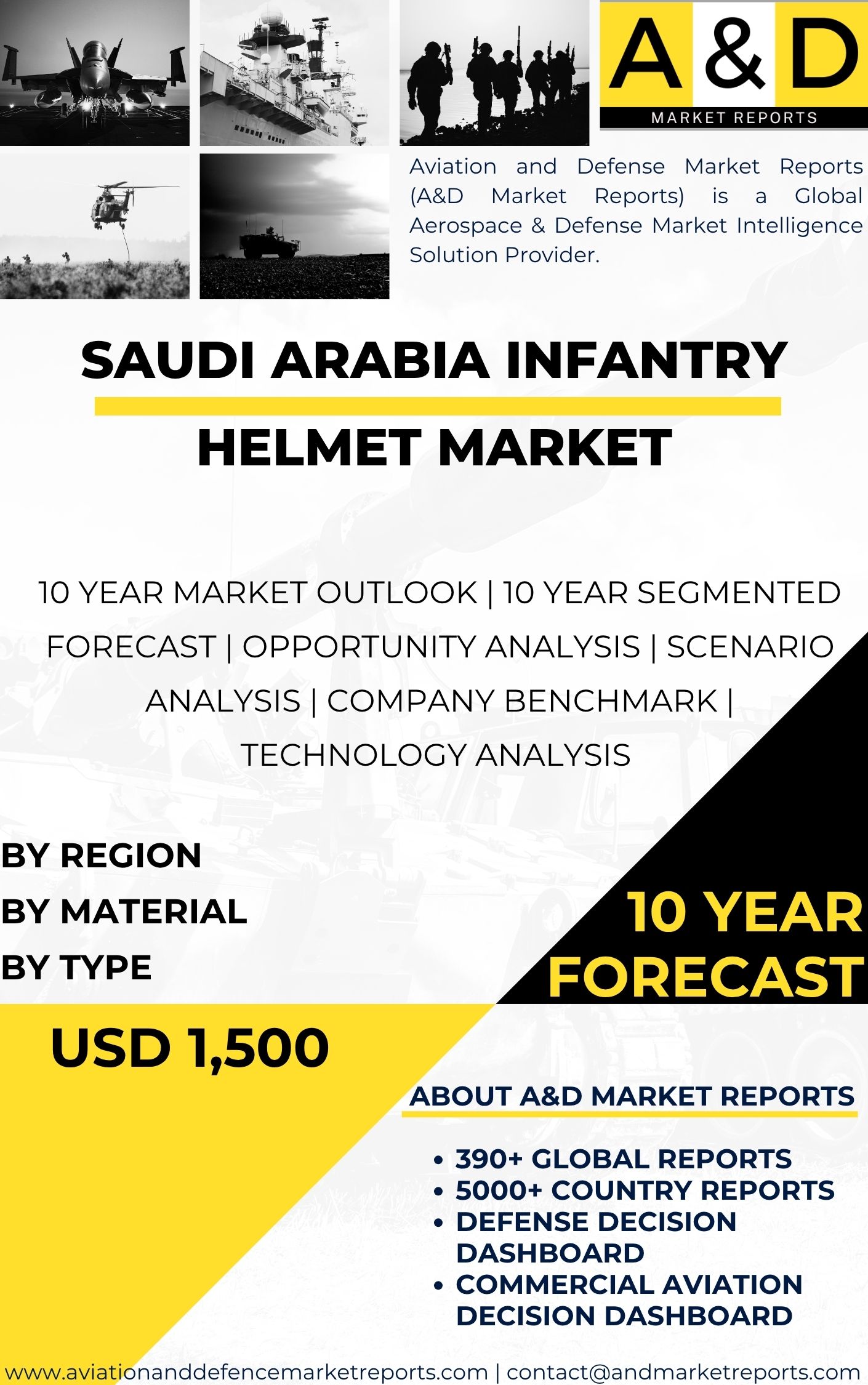
Saudi Arabia Infantry Helmet Market

$1,500.00

Enquire Now
Category: Tag: Report ID: ANDCSA0184

Infantry Helmet Market in the Saudi Arabia is shaped by a deep legacy of military modernization, protection requirements, and the continuous drive to balance survivability with comfort and performance. Historically, helmets have evolved from heavy steel models to advanced composites that offer ballistic resistance while minimizing fatigue for the wearer. In recent decades, the U.S. defense sector has invested heavily in helmets that integrate cutting-edge materials with modular designs, ensuring that soldiers can adapt gear to different operational environments. This shift was made necessary by changing battlefield threats, ranging from urban combat to asymmetrical engagements that require heightened protection from shrapnel, projectiles, and blast waves. In addition to physical protection, helmets have increasingly become platforms for integration with communication systems and night vision capabilities, effectively transforming them into multifunctional hubs rather than simple protective shells. The rise of soldier-centric modernization programs has further fueled demand for helmets that can seamlessly host optics, head-up displays, and situational awareness tools. Companies in the U.S. have responded with research into weight reduction through advanced polymers while still offering high ballistic tolerance. Beyond the military, law enforcement agencies, particularly tactical units, also contribute to market demand as they require gear capable of withstanding small arms fire while enabling operational flexibility. Helmet aesthetics, fitting systems, ventilation, and accessory compatibility have also become distinguishing features in procurement decisions. The economic importance of this market lies in its intersection of defense procurement, research initiatives by defense contractors, and innovation from private firms, all of which contribute to the expansion of the protective gear sector. The trend toward greater connectivity, data sharing, and augmented vision applications ensures that the infantry helmet market will continue evolving as part of the broader shift toward network-centric warfare, reinforcing its role as more than just a piece of armor but as a critical enabler of performance and survivability.
Go To Global Report Page Track this market real time on DDD

Description

Infantry Helmet Market in the Saudi Arabia is shaped by a deep legacy of military modernization, protection requirements, and the continuous drive to balance survivability with comfort and performance. Historically, helmets have evolved from heavy steel models to advanced composites that offer ballistic resistance while minimizing fatigue for the wearer. In recent decades, the U.S. defense sector has invested heavily in helmets that integrate cutting-edge materials with modular designs, ensuring that soldiers can adapt gear to different operational environments. This shift was made necessary by changing battlefield threats, ranging from urban combat to asymmetrical engagements that require heightened protection from shrapnel, projectiles, and blast waves. In addition to physical protection, helmets have increasingly become platforms for integration with communication systems and night vision capabilities, effectively transforming them into multifunctional hubs rather than simple protective shells. The rise of soldier-centric modernization programs has further fueled demand for helmets that can seamlessly host optics, head-up displays, and situational awareness tools. Companies in the U.S. have responded with research into weight reduction through advanced polymers while still offering high ballistic tolerance. Beyond the military, law enforcement agencies, particularly tactical units, also contribute to market demand as they require gear capable of withstanding small arms fire while enabling operational flexibility. Helmet aesthetics, fitting systems, ventilation, and accessory compatibility have also become distinguishing features in procurement decisions. The economic importance of this market lies in its intersection of defense procurement, research initiatives by defense contractors, and innovation from private firms, all of which contribute to the expansion of the protective gear sector. The trend toward greater connectivity, data sharing, and augmented vision applications ensures that the infantry helmet market will continue evolving as part of the broader shift toward network-centric warfare, reinforcing its role as more than just a piece of armor but as a critical enabler of performance and survivability.
Table of content

Table Of Contents

1 Market Introduction

1.1 Market Introduction
1.2 Market Definition
1.3 Market Segmentation
1.4 10 Year Market Outlook

2 Market Technologies

3 Global Market Forecast

3.1 Global Market Forecast
3.2 By Type
3.3 By Material

4 Middle East Market Trends & Forecast

4.1 Drivers, Restraints And Challenges
4.2 PEST
4.3 Market Forecast
4.3.1 Market Forecast By Type
4.3.2 Market Forecast By Material
4.4 Scenario Analysis
4.5 Key Companies& Profiling

5Saudi Arbia Analysis

5.1 Current Levels Of Technology Maturation In This Market
5.2 Market Forecast
5.2.1 Market Forecast By Type
5.2.2 Market Forecast By Material
5.3 Scenario Analysis
5.4 Country Defense Budget (Historical and 10- year forecast)
5.5 Defense Budget Category Spending- 10- year forecast
5.6 Procurement Analysis
5.7 EXIM Data
5.8 Patents

6 Opportunity Matrix

6.1 By Type
6.2 By Material

7 Scenario Analysis

7.1 Scenario 1

7.1.1 By Type (Scenario-1)
7.1.2 By Material (Scenario-1)

7.2 Scenario 2

7.2.1 By Type (Scenario-2)
7.2.2 By Material (Scenario-2)

8 Company Benchmark

9 Strategic Conclusions

10 About Aviation And Defense Market Reports

Segments

By Type
By Material

List of Tables

Table1: Global Market Forecast, Infantry Helmet Market
Table2: Middle East Market Forecast, Infantry Helmet Market
Table3: Middle East Market Forecast, By Type
Table4: Middle East Market Forecast, By Material
Table5: Middle East, Scenario Analysis
Table6: Saudi Arabia Market Forecast, Infantry Helmet Market
Table7: Saudi Arabia Market Forecast, By Type
Table8: Saudi Arabia Market Forecast, By Material
Table9: Saudi Arabia, Scenario Analysis
Table 10: Saudi Arabia Defense Budget 10 Year Forecast
Table 11: Saudi Arabia, Defense Budget Category Spending- 10- year forecast
Table 12: Saudi Arabia, Procurement Analysis
Table 13: Saudi Arabia, EXIM Data Analysis
Table 14: Saudi Arabia, Opportunity Analysis, By Type
Table 15: Saudi Arabia, Opportunity Analysis, By Material
Table 16: Saudi Arabia, Scenario Analysis, By Type
Table 17: Saudi Arabia, Scenario Analysis, By Material

List of Figures

Figure 1: Market Segmentation, Saudi Arbia Infantry Helmet Market
Figure 2: Key Technology Analysis, Infantry Helmet Market
Figure 3: Global Market Forecast, Infantry Helmet Market
Figure 4: Middle East, Market Forecast, Infantry Helmet Market
Figure 5: Middle East, Market Forecast, By Type
Figure 6: Middle East, Market Forecast, By Material
Figure 7: Middle East, Scenario Analysis
Figure 8: Saudi Arabia, Market Forecast, Infantry Helmet Market
Figure 9: Saudi Arabia, Market Forecast, By Type
Figure 10: Saudi Arabia, Market Forecast, By Material
Figure 11: Saudi Arabia, Scenario Analysis
Figure 12: Saudi Arabia, Defense Budget 10 Year Forecast
Figure 13: Saudi Arabia, Defense Budget Category Spending- 10- year forecast
Figure 14: Saudi Arabia, Procurement Analysis
Figure 15: Saudi Arabia, EXIM Data Analysis
Figure 16: Saudi Arabia, Opportunity Analysis, By Type
Figure 17: Saudi Arabia, Opportunity Analysis, By Material
Figure 18: Saudi Arabia, Scenario Analysis, By Type
Figure 19: Saudi Arabia, Scenario Analysis, By Material
Figure 20: Company Benchmark

Aviation and Defense Market Reports


TPA | TIA | Consulting | Market Reports | Defense Decision Dashboard


Our Defense Report - Our Team Has Worked on More Than 250+ Individual Products / Markets