
Description
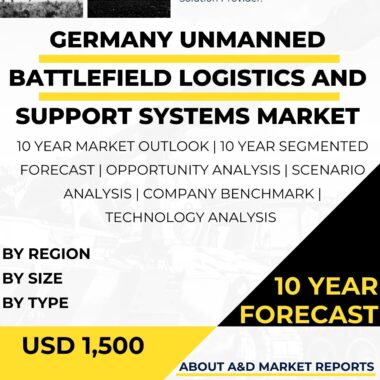
Singapore Unmanned battlefield logistics and support systems Market has witnessed significant growth in recent years. This expansion is driven by the country’s commitment to enhancing defense capabilities, improving operational efficiency, and adopting emerging technologies to maintain a competitive edge in modern warfare.
Unmanned battlefield logistics and support systems involve the use of unmanned vehicles and autonomous technologies to transport supplies, equipment, and personnel—providing essential support to military forces during operations. This overview explores the market’s key drivers, major players, applications, challenges, and future prospects.
Singapore Unmanned battlefield logistics Defense Modernization as a Key Growth Driver
Singapore’s continuous focus on defense readiness and modernization has been the primary catalyst behind market growth. As a small but strategically important nation, Singapore faces distinct security challenges that require a flexible and technologically advanced defense force.
Unmanned systems significantly enhance the efficiency of battlefield logistics by enabling rapid deployment, resupply, and equipment transport while reducing risks to personnel. These systems improve mission success rates and ensure sustained operational effectiveness during complex military engagements.
Singapore Unmanned battlefield logistics Embracing Emerging Technologies and Innovation
Singapore’s broader strategy to integrate artificial intelligence (AI), robotics, and automation across sectors has also shaped the defense landscape. As a leading technology hub in Southeast Asia, the country encourages the adoption of next-generation systems to strengthen its military capabilities.
By incorporating unmanned technologies into battlefield logistics, Singapore aligns with its vision of developing a smart, data-driven, and autonomous defense force capable of responding swiftly to evolving threats.
Development of the Domestic Unmanned Systems Industry
The rapid growth of Singapore’s unmanned systems and defense technology sector has supported this market’s expansion. The domestic defense industry actively invests in research, development, and production of unmanned vehicles, autonomous control systems, and integrated logistics networks.
Collaborations with leading international defense firms further allow Singapore to access advanced design expertise, manufacturing capabilities, and technological innovations, accelerating the country’s progress in unmanned battlefield support.
Diverse Applications Across Land, Air, and Sea Domains
Unmanned battlefield logistics and support systems serve multiple functions across different operational domains:
Aerial Logistics (UAVs): Unmanned aerial vehicles (UAVs) or drones are increasingly used for delivering supplies, medical kits, and emergency equipment to troops in remote or high-risk zones. They offer speed, flexibility, and safety compared to traditional transport methods.
Ground Support (UGVs): Unmanned ground vehicles (UGVs) transport heavy equipment, ammunition, and supplies across difficult terrains, easing the physical load on soldiers and allowing personnel to focus on combat and mission-critical tasks.
Maritime Operations (UUVs & USVs): In naval operations, unmanned maritime systems—including unmanned surface vessels (USVs) and unmanned underwater vehicles (UUVs)—support logistics, conduct underwater surveillance, and deliver essential supplies to ships and coastal bases.
Challenges and Operational Constraints
Despite strong progress, the market faces several challenges.
A key issue lies in the integration of unmanned systems with existing command and control structures. Achieving seamless communication between manned and unmanned assets is vital for effective joint operations.
Moreover, safety and cybersecurity concerns remain significant. Ensuring that unmanned systems can operate securely in contested environments while being protected from electronic interference and hostile actions is critical for mission reliability.
Future Outlook and Market Opportunities
The outlook for Singapore’s unmanned battlefield logistics and support systems market is highly promising. Continued investment in defense innovation, AI, and automation will sustain growth and expand system capabilities. Collaboration with international defense companies will also enhance Singapore’s access to cutting-edge technologies and manufacturing expertise.
Advancements in autonomy, sensor integration, and intelligent decision-making will further improve system performance, reliability, and adaptability—enabling more efficient, coordinated, and resilient battlefield operations.
Conclusion
In summary, the unmanned battlefield logistics and support systems market in Singapore has evolved rapidly, fueled by defense modernization efforts, technological innovation, and strategic partnerships. Unmanned vehicles and autonomous technologies have become essential assets in enhancing logistics, supply, and battlefield support capabilities.
While integration and security challenges persist, Singapore’s proactive approach toward defense innovation positions this market for sustained growth and global competitiveness in the years ahead.