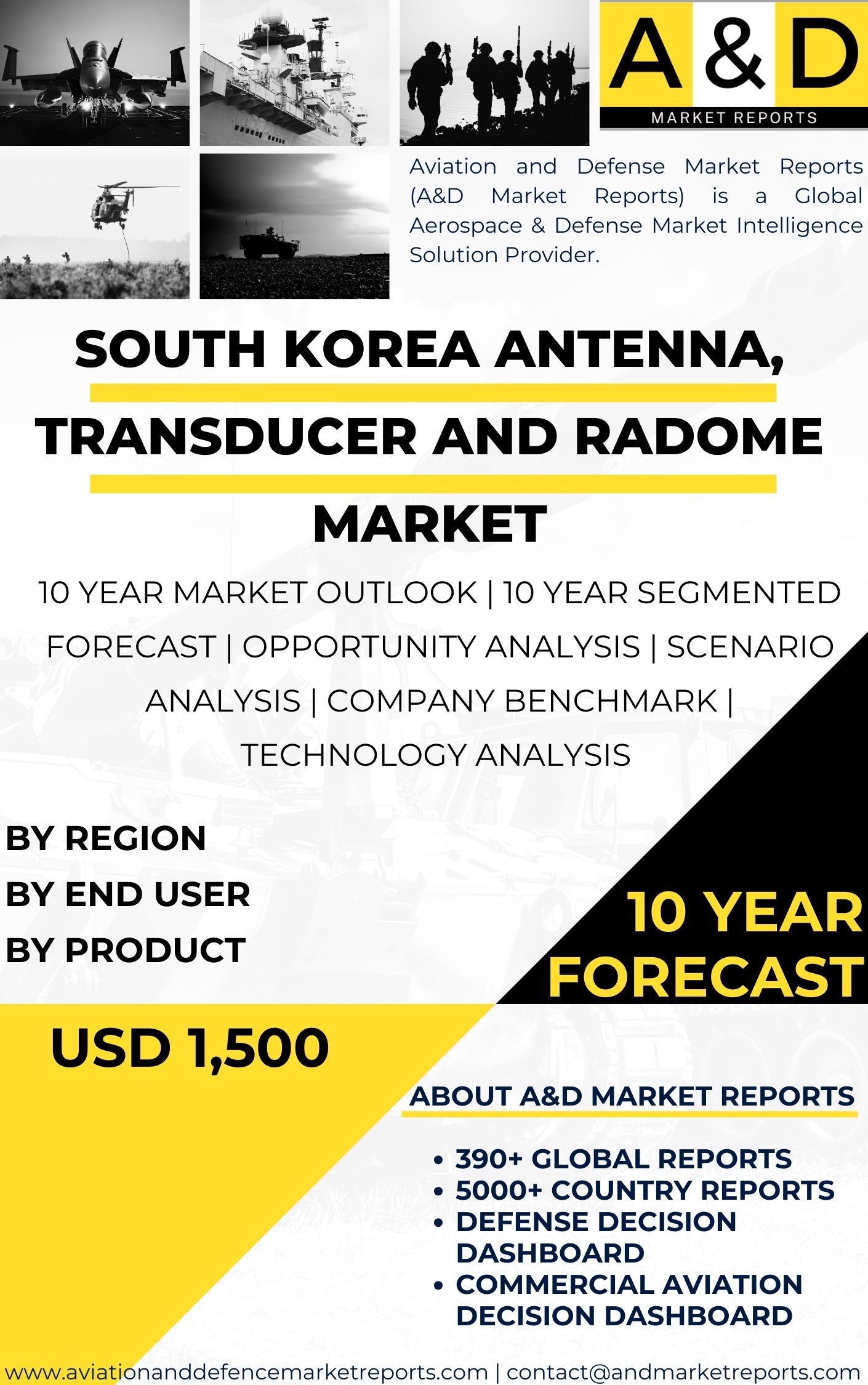
South Korea Antenna, Transducer and Radome Market

$1,500.00

Enquire Now

The South Korea antenna, transducer, and radome market is a vital sector within the nation’s defense and communications industries. Antennas, transducers, and radomes are essential components used in various applications, ranging from military communications and radar systems to satellite communication and commercial telecommunications. This article provides a comprehensive analysis of the current state, growth drivers, challenges, key players, and future prospects of the South Korea antenna, transducer, and radome market.

Go To Global Report Page Track this market real time on DDD

Description

South Korea Antenna, Transducer and Radome Market Overview

The South Korea antenna, transducer and radome market is a key segment of the country’s defense and communications industry. These components support radar systems, military communications, satellites, and commercial networks. Their performance directly affects data accuracy, signal strength, and operational reliability.

Market Background and Development

South Korea began strengthening its antenna, transducer, and radome capabilities to meet defense and communication needs. Rising security concerns pushed the country to improve domestic technology. Over time, local manufacturing expanded to support military readiness and modern communication systems.

Current Market Scenario

The South Korea antenna, transducer and radome market includes domestic manufacturers and selected foreign partnerships. Local companies now design and produce advanced components. This progress has reduced reliance on imports and improved supply security.

Key Growth Drivers

Military Modernization Programs

Military modernization strongly drives the South Korea antenna, transducer and radome market. Advanced radar and communication systems require reliable antennas and transducers. These components support surveillance, command systems, and real-time data sharing.

Defense Indigenization Initiatives

Government-backed indigenization programs support market growth. Local firms receive funding for research and testing. This approach improves technology control and long-term sustainability.

Technology Partnerships

Strategic partnerships help access advanced designs and expertise. Collaboration improves component performance and production efficiency. Knowledge sharing accelerates development timelines.

Commercial Communication Demand

Commercial telecom growth also supports the market. Demand for antennas and transducers rises with satellite systems, mobile networks, and IoT deployment. This creates steady non-defense revenue streams.

Export Opportunities

South Korean manufacturers export high-quality components to overseas buyers. Strong performance and reliability improve brand trust. Exports contribute to steady market expansion.

Market Challenges

Rapid Technology Changes

Communication technology evolves quickly. Manufacturers must invest continuously in research. Keeping pace with new standards increases development pressure.

Competitive Industry Environment

Competition remains strong from established suppliers. Domestic firms must focus on specialization and innovation. Niche applications help improve competitiveness.

Export Regulations

Strict export rules affect defense-related components. Regulatory approval can delay shipments. Market access remains limited in some regions.

Future Market Outlook

The South Korea antenna, transducer and radome market is expected to grow steadily. Investment in advanced materials and design will improve performance. Workforce training will support innovation and production quality.

Conclusion

The South Korea antenna, transducer and radome market is essential for defense readiness and communication infrastructure. Growth is driven by military modernization, domestic production, and telecom expansion. Challenges include technology shifts, competition, and export controls. With continued investment, partnerships, and skilled workforce development, South Korea can strengthen its antenna, transducer, and radome capabilities and support long-term industry growth.
Table of content

Table Of Contents

1 Market Introduction

1.1 Market Introduction
1.2 Market Definition
1.3 Market Segmentation
1.4 10 Year Market Outlook

2 Market Technologies

3 Global Market Forecast

3.1 Global Market Forecast
3.2 By End User
3.3 By Product

4 APAC Market Trends & Forecast

4.1 Drivers, Restraints And Challenges
4.2 PEST
4.3 Market Forecast
4.3.1 Market Forecast By End User
4.3.2 Market Forecast By Product
4.4 Scenario Analysis
4.5 Key Companies& Profiling

5 South Korea Analysis

5.1 Current Levels Of Technology Maturation In This Market
5.2 Market Forecast
5.2.1 Market Forecast By End User
5.2.2 Market Forecast By Product
5.3 Scenario Analysis
5.4 Country Defense Budget (Historical and 10- year forecast)
5.5 Defense Budget Category Spending- 10- year forecast
5.6 Procurement Analysis
5.7 EXIM Data
5.8 Patents

6 Opportunity Matrix

6.1 By End User
6.2 By Product

7 Scenario Analysis

7.1 Scenario 1

7.1.1 By End User (Scenario-1)
7.1.2 By Product(Scenario-1)

7.2 Scenario 2

7.2.1 By End User (Scenario-2)
7.2.2 By Product(Scenario-2)

8 Company Benchmark

9 Strategic Conclusions

10 About Aviation And Defense Market Reports

Segments

By End User
By Product

List of Tables

Table1: Global Market Forecast, South Korea Antenna, Transducer and Radome Market
Table2: APAC Market Forecast, South Korea Antenna, Transducer and Radome Market
Table3: APAC Market Forecast, By End User
Table4: APAC Market Forecast, By Product
Table5: APAC, Scenario Analysis
Table6: South Korea Market Forecast, South Korea Antenna, Transducer and Radome Market
Table7: South Korea Market Forecast, By End User
Table8: South Korea Market Forecast, By Product
Table9: South Korea, Scenario Analysis
Table 10: South Korea Defense Budget 10 Year Forecast
Table 11: South Korea, Defense Budget Category Spending- 10- year forecast
Table 12: South Korea, Procurement Analysis
Table 13: South Korea, EXIM Data Analysis
Table 14: South Korea, Opportunity Analysis, By End User
Table 15: South Korea, Opportunity Analysis, By Product
Table 16: South Korea, Scenario Analysis, By End User
Table 17: South Korea, Scenario Analysis, By Product

List of Figures

Figure 1: Market Segmentation, South Korea Antenna, Transducer and Radome Market
Figure 2: Key Technology Analysis, South Korea Antenna, Transducer and Radome Market
Figure 3: Global Market Forecast, South Korea Antenna, Transducer and Radome Market
Figure 4: APAC, Market Forecast, South Korea Antenna, Transducer and Radome Market
Figure 5: APAC, Market Forecast, By End User
Figure 6: APAC, Market Forecast, By Product
Figure 7: APAC, Scenario Analysis
Figure 8: South Korea, Market Forecast, South Korea Antenna, Transducer and Radome Market
Figure 9: South Korea, Market Forecast, By End User
Figure 10: South Korea, Market Forecast, By Product
Figure 11: South Korea, Scenario Analysis
Figure 12: South Korea, Defense Budget 10 Year Forecast
Figure 13: South Korea, Defense Budget Category Spending- 10- year forecast
Figure 14: South Korea, Procurement Analysis
Figure 15: South Korea, EXIM Data Analysis
Figure 16: South Korea, Opportunity Analysis, By End User
Figure 17: South Korea, Opportunity Analysis, By Product
Figure 18: South Korea, Scenario Analysis, By End User
Figure 19: South Korea, Scenario Analysis, By Product
Figure 20: Company Benchmark