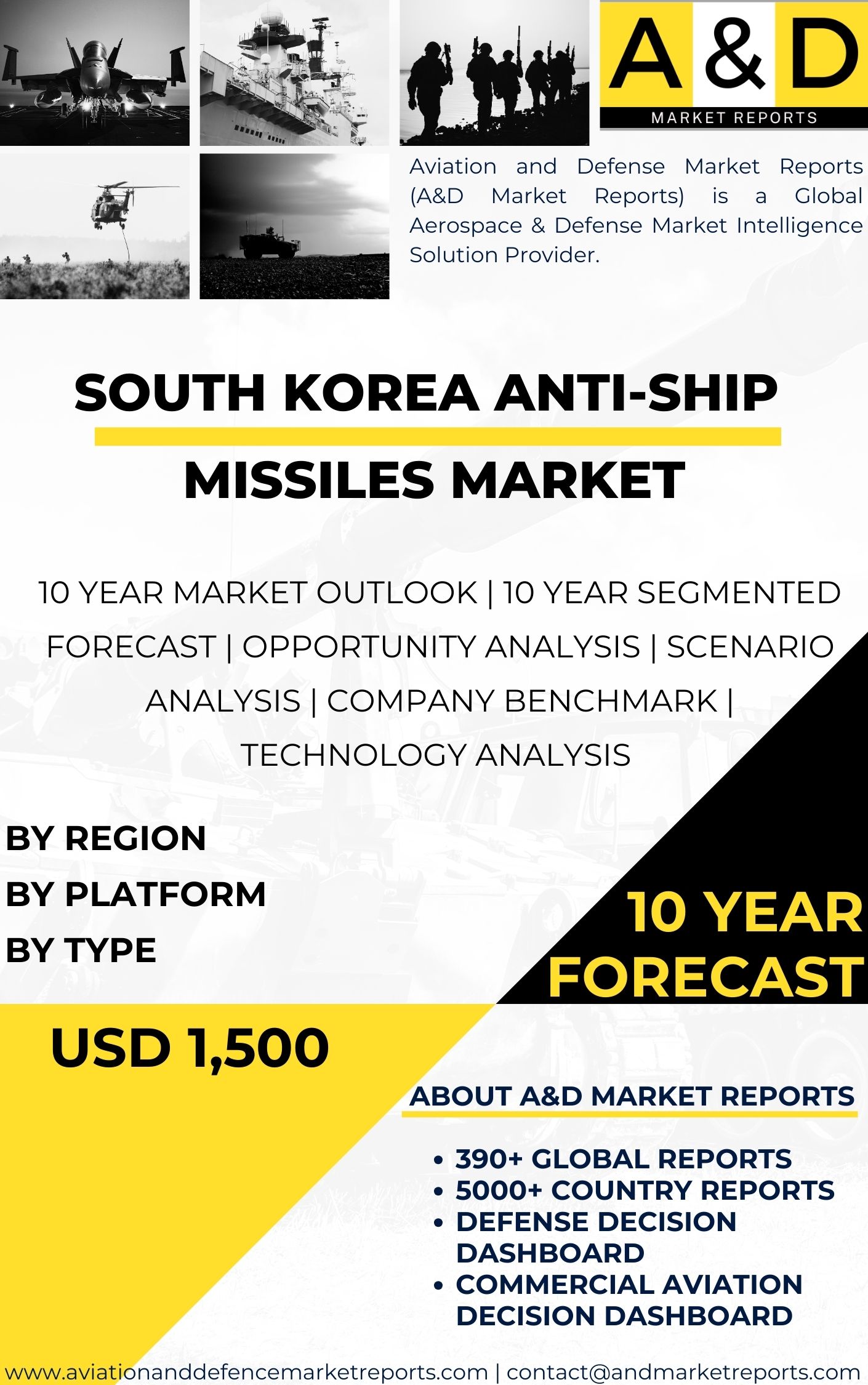
South Korea Anti-ship missiles Market

$1,500.00

Enquire Now

The South Korea anti-ship missiles market is a crucial component of the nation’s defense industry, ensuring maritime security and naval superiority. Anti-ship missiles are advanced munitions designed to target and destroy enemy naval vessels, playing a critical role in safeguarding territorial waters and projecting maritime power. This article provides an in-depth analysis of the current state, growth drivers, challenges, key players, and future prospects of the South Korea anti-ship missiles market.

Go To Global Report Page Track this market real time on DDD

Description

South Korea Anti-Ship Missiles Market Overview

The South Korea anti-ship missiles market is a key part of the country’s defense industry. These missiles protect territorial waters and support naval dominance. They are designed to detect, track, and destroy hostile naval vessels. Their role is critical for maritime security and deterrence.

Background and Market Evolution

South Korea strengthened its anti-ship missile capabilities due to regional security concerns. Protecting sea lanes and coastlines became a national priority. Over time, the country invested in domestic missile programs. This reduced dependence on external suppliers and improved naval readiness.

Current Market Landscape

The South Korea anti-ship missiles market includes domestically developed systems and selected foreign collaborations. Local defense firms now design and manufacture advanced missiles. These efforts support self-reliance and stable supply chains. Indigenous programs continue to expand in scale and capability.

Key Growth Drivers

Naval Modernization Programs

Naval modernization strongly drives the South Korea anti-ship missiles market. The navy upgrades platforms and weapons to improve combat readiness. Anti-ship missiles enhance strike range and precision. They support both defensive and offensive naval operations.

Strategic Maritime Position

South Korea has extensive coastlines and busy sea routes. This increases the need for strong maritime defense systems. Anti-ship missiles help deter hostile naval movements. They also protect critical maritime assets.

Defense Indigenization Efforts

Government support for indigenization fuels market growth. Investments in research and testing improve missile performance. Local production strengthens long-term defense capability. It also improves control over sensitive technologies.

Technology Partnerships

Strategic partnerships support technology access and system integration. Collaboration improves guidance systems and propulsion design. These partnerships speed up development cycles. They also enhance overall system reliability.

Export Demand

South Korean missile systems attract overseas interest. Buyers value performance and reliability. Exports support production scale and revenue growth. This strengthens the domestic defense industry.

Market Challenges

Rapid Technology Advancement

Missile technology evolves quickly. Systems must counter modern naval defenses. Continuous research is required to maintain effectiveness. This increases development cost and complexity.

Competitive Industry Environment

The market faces strong competition from established suppliers. Domestic manufacturers must focus on innovation. Specialized solutions help improve competitiveness. Cost efficiency also remains important.

Export Regulations

Strict arms export regulations affect market access. Approval processes can delay deliveries. Some regions remain restricted. Compliance remains a key operational challenge.

Future Market Outlook

The South Korea anti-ship missiles market is expected to grow steadily. Continued investment will improve range, accuracy, and survivability. Skilled workforce development will support innovation. Long-term demand from naval forces will sustain growth.

Conclusion

The South Korea anti-ship missiles market plays a vital role in maritime defense and naval strength. Growth is driven by naval modernization, domestic production, and export demand. Challenges include fast technology changes, competition, and regulatory limits. With continued investment, partnerships, and skill development, South Korea can strengthen its anti-ship missile capabilities and maintain strong maritime security.
Table of content

Table Of Contents

1 Market Introduction

1.1 Market Introduction
1.2 Market Definition
1.3 Market Segmentation
1.4 10 Year Market Outlook

2 Market Technologies

3 Global Market Forecast

3.1 Global Market Forecast
3.2 By Platform
3.3 By Type

4 APAC Market Trends & Forecast

4.1 Drivers, Restraints And Challenges
4.2 PEST
4.3 Market Forecast
4.3.1 Market Forecast By Platform
4.3.2 Market Forecast By Type
4.4 Scenario Analysis
4.5 Key Companies& Profiling

5 South Korea Analysis

5.1 Current Levels Of Technology Maturation In This Market
5.2 Market Forecast
5.2.1 Market Forecast By Platform
5.2.2 Market Forecast By Type
5.3 Scenario Analysis
5.4 Country Defense Budget (Historical and 10- year forecast)
5.5 Defense Budget Category Spending- 10- year forecast
5.6 Procurement Analysis
5.7 EXIM Data
5.8 Patents

6 Opportunity Matrix

6.1 By Platform
6.2 By Type

7 Scenario Analysis

7.1 Scenario 1

7.1.1 By Platform (Scenario-1)
7.1.2 By Type(Scenario-1)

7.2 Scenario 2

7.2.1 By Platform (Scenario-2)
7.2.2 By Type(Scenario-2)

8 Company Benchmark

9 Strategic Conclusions

10 About Aviation And Defense Market Reports

Segments

By Platform
By Type

List of Tables

Table1: Global Market Forecast, South Korea Anti ship missiles Market
Table2: APAC Market Forecast, South Korea Anti ship missiles Market
Table3: APAC Market Forecast, By Platform
Table4: APAC Market Forecast, By Type
Table5: APAC, Scenario Analysis
Table6: South Korea Market Forecast, South Korea Anti ship missiles Market
Table7: South Korea Market Forecast, By Platform
Table8: South Korea Market Forecast, By Type
Table9: South Korea, Scenario Analysis
Table 10: South Korea Defense Budget 10 Year Forecast
Table 11: South Korea, Defense Budget Category Spending- 10- year forecast
Table 12: South Korea, Procurement Analysis
Table 13: South Korea, EXIM Data Analysis
Table 14: South Korea, Opportunity Analysis, By Platform
Table 15: South Korea, Opportunity Analysis, By Type
Table 16: South Korea, Scenario Analysis, By Platform
Table 17: South Korea, Scenario Analysis, By Type

List of Figures

Figure 1: Market Segmentation, South Korea Anti ship missiles Market
Figure 2: Key Technology Analysis, South Korea Anti ship missiles Market
Figure 3: Global Market Forecast, South Korea Anti ship missiles Market
Figure 4: APAC, Market Forecast, South Korea Anti ship missiles Market
Figure 5: APAC, Market Forecast, By Platform
Figure 6: APAC, Market Forecast, By Type
Figure 7: APAC, Scenario Analysis
Figure 8: South Korea, Market Forecast, South Korea Anti ship missiles Market
Figure 9: South Korea, Market Forecast, By Platform
Figure 10: South Korea, Market Forecast, By Type
Figure 11: South Korea, Scenario Analysis
Figure 12: South Korea, Defense Budget 10 Year Forecast
Figure 13: South Korea, Defense Budget Category Spending- 10- year forecast
Figure 14: South Korea, Procurement Analysis
Figure 15: South Korea, EXIM Data Analysis
Figure 16: South Korea, Opportunity Analysis, By Platform
Figure 17: South Korea, Opportunity Analysis, By Type
Figure 18: South Korea, Scenario Analysis, By Platform
Figure 19: South Korea, Scenario Analysis, By Type
Figure 20: Company Benchmark

Aviation and Defense Market Reports


TPA | TIA | Consulting | Market Reports | Defense Decision Dashboard


Our Defense Report - Our Team Has Worked on More Than 250+ Individual Products / Markets