Description
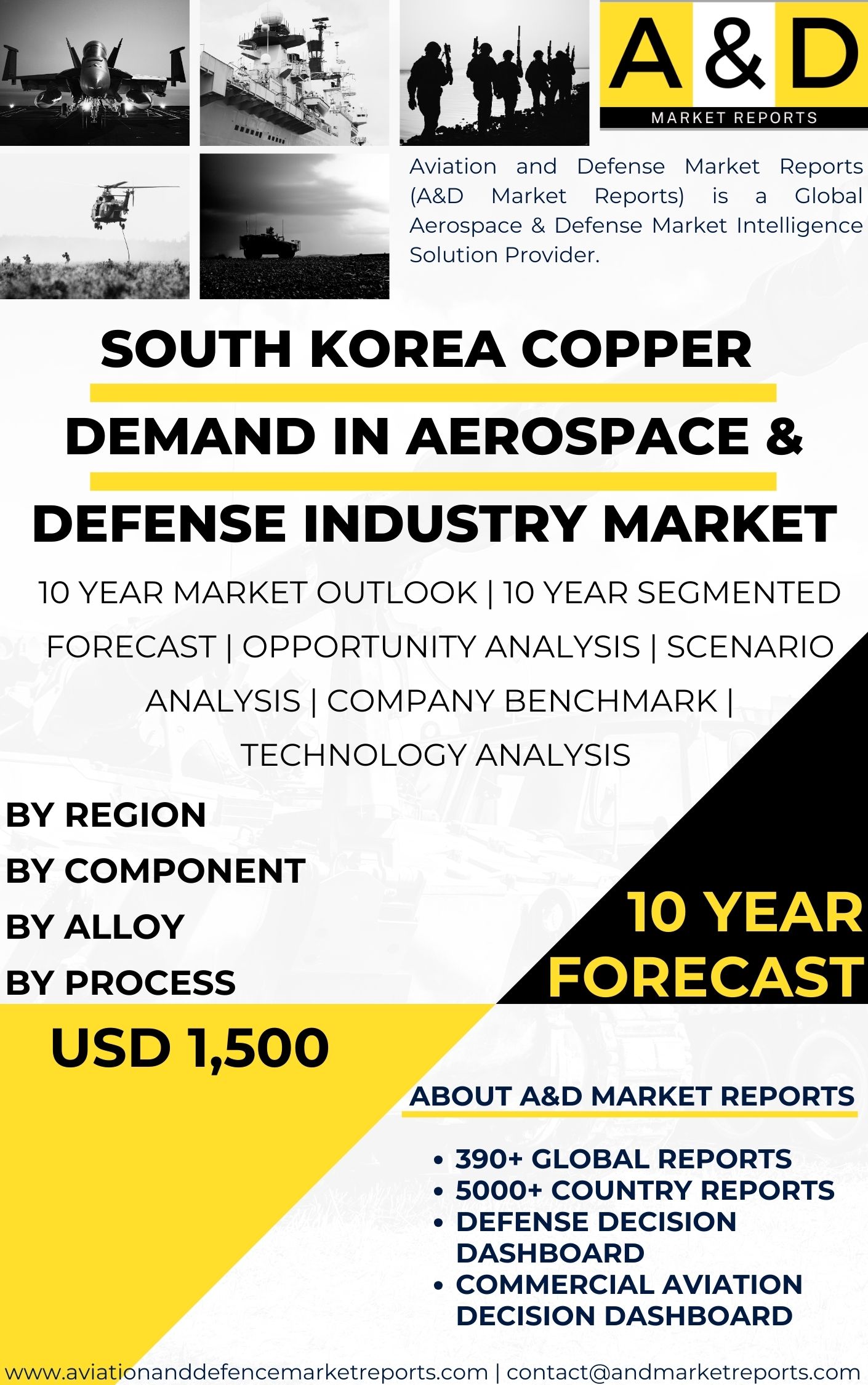
Copper Demand in South Korea Aerospace and Defense Industry
The Copper demand in Aerospace is growing rapidly. Copper is valued for its electrical conductivity, thermal properties, and corrosion resistance. It is essential in electronics, wiring, ammunition, and propulsion systems for military and aerospace applications.
Rising defense technology needs are driving higher copper consumption. Quality and reliability are critical for modern defense systems.
Role of Copper in Military Electronics
Copper is vital for electrical and electronic components. Modern systems like radar, communication equipment, and electronic warfare platforms rely on high-quality copper conductors and connectors.
The copper demand in South Korea aerospace and defense industry continues to grow as the nation develops sophisticated defense technologies.
Copper in Defense Collaborations and Component Manufacturing
South Korea participates in joint defense projects with partners. Copper is widely used in manufacturing components and subassemblies for these programs.
Its excellent conductivity and durability make copper ideal for critical military systems. Domestic production supports technology advancement and defense readiness.
Copper Applications in Ammunition and Propulsion Systems
Copper alloys are used in bullet casings, armor-piercing projectiles, and jet engine components. Corrosion resistance and durability ensure performance under harsh conditions.
These applications strengthen South Korea’s operational readiness and overall military capability.
Advancements in Copper Research and Development
Research into copper alloys and production techniques has improved material performance. New methods ensure copper components meet stringent aerospace and defense standards.
High-quality copper production supports extreme conditions like high stress, temperature, and corrosion, reinforcing South Korea’s defense manufacturing capabilities.
Future Outlook of Copper Demand in South Korea Aerospace and Defense Industry
The copper demand in South Korea aerospace and defense industry is expected to remain strong. Continuous investments in research, production, and defense modernization will drive growth.
Copper will remain a key material, supporting military technology, electronics, and propulsion systems, strengthening South Korea’s defense capabilities.
Table of content
Table Of Contents
1 Market Introduction
1.1 Market Introduction
1.2 Market Definition
1.3 Market Segmentation
1.4 10 Year Market Outlook
2 Market Technologies
3 Global Market Forecast
3.1 Global Market Forecast
3.2 By Component
3.3 By Process
4 APAC Market Trends & Forecast
4.1 Drivers, Restraints And Challenges
4.2 PEST
4.3 Market Forecast
4.3.1 Market Forecast By Component
4.3.2 Market Forecast By Process
4.4 Scenario Analysis
4.5 Key Companies& Profiling
5 South Korea Analysis
5.1 Current Levels Of Technology Maturation In This Market
5.2 Market Forecast
5.2.1 Market Forecast By Component
5.2.2 Market Forecast By Process
5.3 Scenario Analysis
5.4 Country Defense Budget (Historical and 10- year forecast)
5.5 Defense Budget Category Spending- 10- year forecast
5.6 Procurement Analysis
5.7 EXIM Data
5.8 Patents
6 Opportunity Matrix
6.1 By Component
6.2 By Process
7 Scenario Analysis
7.1 Scenario 1
7.1.1 By Component (Scenario-1)
7.1.2 By Process(Scenario-1)
7.2 Scenario 2
7.2.1 By Component (Scenario-2)
7.2.2 By Process(Scenario-2)
8 Company Benchmark
9 Strategic Conclusions
10 About Aviation And Defense Market Reports
Segments
By Component
By Process
List of Tables
Table1: Global Market Forecast, Copper demand in Aerospace & Defense Industry
Table2: APAC Market Forecast, Copper demand in Aerospace & Defense Industry
Table3: APAC Market Forecast, By Component
Table4: APAC Market Forecast, By Process
Table5: APAC, Scenario Analysis
Table6: South Korea Market Forecast, Copper demand in Aerospace & Defense Industry
Table7: South Korea Market Forecast, By Component
Table8: South Korea Market Forecast, By Process
Table9: South Korea, Scenario Analysis
Table 10: South Korea Defense Budget 10 Year Forecast
Table 11: South Korea, Defense Budget Category Spending- 10- year forecast
Table 12: South Korea, Procurement Analysis
Table 13: South Korea, EXIM Data Analysis
Table 14: South Korea, Opportunity Analysis, By Component
Table 15: South Korea, Opportunity Analysis, By Process
Table 16: South Korea, Scenario Analysis, By Component
Table 17: South Korea, Scenario Analysis, By Process
Figure 1: Market Segmentation, South Korea Copper demand in Aerospace & Defense Industry
Figure 2: Key Technology Analysis, Copper demand in Aerospace & Defense Industry
Figure 3: Global Market Forecast, Copper demand in Aerospace & Defense Industry
Figure 4: APAC, Market Forecast, Copper demand in Aerospace & Defense Industry
Figure 5: APAC, Market Forecast, By Component
Figure 6: APAC, Market Forecast, By Process
Figure 7: APAC, Scenario Analysis
Figure 8: South Korea, Market Forecast, Copper demand in Aerospace & Defense Industry
Figure 9: South Korea, Market Forecast, By Component
Figure 10: South Korea, Market Forecast, By Process
Figure 11: South Korea, Scenario Analysis
Figure 12: South Korea, Defense Budget 10 Year Forecast
Figure 13: South Korea, Defense Budget Category Spending- 10- year forecast
Figure 14: South Korea, Procurement Analysis
Figure 15: South Korea, EXIM Data Analysis
Figure 16: South Korea, Opportunity Analysis, By Component
Figure 17: South Korea, Opportunity Analysis, By Process
Figure 18: South Korea, Scenario Analysis, By Component
Figure 19: South Korea, Scenario Analysis, By Process
Figure 20: Company Benchmark