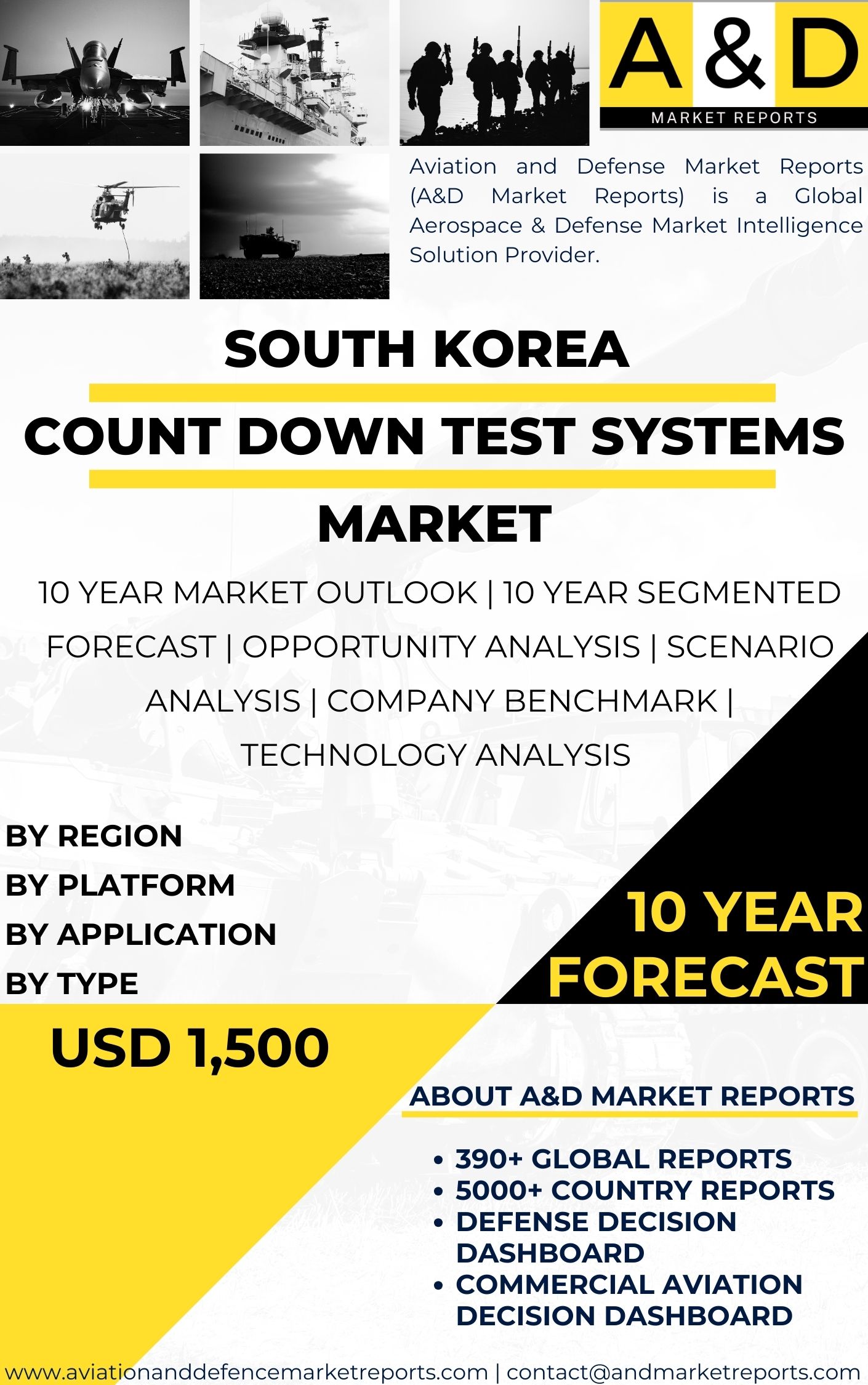
South Korea Count Down Test Systems

$1,500.00

Enquire Now

Countdown Test Systems in South Korea form an essential segment of aerospace and defense testing infrastructure, facilitating critical pre-launch and pre-flight validation protocols for missiles, rockets, and space vehicles. These systems ensure that each function and subsystem is thoroughly verified just before launch, ranging from electronics and avionics checks to countdown sequence coordination, safety interlocks, and telemetry continuity. South Korea?s expanding missile technology programs, including ballistic missile development and satellite launch vehicles, have stimulated robust demand for reliable, precise countdown test equipment to guarantee mission success and safety.

Go To Global Report Page Track this market real time on DDD

Description

Countdown Test Systems in South Korea Overview

Count Down Test Systems   in South Korea play a vital role in aerospace and defense testing. These systems support final checks before missile, rocket, and space launches. They verify that all subsystems work correctly before liftoff.

South Korea’s growing missile and space programs drive demand for reliable countdown testing. Accuracy and safety remain top priorities.

Role of Countdown Test Systems in South Korea

Countdown test systems manage time-critical launch tasks. They check avionics, electronics, and telemetry links. They also control safety interlocks and sequence timing.

These systems help prevent launch failures. They ensure mission readiness under strict schedules.

Demand from Missile and Space Programs

The Countdown Test Systems in South Korea market benefits from missile development programs. Satellite launch vehicles also increase testing needs. Each mission requires precise validation before launch.

Government agencies rely on these systems to meet safety standards. Mission success depends on accurate countdown execution.

Engineering and System Integration

Countdown sequences involve many subsystems. Engineers design custom test setups for each platform. These setups simulate real launch conditions.

PLC controllers and HMI panels support system control. Operators can monitor countdown status in real time.

Automation and Control Technologies

Automation improves testing speed and accuracy. Programmable systems reduce manual errors. Operators can respond faster to system alerts.

This improves overall test reliability.

Applications Beyond Missile Launches

Countdown Test Systems in South Korea also support UAV testing. Satellite deployment systems rely on precise timing. Advanced weapon platforms use countdown validation.

These applications expand market scope. Timed operations require exact control.

Software and Data Management

Software platforms manage countdown logic. They collect sensor data and system health signals. These platforms support fault detection.

Recorded data helps post-test analysis. Engineers use it to improve future designs.

Safety and Redundancy Features

Safety remains a core focus in Countdown Test Systems in South Korea. Automated abort functions protect assets. Fail-safe interlocks stop unsafe launches.

Redundant monitoring improves system response. These features reduce operational risk.

Technology Trends and Innovation

Digital control systems continue to evolve. IoT connectivity enables remote monitoring. AI tools support fault prediction.

These technologies reduce downtime. They also improve maintenance planning.

Research and Industry Collaboration

Universities support system development. Institutions like Seoul National University contribute research. Defense firms apply this research to real systems.

This collaboration strengthens innovation. It also supports future hypersonic and space programs.

Market Challenges and Outlook

Cybersecurity remains a key challenge. System complexity increases integration demands. Tight schedules add pressure.

Despite this, investment remains strong. The Countdown Test Systems in South Korea market shows steady growth. Innovation and partnerships support long-term expansion.
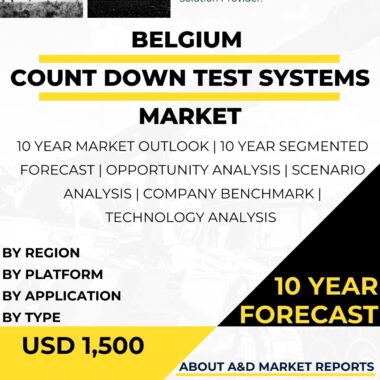
Table of content

Table Of Contents

1 Market Introduction

1.1 Market Introduction
1.2 Market Definition
1.3 Market Segmentation
1.4 10 Year Market Outlook

2 Market Technologies

3 Global Market Forecast

3.1 Global Market Forecast
3.2 By Platform
3.3 By Application

4 APAC Market Trends & Forecast

4.1 Drivers, Restraints And Challenges
4.2 PEST
4.3 Market Forecast
4.3.1 Market Forecast By Platform
4.3.2 Market Forecast By Application
4.4 Scenario Analysis
4.5 Key Companies& Profiling

5 South Korea Analysis

5.1 Current Levels Of Technology Maturation In This Market
5.2 Market Forecast
5.2.1 Market Forecast By Platform
5.2.2 Market Forecast By Application
5.3 Scenario Analysis
5.4 Country Defense Budget (Historical and 10- year forecast)
5.5 Defense Budget Category Spending- 10- year forecast
5.6 Procurement Analysis
5.7 EXIM Data
5.8 Patents

6 Opportunity Matrix

6.1 By Platform
6.2 By Application

7 Scenario Analysis

7.1 Scenario 1

7.1.1 By Platform (Scenario-1)
7.1.2 By Application (Scenario-1)

7.2 Scenario 2

7.2.1 By Platform (Scenario-2)
7.2.2 By Application (Scenario-2)

8 Company Benchmark

9 Strategic Conclusions

10 About Aviation And Defense Market Reports

Segments

By Platform
By Application

List of Tables

Table1: Global Market Forecast, Count Down Test Systems
Table2: APAC Market Forecast, Count Down Test Systems
Table3: APAC Market Forecast, By Platform
Table4: APAC Market Forecast, By Application
Table5: APAC, Scenario Analysis
Table6: South Korea Market Forecast, Count Down Test Systems
Table7: South Korea Market Forecast, By Platform
Table8: South Korea Market Forecast, By Application
Table9: South Korea, Scenario Analysis
Table 10: South Korea Defense Budget 10 Year Forecast
Table 11: South Korea, Defense Budget Category Spending- 10- year forecast
Table 12: South Korea, Procurement Analysis
Table 13: South Korea, EXIM Data Analysis
Table 14: South Korea, Opportunity Analysis, By Platform
Table 15: South Korea, Opportunity Analysis, By Application
Table 16: South Korea, Scenario Analysis, By Platform
Table 17: South Korea, Scenario Analysis, By Application

List of Figures

Figure 1: Market Segmentation, South Korea Count Down Test Systems
Figure 2: Key Technology Analysis, Count Down Test Systems
Figure 3: Global Market Forecast, Count Down Test Systems
Figure 4: APAC, Market Forecast, Count Down Test Systems
Figure 5: APAC, Market Forecast, By Platform
Figure 6: APAC, Market Forecast, By Application
Figure 7: APAC, Scenario Analysis
Figure 8: South Korea, Market Forecast, Count Down Test Systems
Figure 9: South Korea, Market Forecast, By Platform
Figure 10: South Korea, Market Forecast, By Application
Figure 11: South Korea, Scenario Analysis
Figure 12: South Korea, Defense Budget 10 Year Forecast
Figure 13: South Korea, Defense Budget Category Spending- 10- year forecast
Figure 14: South Korea, Procurement Analysis
Figure 15: South Korea, EXIM Data Analysis
Figure 16: South Korea, Opportunity Analysis, By Platform
Figure 17: South Korea, Opportunity Analysis, By Application
Figure 18: South Korea, Scenario Analysis, By Platform
Figure 19: South Korea, Scenario Analysis, By Application
Figure 20: Company Benchmark