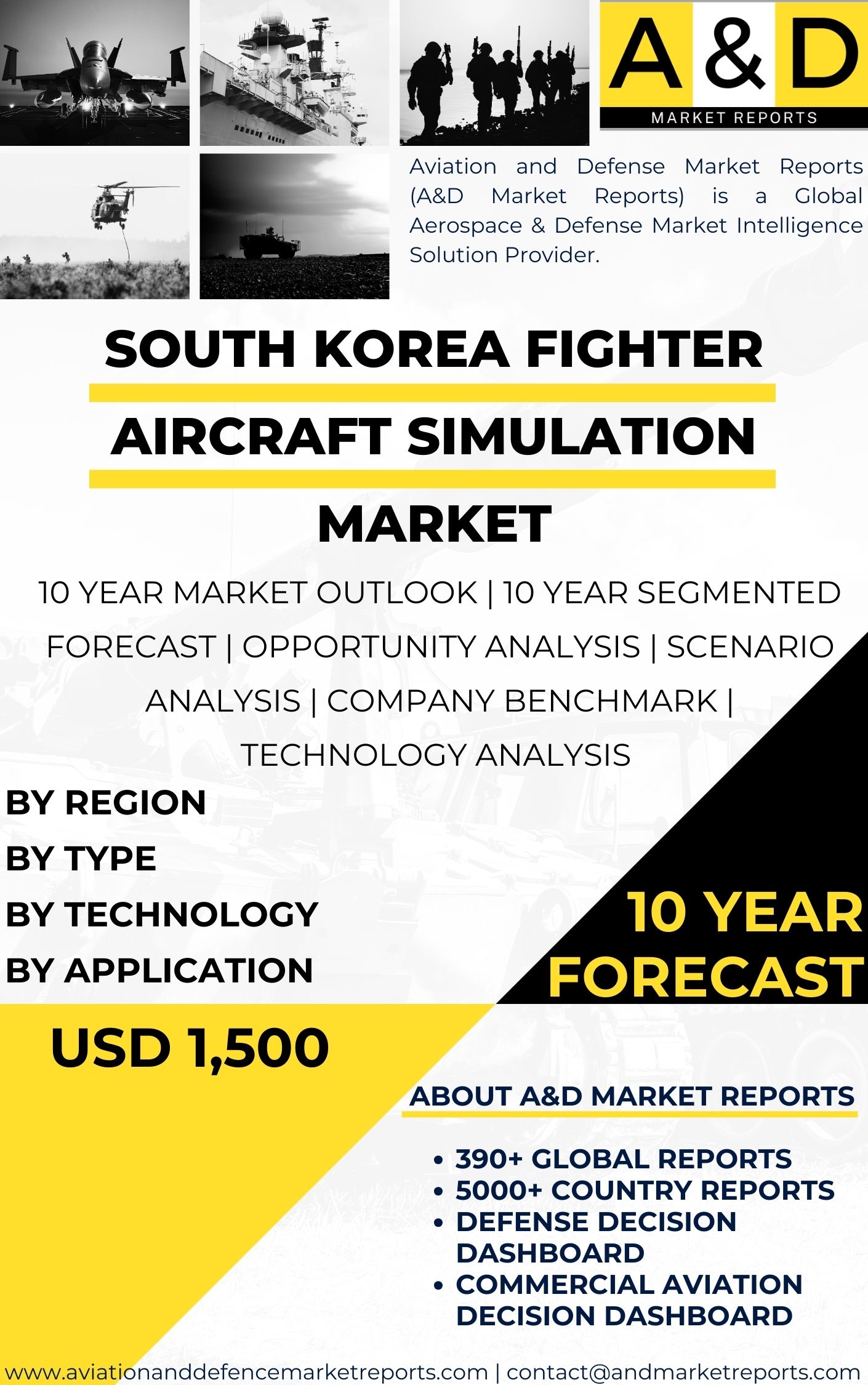
South Korea Fighter Aircraft Simulation Market

$1,500.00

Enquire Now

The fighter aircraft simulation market in South Korea is a technologically advanced and rapidly expanding segment central to the country’s military training and force modernization programs. Recognizing the cost, risk, and complexity of live flight training, South Korea has invested heavily in developing and acquiring cutting-edge fighter simulation technologies. These high-fidelity systems are essential for preparing pilots to operate next-generation fighter jets amid evolving threat environments and increasingly sophisticated mission requirements.

Go To Global Report Page Track this market real time on DDD

Description

South Korea Fighter Aircraft Simulation Market Overview

The South Korea fighter aircraft simulation market plays a key role in military training and force modernization. Simulation reduces cost and risk compared to live flight training. It also allows pilots to train more often and more safely.

South Korea continues to invest in advanced simulation systems. These systems prepare pilots for modern fighter aircraft and complex mission demands.

Importance of Fighter Aircraft Simulation Training

Fighter aircraft simulation supports pilot readiness and combat safety. Simulators allow pilots to train without using real aircraft. This reduces wear, fuel use, and operational risk.

The South Korea fighter aircraft simulation market supports training for air combat, emergency handling, and mission planning. These systems improve decision-making under pressure.

Advanced Simulation Technologies in South Korea

Modern simulators use high-resolution visuals and motion platforms. Virtual reality and augmented reality improve realism. These features help pilots understand aircraft behavior.

AI-driven scenarios adjust training difficulty in real time. Pilots receive instant feedback during each session. This improves learning speed and skill retention.

Mission Rehearsal and Networked Training

Simulation systems support more than basic flight training. They allow full mission rehearsal and tactics development. Pilots train in multi-aircraft formations.

The South Korea fighter aircraft simulation market also supports networked exercises. These systems connect air, land, and naval forces. This prepares crews for joint operations.

Industry Collaboration and Indigenous Development

Domestic defense firms work closely with technology partners. Together, they build systems tailored to national defense needs. Local development strengthens technical independence.

Live, virtual, and constructive (LVC) integration improves training realism. These systems combine real pilots with simulated forces and threats.

Government Support and Policy Framework

Government agencies promote simulation-based training. Policies support safety, efficiency, and innovation. Certification processes for simulators are becoming faster.

These efforts encourage local research and attract foreign partners. South Korea aims to lead in smart aviation training solutions.

Role of AI and Data Analytics

AI, VR, and cloud systems drive growth in the South Korea fighter aircraft simulation market. Data analytics track pilot performance. Training programs adapt to individual skill levels.

Threat models reflect real combat conditions. This helps pilots prepare for evolving air defense systems.

Market Challenges and Constraints

High development costs remain a challenge. Technology also evolves quickly. Systems must keep pace with modern fighter aircraft.

The market must balance realism with cost control. Scalability and long-term support are critical.

Conclusion

The South Korea fighter aircraft simulation market supports pilot proficiency and operational readiness. Advanced technology and strong policy backing drive growth.

Simulation improves safety, reduces cost, and enhances combat preparedness. Continued investment will sustain air force readiness and future capability.
Table of content

Table Of Contents

1 Market Introduction

1.1 Market Introduction
1.2 Market Definition
1.3 Market Segmentation
1.4 10 Year Market Outlook

2 Market Technologies

3 Global Market Forecast

3.1 Global Market Forecast
3.2 By Type
3.3 By Application

4 APAC Market Trends & Forecast

4.1 Drivers, Restraints And Challenges
4.2 PEST
4.3 Market Forecast
4.3.1 Market Forecast By Type
4.3.2 Market Forecast By Application
4.4 Scenario Analysis
4.5 Key Companies& Profiling

5 South Korea Analysis

5.1 Current Levels Of Technology Maturation In This Market
5.2 Market Forecast
5.2.1 Market Forecast By Type
5.2.2 Market Forecast By Application
5.3 Scenario Analysis
5.4 Country Defense Budget (Historical and 10- year forecast)
5.5 Defense Budget Category Spending- 10- year forecast
5.6 Procurement Analysis
5.7 EXIM Data
5.8 Patents

6 Opportunity Matrix

6.1 By Type
6.2 By Application

7 Scenario Analysis

7.1 Scenario 1

7.1.1 By Type (Scenario-1)
7.1.2 By Application (Scenario-1)

7.2 Scenario 2

7.2.1 By Type (Scenario-2)
7.2.2 By Application (Scenario-2)

8 Company Benchmark

9 Strategic Conclusions

10 About Aviation And Defense Market Reports

Segments

By Type
By Application

List of Tables

Table1: Global Market Forecast, Fighter Aircraft Simulation Market
Table2: APAC Market Forecast, Fighter Aircraft Simulation Market
Table3: APAC Market Forecast, By Type
Table4: APAC Market Forecast, By Application
Table5: APAC, Scenario Analysis
Table6: South Korea Market Forecast, Fighter Aircraft Simulation Market
Table7: South Korea Market Forecast, By Type
Table8: South Korea Market Forecast, By Application
Table9: South Korea, Scenario Analysis
Table 10: South Korea Defense Budget 10 Year Forecast
Table 11: South Korea, Defense Budget Category Spending- 10- year forecast
Table 12: South Korea, Procurement Analysis
Table 13: South Korea, EXIM Data Analysis
Table 14: South Korea, Opportunity Analysis, By Type
Table 15: South Korea, Opportunity Analysis, By Application
Table 16: South Korea, Scenario Analysis, By Type
Table 17: South Korea, Scenario Analysis, By Application

List of Figures

Figure 1: Market Segmentation, South Korea Fighter Aircraft Simulation Market
Figure 2: Key Technology Analysis, Fighter Aircraft Simulation Market
Figure 3: Global Market Forecast, Fighter Aircraft Simulation Market
Figure 4: APAC, Market Forecast, Fighter Aircraft Simulation Market
Figure 5: APAC, Market Forecast, By Type
Figure 6: APAC, Market Forecast, By Application
Figure 7: APAC, Scenario Analysis
Figure 8: South Korea, Market Forecast, Fighter Aircraft Simulation Market
Figure 9: South Korea, Market Forecast, By Type
Figure 10: South Korea, Market Forecast, By Application
Figure 11: South Korea, Scenario Analysis
Figure 12: South Korea, Defense Budget 10 Year Forecast
Figure 13: South Korea, Defense Budget Category Spending- 10- year forecast
Figure 14: South Korea, Procurement Analysis
Figure 15: South Korea, EXIM Data Analysis
Figure 16: South Korea, Opportunity Analysis, By Type
Figure 17: South Korea, Opportunity Analysis, By Application
Figure 18: South Korea, Scenario Analysis, By Type
Figure 19: South Korea, Scenario Analysis, By Application
Figure 20: Company Benchmark