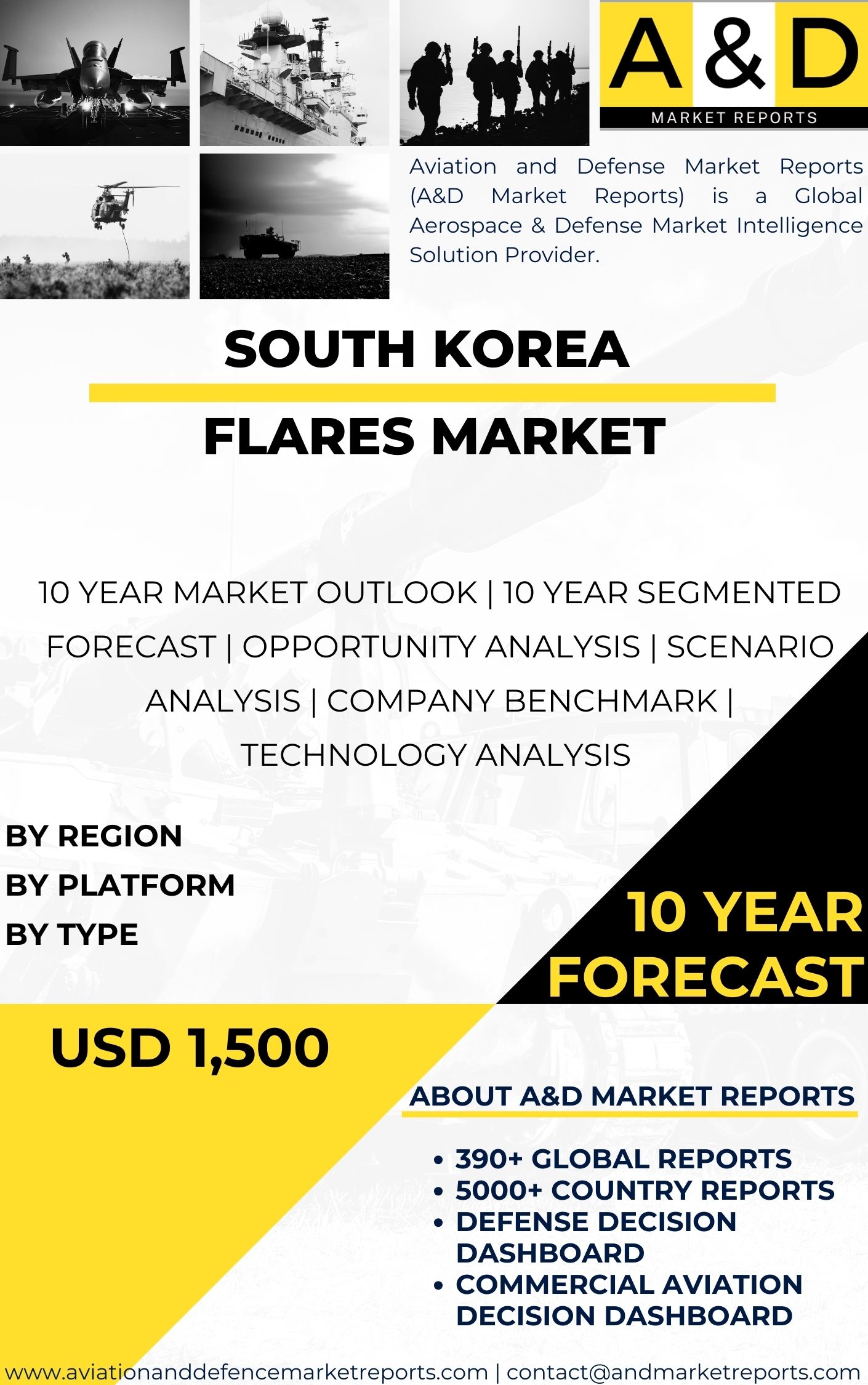
South Korea Flares Market

$1,500.00

Enquire Now

The flares market in South Korea encompasses various types of flares used in military, industrial, and safety applications. South Korea?s strategic geographic and political position in East Asia contributes to a significant demand for flares, especially in defense sectors. Flares primarily serve as countermeasures for aircraft, ships, and vehicles to protect against heat-seeking missiles and other guided threats. The modernization of military forces and increasing geopolitical tensions in the region have driven advancements in flare technology, with South Korea being an active participant in this market domain. Technological improvements in flare composition and design have enhanced their effectiveness in disrupting missile tracking systems, leading to higher adoption rates within the military aviation sector.

Go To Global Report Page Track this market real time on DDD

Description

Flares Market in South Korea Overview

The Flares Market in South Korea serves defense, industrial, and safety needs. Demand remains strong due to regional security risks and strict safety rules. The country’s location in East Asia also increases the need for reliable flare systems.

Flares protect aircraft, ships, and vehicles from guided threats. They also support emergency signaling and industrial operations.

Flares Market in South Korea Growth Drivers

The Flares Market in South Korea grows due to defense modernization. Rising regional tensions increase demand for countermeasure systems. Military upgrades remain a top priority.

Technological progress improves flare performance. These advances support wider adoption across platforms.

Military Applications of Flares

Military use dominates the Flares Market in South Korea. Flares act as countermeasures against heat-seeking missiles. They protect fighter jets, helicopters, and naval vessels.

Improved flare designs disrupt missile tracking. This raises survivability in combat conditions.

Safety and Emergency Signaling Demand

Flares play a key role in emergency response. Maritime and aviation sectors rely on distress flares. Search and rescue missions depend on clear visual signals.

Shipping and fishing industries drive steady demand. Safety regulations also support continued use.

Industrial Use and Flare Gas Recovery

Industrial facilities use flares for emission control. The Flares Market in South Korea includes flare gas recovery systems. These systems capture and reuse waste gas.

Refineries and plants adopt these solutions to cut pollution. Environmental rules encourage further adoption.

Technology Trends and Product Innovation

Manufacturers invest in advanced flare technology. Pyrophoric flares gain popularity due to longer burn time. They also perform better in harsh weather.

Improved infrared output enhances effectiveness. These features suit modern defense systems.

Role of Domestic Manufacturers

Local firms play a major role in the Flares Market in South Korea. They develop both defense and industrial flare solutions. Strong manufacturing capability supports consistent supply.

Partnerships with foreign firms improve technology access. This supports faster innovation.

Government Support and Procurement

Government programs support flare development. Defense procurement focuses on indigenous capability. This reduces reliance on imports.

Modern aircraft upgrades increase demand for advanced flares. Naval and ground systems also benefit.

Commercial and Civil Applications

Flares support roadside safety and outdoor events. High-visibility signaling remains important. Demand rises for safer and cleaner flare materials.

Research focuses on eco-friendly designs. Biodegradable options gain attention.

Challenges in the Flares Market in South Korea

High development costs pose challenges. Integration with older platforms can be complex. Maintenance also requires skilled support.

Despite this, government backing supports growth. Innovation continues to lower barriers.

Flares Market in South Korea Outlook

The Flares Market in South Korea shows steady growth potential. Defense needs remain strong. Environmental and safety rules also drive demand.

Advanced flare technologies will shape future trends. Overall, the market remains vital to South Korea’s defense and industrial systems.
Table of content

Table Of Contents

1 Market Introduction

1.1 Market Introduction
1.2 Market Definition
1.3 Market Segmentation
1.4 10 Year Market Outlook

2 Market Technologies

3 Global Market Forecast

3.1 Global Market Forecast
3.2 By Platform
3.3 By Type

4 APAC Market Trends & Forecast

4.1 Drivers, Restraints And Challenges
4.2 PEST
4.3 Market Forecast
4.3.1 Market Forecast By Platform
4.3.2 Market Forecast By Type
4.4 Scenario Analysis
4.5 Key Companies& Profiling

5 South Korea Analysis

5.1 Current Levels Of Technology Maturation In This Market
5.2 Market Forecast
5.2.1 Market Forecast By Type
5.2.2 Market Forecast By Platform
5.3 Scenario Analysis
5.4 Country Defense Budget (Historical and 10- year forecast)
5.5 Defense Budget Category Spending- 10- year forecast
5.6 Procurement Analysis
5.7 EXIM Data
5.8 Patents

6 Opportunity Matrix

6.1 By Platform
6.2 By Type

7 Scenario Analysis

7.1 Scenario 1

7.1.1 By Platform (Scenario-1)
7.1.2 By Type (Scenario-1)

7.2 Scenario 2

7.2.1 By Platform (Scenario-2)
7.2.2 By Type (Scenario-2)

8 Company Benchmark

9 Strategic Conclusions

10 About Aviation And Defense Market Reports

Segments

By Platform
By Type

List of Tables

Table1: Global Market Forecast, Flares Market
Table2: APAC Market Forecast, Flares Market
Table3: APAC Market Forecast, By Platform
Table4: APAC Market Forecast, By Type
Table5: APAC, Scenario Analysis
Table6: South Korea Market Forecast, Flares Market
Table7: South Korea Market Forecast, By Platform
Table8: South Korea Market Forecast, By Type
Table9: South Korea, Scenario Analysis
Table 10: South Korea Defense Budget 10 Year Forecast
Table 11: South Korea, Defense Budget Category Spending- 10- year forecast
Table 12: South Korea, Procurement Analysis
Table 13: South Korea, EXIM Data Analysis
Table 14: South Korea, Opportunity Analysis, By Platform
Table 15: South Korea, Opportunity Analysis, By Type
Table 16: South Korea, Scenario Analysis, By Platform
Table 17: South Korea, Scenario Analysis, By Type

List of Figures

Figure 1: Market Segmentation, South Korea Flares Market
Figure 2: Key Technology Analysis, Flares Market
Figure 3: Global Market Forecast, Flares Market
Figure 4: APAC, Market Forecast, Flares Market
Figure 5: APAC, Market Forecast, By Platform
Figure 6: APAC, Market Forecast, By Type
Figure 7: APAC, Scenario Analysis
Figure 8: South Korea, Market Forecast, Flares Market
Figure 9: South Korea, Market Forecast, By Platform
Figure 10: South Korea, Market Forecast, By Type
Figure 11: South Korea, Scenario Analysis
Figure 12: South Korea, Defense Budget 10 Year Forecast
Figure 13: South Korea, Defense Budget Category Spending- 10- year forecast
Figure 14: South Korea, Procurement Analysis
Figure 15: South Korea, EXIM Data Analysis
Figure 16: South Korea, Opportunity Analysis, By Platform
Figure 17: South Korea, Opportunity Analysis, By Type
Figure 18: South Korea, Scenario Analysis, By Platform
Figure 19: South Korea, Scenario Analysis, By Type
Figure 20: Company Benchmark

Aviation and Defense Market Reports


TPA | TIA | Consulting | Market Reports | Defense Decision Dashboard


Our Defense Report - Our Team Has Worked on More Than 250+ Individual Products / Markets