South Korea Main Battle Tank Thermal Camera

$1,500.00

Enquire Now

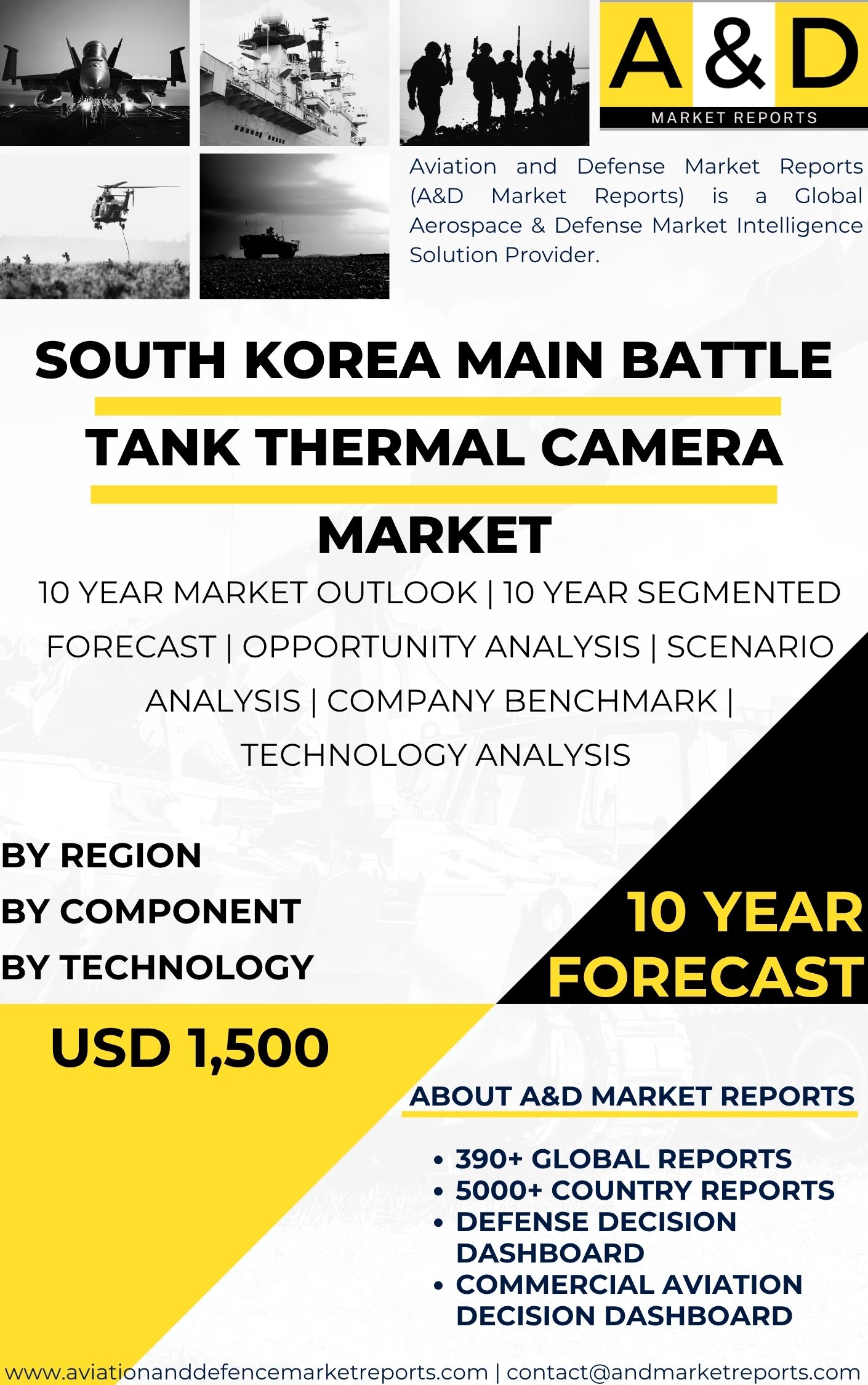
South Korea?s main battle tank (MBT) thermal camera market is a strategically important sector within the nation’s sophisticated ground vehicle defense industry. Modern South Korean MBTs, such as the K1A1 and K2 Black Panther, rely on advanced thermal imaging systems as essential fire control, navigation, and situational awareness tools in low-visibility and night operations. These thermal cameras, typically integrated into the gunner?s sight and commander?s panoramic sight, allow target detection, recognition, and engagement even in complete darkness, through smoke, and during adverse weather conditions.

Go To Global Report Page Track this market real time on DDD

Description

Main Battle Tank Thermal Camera Market in South Korea Overview

The Main Battle Tank Thermal plays a vital role in ground defense systems. Modern tanks rely on thermal cameras for night and low-visibility combat. South Korean tanks such as the K1A1 and K2 Black Panther use these systems for targeting and navigation. Thermal cameras improve battlefield awareness in all weather conditions.

Role of Thermal Cameras in South Korean MBTs

Thermal cameras help tank crews detect and track threats. They work in darkness, smoke, and fog. These systems support faster and safer combat decisions.

Gunner and Commander Sight Systems

Thermal cameras integrate into gunner sights and commander panoramic sights. This setup allows constant target observation. Crews can engage enemies without visual contact.

Technology Advancements in the Main Battle Tank Thermal Camera Market in South Korea

Manufacturers improve sensor resolution and image processing. Systems must survive vibration, shock, and extreme temperatures. Both cooled and uncooled infrared sensors are in use.

Cooled and Uncooled Thermal Sensors

Cooled sensors offer longer detection range. They suit main combat and reconnaissance roles. Uncooled sensors reduce cost and power use. Both types support accurate threat detection.

Combat Advantages of Thermal Imaging Systems

Thermal cameras help crews spot enemy vehicles and infantry early. This advantage increases survivability and fire accuracy. Integration with laser range finders improves hit probability. Ballistic computers support fast engagement.

Industry Support and Export Growth

Government support drives research and development. Industry partnerships improve system performance. South Korea upgrades older tank fleets and supports new platforms. Thermal cameras remain a key export capability.

Sustainability and Design Challenges

Manufacturers focus on lower power use and recyclable materials. Designs must balance range, weight, and durability. Cost control remains important for wider adoption.

Future Outlook of Main Battle Tank Thermal Camera Market in South Korea

The main battle tank thermal camera market in South Korea shows strong growth potential. Tank modernization programs sustain demand. Advanced thermal imaging strengthens armored combat capability. These systems support both national defense and export success.
Table of content

Table Of Contents

1 Market Introduction

1.1 Market Introduction
1.2 Market Definition
1.3 Market Segmentation
1.4 10 Year Market Outlook

2 Market Technologies

3 Global Market Forecast

3.1 Global Market Forecast
3.2 By Technology
3.3 By Component

4 APAC Market Trends & Forecast

4.1 Drivers, Restraints And Challenges
4.2 PEST
4.3 Market Forecast
4.3.1 Market Forecast By Technology
4.3.2 Market Forecast By Component
4.4 Scenario Analysis
4.5 Key Companies& Profiling

5 South Korea Analysis

5.1 Current Levels Of Technology Maturation In This Market
5.2 Market Forecast
5.2.1 Market Forecast By Component
5.2.2 Market Forecast By Technology
5.3 Scenario Analysis
5.4 Country Defense Budget (Historical and 10- year forecast)
5.5 Defense Budget Category Spending- 10- year forecast
5.6 Procurement Analysis
5.7 EXIM Data
5.8 Patents

6 Opportunity Matrix

6.1 By Technology
6.2 By Component

7 Scenario Analysis

7.1 Scenario 1

7.1.1 By Technology (Scenario-1)
7.1.2 By Component (Scenario-1)

7.2 Scenario 2

7.2.1 By Technology (Scenario-2)
7.2.2 By Component (Scenario-2)

8 Company Benchmark

9 Strategic Conclusions

10 About Aviation And Defense Market Reports

Segments

By Component
By Technology

List of Tables

Table1: Global Market Forecast, Main Battle Tank Thermal Camera
Table2: APAC Market Forecast, Main Battle Tank Thermal Camera
Table3: APAC Market Forecast, By Component
Table4: APAC Market Forecast, By Technology
Table5: APAC, Scenario Analysis
Table6: South Korea Market Forecast, Main Battle Tank Thermal Camera
Table7: South Korea Market Forecast, By Component
Table8: South Korea Market Forecast, By Technology
Table9: South Korea, Scenario Analysis
Table 10: South Korea Defense Budget 10 Year Forecast
Table 11: South Korea, Defense Budget Category Spending- 10- year forecast
Table 12: South Korea, Procurement Analysis
Table 13: South Korea, EXIM Data Analysis
Table 14: South Korea, Opportunity Analysis, By Component
Table 15: South Korea, Opportunity Analysis, By Technology
Table 16: South Korea, Scenario Analysis, By Component
Table 17: South Korea, Scenario Analysis, By Technology

List of Figures

Figure 1: Market Segmentation, South Korea Main Battle Tank Thermal Camera
Figure 2: Key Technology Analysis, Main Battle Tank Thermal Camera
Figure 3: Global Market Forecast, Main Battle Tank Thermal Camera
Figure 4: APAC, Market Forecast, Main Battle Tank Thermal Camera
Figure 5: APAC, Market Forecast, By Component
Figure 6: APAC, Market Forecast, By Technology
Figure 7: APAC, Scenario Analysis
Figure 8: South Korea, Market Forecast, Main Battle Tank Thermal Camera
Figure 9: South Korea, Market Forecast, By Component
Figure 10: South Korea, Market Forecast, By Technology
Figure 11: South Korea, Scenario Analysis
Figure 12: South Korea, Defense Budget 10 Year Forecast
Figure 13: South Korea, Defense Budget Category Spending- 10- year forecast
Figure 14: South Korea, Procurement Analysis
Figure 15: South Korea, EXIM Data Analysis
Figure 16: South Korea, Opportunity Analysis, By Component
Figure 17: South Korea, Opportunity Analysis, By Technology
Figure 18: South Korea, Scenario Analysis, By Component
Figure 19: South Korea, Scenario Analysis, By Technology
Figure 20: Company Benchmark