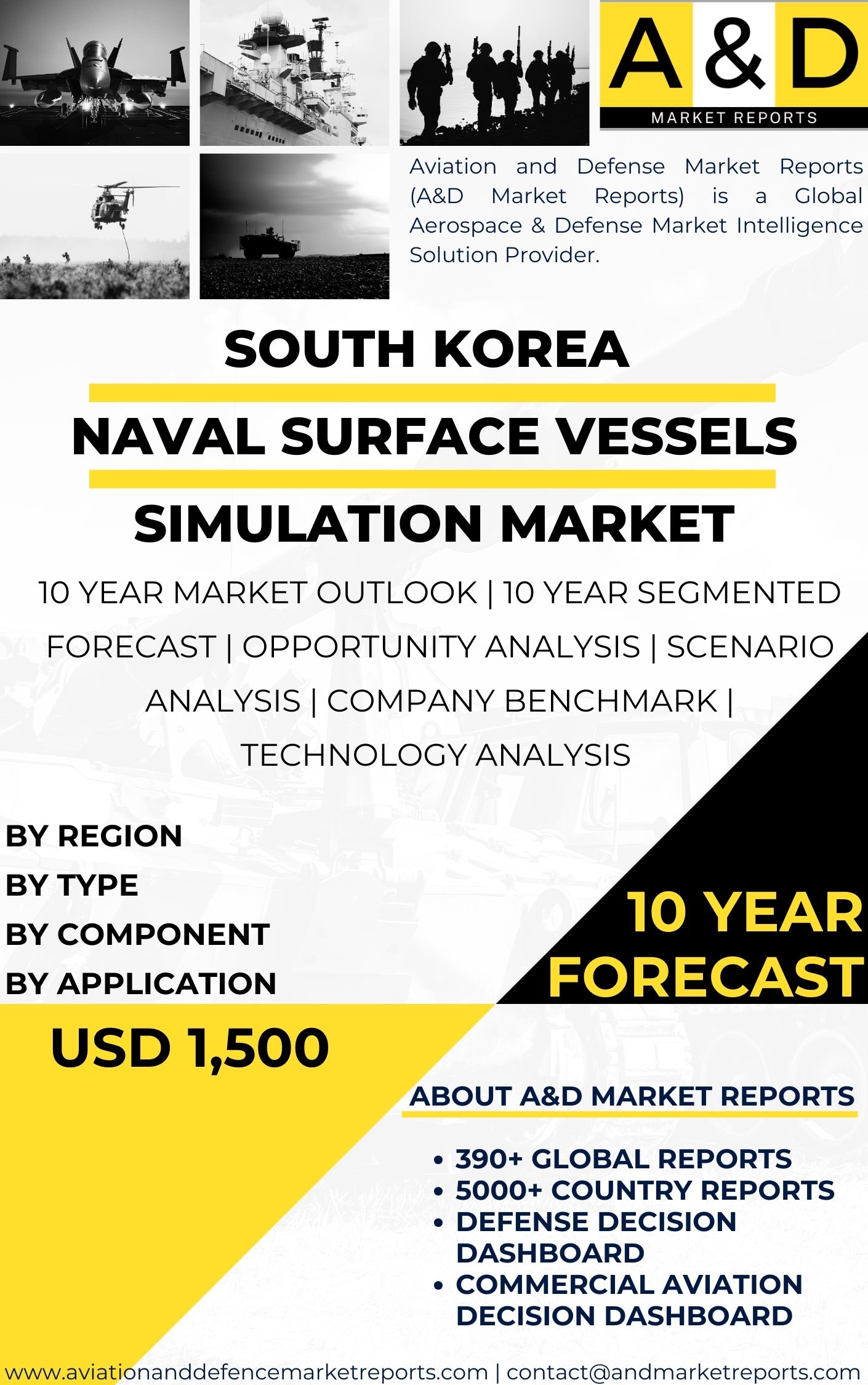
South Korea Naval Surface Vessels Simulation Market

$1,500.00

Enquire Now

The naval surface vessels simulation market in South Korea is an increasingly vital segment supporting the nation?s maritime defense and naval operational readiness. These simulation systems replicate the complex operational environment of surface fleets, enabling realistic training for navigation, combat tactics, command decision-making, and multi-ship coordination across a variety of platforms including destroyers, frigates, corvettes, and patrol vessels.

Go To Global Report Page Track this market real time on DDD

Description

The naval surface vessels simulation market in South Korea is an increasingly vital segment supporting the nation?s maritime defense and naval operational readiness. These simulation systems replicate the complex operational environment of surface fleets, enabling realistic training for navigation, combat tactics, command decision-making, and multi-ship coordination across a variety of platforms including destroyers, frigates, corvettes, and patrol vessels.

South Korea?s strategic maritime position, regional security dynamics, and ambitions for a blue-water navy drive demand for high fidelity, scenario-based simulation that incorporates advanced virtual reality (VR), augmented reality (AR), and mixed reality (MR) technologies. These technologies allow naval personnel to rehearse surface warfare, anti-aircraft defense, anti-submarine tactics, and humanitarian support missions in a controlled, cost-efficient manner.

Integration of artificial intelligence (AI), cloud computing, and networked simulation ensures multi-domain operations training involving air, surface, and subsurface elements. The modular designs of training simulators facilitate rapid scenario adaptation, crew proficiency tracking, and interoperability testing with allied navies.

The South Korean defense industry collaborates with academic and international partners to develop indigenous technologies, emphasizing environment realism, operator safety, seamless hardware-software integration, and sustainability with energy-efficient platforms.

Challenges include high integration cost with legacy vessels, ensuring multi-vendor simulation interoperability, and replicating quick-evolving maritime threats. Nevertheless, strong government support, export potential, and ongoing fleet modernization programs foresee promising growth for this market.

Overall, South Korea?s naval surface vessels simulation market embodies a sophisticated ecosystem leveraging advanced technologies to maintain maritime superiority, operational effectiveness, and global competitiveness.

Table of content

Table Of Contents

1 Market Introduction

1.1 Market Introduction
1.2 Market Definition
1.3 Market Segmentation
1.4 10 Year Market Outlook

2 Market Technologies

3 Global Market Forecast

3.1 Global Market Forecast
3.2 By Type
3.3 By Component

4 APAC Market Trends & Forecast

4.1 Drivers, Restraints And Challenges
4.2 PEST
4.3 Market Forecast
4.3.1 Market Forecast By Type
4.3.2 Market Forecast By Component
4.4 Scenario Analysis
4.5 Key Companies& Profiling

5 South Korea Analysis

5.1 Current Levels Of Technology Maturation In This Market
5.2 Market Forecast
5.2.1 Market Forecast By Component
5.2.2 Market Forecast By Type
5.3 Scenario Analysis
5.4 Country Defense Budget (Historical and 10- year forecast)
5.5 Defense Budget Category Spending- 10- year forecast
5.6 Procurement Analysis
5.7 EXIM Data
5.8 Patents

6 Opportunity Matrix

6.1 By Type
6.2 By Component

7 Scenario Analysis

7.1 Scenario 1

7.1.1 By Type (Scenario-1)
7.1.2 By Component (Scenario-1)

7.2 Scenario 2

7.2.1 By Type (Scenario-2)
7.2.2 By Component (Scenario-2)

8 Company Benchmark

9 Strategic Conclusions

10 About Aviation And Defense Market Reports

Segments

By Type
By Component

List of Tables

Table1: Global Market Forecast, Naval Surface Vessels Simulation Market
Table2: APAC Market Forecast, Naval Surface Vessels Simulation Market
Table3: APAC Market Forecast, By Type
Table4: APAC Market Forecast, By Component
Table5: APAC, Scenario Analysis
Table6: South Korea Market Forecast, Naval Surface Vessels Simulation Market
Table7: South Korea Market Forecast, By Type
Table8: South Korea Market Forecast, By Component
Table9: South Korea, Scenario Analysis
Table 10: South Korea Defense Budget 10 Year Forecast
Table 11: South Korea, Defense Budget Category Spending- 10- year forecast
Table 12: South Korea, Procurement Analysis
Table 13: South Korea, EXIM Data Analysis
Table 14: South Korea, Opportunity Analysis, By Type
Table 15: South Korea, Opportunity Analysis, By Component
Table 16: South Korea, Scenario Analysis, By Type
Table 17: South Korea, Scenario Analysis, By Component

List of Figures

Figure 1: Market Segmentation, South Korea Naval Surface Vessels Simulation Market
Figure 2: Key Technology Analysis, Naval Surface Vessels Simulation Market
Figure 3: Global Market Forecast, Naval Surface Vessels Simulation Market
Figure 4: APAC, Market Forecast, Naval Surface Vessels Simulation Market
Figure 5: APAC, Market Forecast, By Type
Figure 6: APAC, Market Forecast, By Component
Figure 7: APAC, Scenario Analysis
Figure 8: South Korea, Market Forecast, Naval Surface Vessels Simulation Market
Figure 9: South Korea, Market Forecast, By Type
Figure 10: South Korea, Market Forecast, By Component
Figure 11: South Korea, Scenario Analysis
Figure 12: South Korea, Defense Budget 10 Year Forecast
Figure 13: South Korea, Defense Budget Category Spending- 10- year forecast
Figure 14: South Korea, Procurement Analysis
Figure 15: South Korea, EXIM Data Analysis
Figure 16: South Korea, Opportunity Analysis, By Type
Figure 17: South Korea, Opportunity Analysis, By Component
Figure 18: South Korea, Scenario Analysis, By Type
Figure 19: South Korea, Scenario Analysis, By Component
Figure 20: Company Benchmark

Aviation and Defense Market Reports


TPA | TIA | Consulting | Market Reports | Defense Decision Dashboard


Our Defense Report - Our Team Has Worked on More Than 250+ Individual Products / Markets