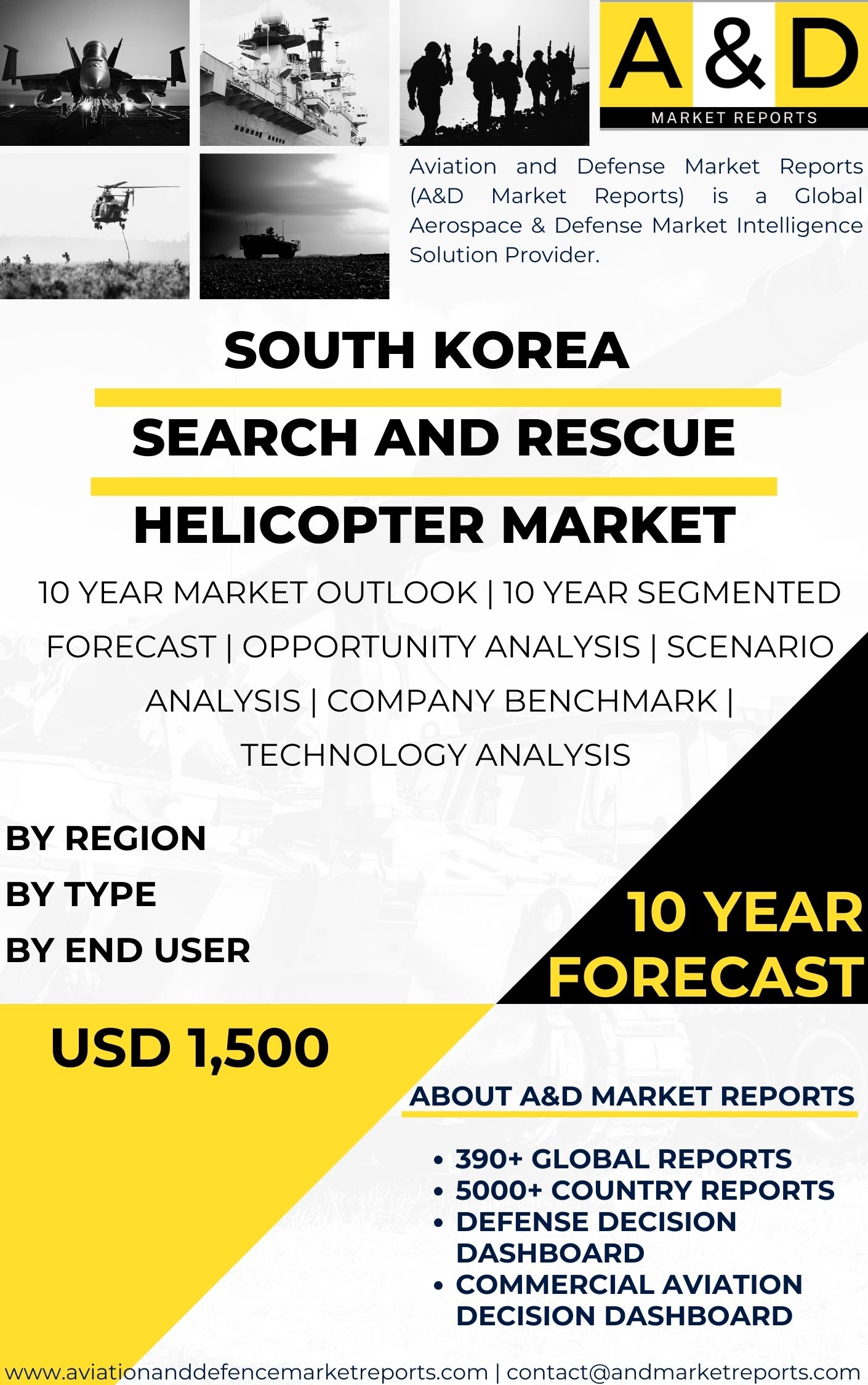
South Korea Search and Rescue Helicopter Market

$1,500.00

Enquire Now

The South Korea search and rescue (SAR) helicopter market is a critical segment of the country’s aviation and defense industries, providing essential air assets dedicated to saving lives and responding to emergencies in various terrains and conditions. SAR helicopters play a pivotal role in conducting search and rescue missions, medical evacuations, disaster response, and humanitarian assistance. South Korea’s focus on indigenous development, strategic partnerships, and technological innovation has positioned it as a major player in the global SAR helicopter market.

Go To Global Report Page Track this market real time on DDD

Description

South Korea Search and Rescue Helicopter Market Overview

The South Korea search and rescue helicopter market is a vital part of the country’s aviation and defense sectors. These helicopters support life-saving missions across land and sea.

They operate in harsh conditions and respond to emergencies quickly.

Role of SAR Helicopters in Emergency Operations

Life-Saving Capabilities

Search and rescue helicopters help locate and recover people in danger. They support medical evacuation, disaster relief, and rescue missions.

Their speed and flexibility make them essential in critical situations.

Operations in Challenging Terrain

SAR helicopters operate in mountains, forests, and coastal regions. They reach areas that ground teams cannot access easily.

Indigenous Development in the South Korea SAR Helicopter Market

Domestic Manufacturing Progress

Indigenous development plays a major role in the South Korea search and rescue helicopter market. Korea Aerospace Industries (KAI) leads many development programs.

These helicopters meet the needs of both defense and civil agencies.

Benefits of Local Production

Local manufacturing improves supply security. It also allows faster upgrades and better system integration.

Military Use of Search and Rescue Helicopters

Support for Defense Operations

The South Korean military uses SAR helicopters for rescue and recovery missions. They support training exercises and emergency response.

These helicopters also assist during natural disasters.

Personnel Recovery Missions

SAR helicopters recover injured or stranded personnel. They operate in difficult and hostile environments when needed.

Civilian Applications of SAR Helicopters

Support for Public Safety Agencies

Civil agencies rely on SAR helicopters for emergency response. The Korea Coast Guard and National Fire Agency are key users.

They respond to maritime accidents, mountain rescues, and urban emergencies.

Disaster and Medical Response

SAR helicopters transport injured people quickly. They provide rapid support during floods, fires, and earthquakes.

Technology and Innovation in SAR Helicopters

Research and Development Focus

South Korea invests heavily in research and development. This improves helicopter range, endurance, and reliability.

Advanced sensors and communication systems enhance mission success.

Improved Situational Awareness

Modern SAR helicopters use radar and imaging systems. These tools help crews locate survivors faster.

Strategic Partnerships and Collaboration

Technology Integration

Partnerships with international manufacturers support system upgrades. These collaborations improve helicopter performance.

They also enhance mission flexibility.

Training and Skill Development

Pilot and Crew Training

Training is critical in the South Korea search and rescue helicopter market. Pilots train for complex rescue scenarios.

Crews also practice medical evacuation procedures.

Operational Readiness

Regular training improves safety and response time. It prepares teams for real emergencies.

Safety and Maintenance Standards

Focus on Airworthiness

Safety remains a top priority in SAR operations. South Korea follows strict maintenance standards.

These rules ensure helicopter reliability and crew safety.

Future Outlook of the South Korea Search and Rescue Helicopter Market

The South Korea search and rescue helicopter market will continue to grow. Demand for emergency response and disaster relief is rising.

SAR helicopters will remain essential for public safety and national resilience.
Table of content

Table Of Contents

1 Market Introduction

1.1 Market Introduction
1.2 Market Definition
1.3 Market Segmentation
1.4 10 Year Market Outlook

2 Market Technologies

3 Global Market Forecast

3.1 Global Market Forecast
3.2 By Type
3.3 By End User

4 APAC Market Trends & Forecast

4.1 Drivers, Restraints And Challenges
4.2 PEST
4.3 Market Forecast
4.3.1 Market Forecast By Type
4.3.2 Market Forecast By End User
4.4 Scenario Analysis
4.5 Key Companies& Profiling

5 South Korea Analysis

5.1 Current Levels Of Technology Maturation In This Market
5.2 Market Forecast
5.2.1 Market Forecast By Type
5.2.2 Market Forecast By End User
5.3 Scenario Analysis
5.4 Country Defense Budget (Historical and 10- year forecast)
5.5 Defense Budget Category Spending- 10- year forecast
5.6 Procurement Analysis
5.7 EXIM Data
5.8 Patents

6 Opportunity Matrix

6.1 By Type
6.2 By End User

7 Scenario Analysis

7.1 Scenario 1

7.1.1 By Type (Scenario-1)
7.1.2 By End User (Scenario-1)

7.2 Scenario 2

7.2.1 By Type (Scenario-2)
7.2.2 By End User (Scenario-2)

8 Company Benchmark

9 Strategic Conclusions

10 About Aviation And Defense Market Reports

Segments

By Type
By End User

List of Tables

Table1: Global Market Forecast, South Korea Search and Rescue Helicopter Market
Table2: APAC Market Forecast, South Korea Search and Rescue Helicopter Market
Table3: APAC Market Forecast, By Type
Table4: APAC Market Forecast, By End User
Table5: APAC, Scenario Analysis
Table6: South Korea Market Forecast, South Korea Search and Rescue Helicopter Market
Table7: South Korea Market Forecast, By Type
Table8: South Korea Market Forecast, By End User
Table9: South Korea, Scenario Analysis
Table 10: South Korea Defense Budget 10 Year Forecast
Table 11: South Korea, Defense Budget Category Spending- 10- year forecast
Table 12: South Korea, Procurement Analysis
Table 13: South Korea, EXIM Data Analysis
Table 14: South Korea, Opportunity Analysis, By Type
Table 15: South Korea, Opportunity Analysis, By End User
Table 16: South Korea, Scenario Analysis, By Type
Table 17: South Korea, Scenario Analysis, By End User

List of Figures

Figure 1: Market Segmentation, South Korea Search and Rescue Helicopter Market
Figure 2: Key Technology Analysis, South Korea Search and Rescue Helicopter Market
Figure 3: Global Market Forecast, South Korea Search and Rescue Helicopter Market
Figure 4: APAC, Market Forecast, South Korea Search and Rescue Helicopter Market
Figure 5: APAC, Market Forecast, By Type
Figure 6: APAC, Market Forecast, By End User
Figure 7: APAC, Scenario Analysis
Figure 8: South Korea, Market Forecast, South Korea Search and Rescue Helicopter Market
Figure 9: South Korea, Market Forecast, By Type
Figure 10: South Korea, Market Forecast, By End User
Figure 11: South Korea, Scenario Analysis
Figure 12: South Korea, Defense Budget 10 Year Forecast
Figure 13: South Korea, Defense Budget Category Spending- 10- year forecast
Figure 14: South Korea, Procurement Analysis
Figure 15: South Korea, EXIM Data Analysis
Figure 16: South Korea, Opportunity Analysis, By Type
Figure 17: South Korea, Opportunity Analysis, By End User
Figure 18: South Korea, Scenario Analysis, By Type
Figure 19: South Korea, Scenario Analysis, By End User
Figure 20: Company Benchmark

Aviation and Defense Market Reports


TPA | TIA | Consulting | Market Reports | Defense Decision Dashboard


Our Defense Report - Our Team Has Worked on More Than 250+ Individual Products / Markets