
Description
South Korea Steel Aerospace and Defense Market Overview
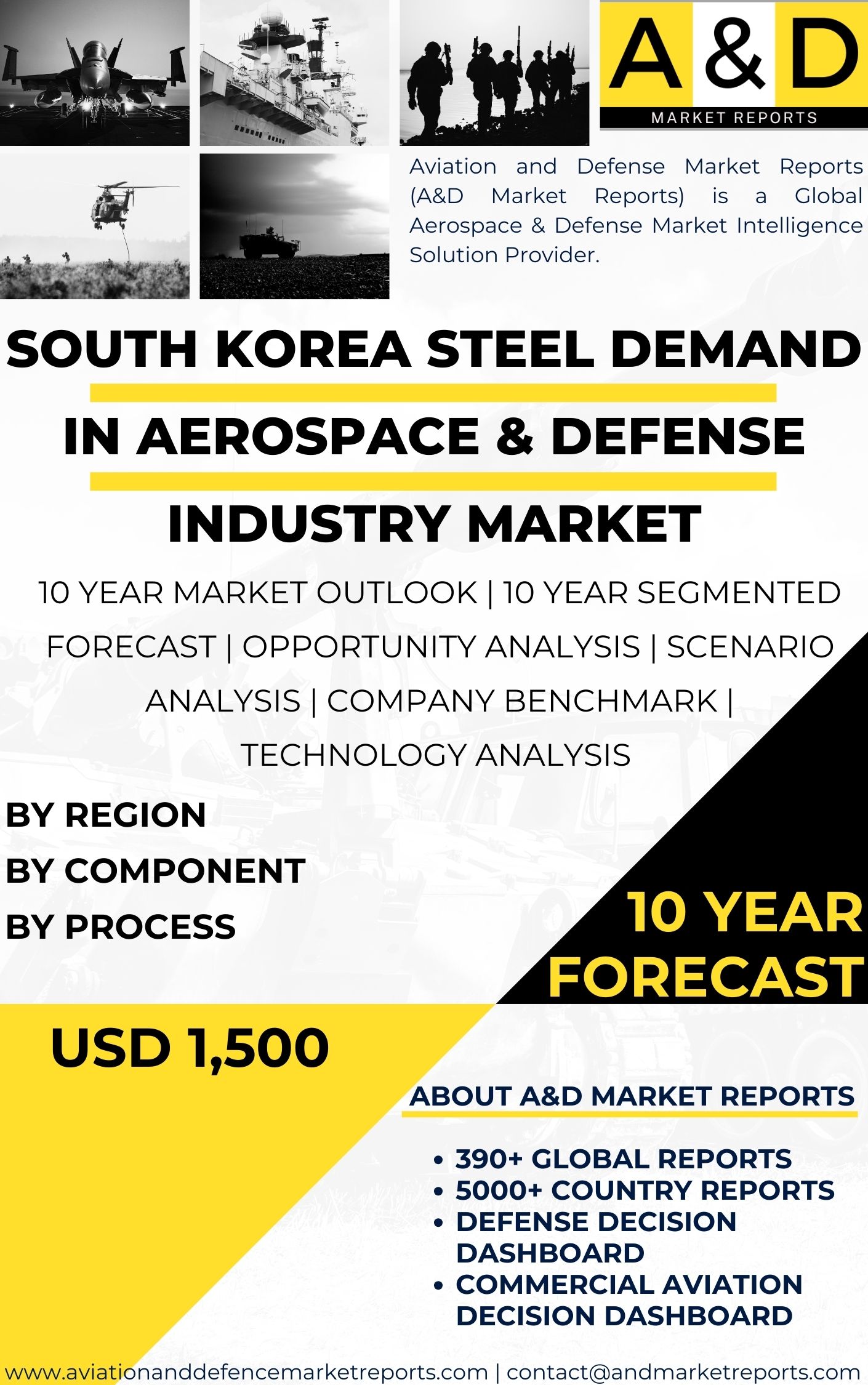
The South Korea Steel demand is expanding steadily as the country strengthens its aerospace manufacturing capabilities and defense production infrastructure. Steel remains one of the most important materials used across military and aerospace applications because of its exceptional strength, durability, versatility, and cost-effectiveness. The material supports the construction of fighter aircraft components, naval vessels, armored vehicles, missile launch systems, military infrastructure, and various support equipment. As South Korea continues to invest in defense modernization, indigenous platform development, and export-oriented manufacturing, demand for specialized aerospace and defense-grade steel continues to increase. This growth is further supported by technological advancements and the country’s commitment to maintaining a strong domestic industrial base.
Defense Collaboration Driving Steel Demand
International defense cooperation plays a significant role in driving steel demand within South Korea’s aerospace and defense sectors. The country actively participates in joint development programs, technology partnerships, and multinational defense projects that require high-quality structural materials. Steel is widely used in these initiatives because it offers excellent load-bearing capability, structural stability, and long-term reliability under demanding operational conditions. Furthermore, collaborative programs often require large-scale production of military components and systems, creating additional demand for specialized steel products. As defense partnerships continue to expand, the South Korea Steel Aerospace and Defense Market is expected to benefit from increased manufacturing activity and higher material consumption.
Indigenous Manufacturing and Self-Reliance
Self-reliance remains a major strategic objective for South Korea’s defense industry. Domestic companies continue to develop and manufacture advanced military platforms, including fighter aircraft, naval vessels, armored vehicles, missile systems, and unmanned platforms. Steel serves as a fundamental material in the production of these complex systems due to its strength, durability, and adaptability. By expanding domestic steel production and processing capabilities, South Korea reduces dependence on foreign suppliers while strengthening supply chain security. In addition, local manufacturing improves defense readiness by ensuring consistent access to critical materials. This focus on indigenous production continues to support the long-term growth of the South Korea Steel Aerospace and Defense Market.
Advanced Steel Alloys for Military Use
Research and development efforts are driving innovation in advanced steel alloys designed specifically for aerospace and defense applications. These specialized materials offer improved resistance to corrosion, high temperatures, fatigue, and ballistic threats. Advanced steel alloys are increasingly used in military vehicles, naval vessels, structural aircraft components, protective systems, and mission-critical equipment. Furthermore, manufacturers continue to develop lighter and stronger steel grades that enhance platform performance without compromising structural integrity. These innovations improve operational effectiveness while supporting the evolving requirements of modern military systems across air, land, sea, and space domains.
Aerospace Applications of Defense-Grade Steel
Although lightweight materials such as composites and titanium are increasingly used in aerospace manufacturing, steel remains essential for many aircraft components. Landing gear systems, engine mounts, structural supports, fasteners, and critical load-bearing assemblies often rely on high-strength steel due to its exceptional mechanical properties. Aerospace-grade steel provides the durability required to withstand repeated operational stress and extreme environmental conditions. Moreover, the expansion of domestic aerospace programs and maintenance activities continues to generate demand for specialized steel products. As South Korea advances its aviation and space ambitions, steel will remain a key material within the aerospace value chain.
Naval and Armored Vehicle Applications
Naval platforms and armored military vehicles represent major consumers of defense-grade steel in South Korea. Warships, submarines, patrol vessels, and amphibious platforms require high-strength steel to withstand harsh maritime environments and operational stresses. Similarly, armored vehicles depend on specialized steel for protection against ballistic threats while maintaining structural integrity. Advances in armor technology have led to the development of stronger and lighter steel solutions that improve survivability and mobility. As naval modernization and land force upgrades continue, demand for advanced military steel products is expected to remain strong.
Technology Innovation and Material Development
Technology innovation is transforming the South Korea Steel Aerospace and Defense Market. Manufacturers are investing in advanced metallurgical processes, precision manufacturing techniques, and digital quality control systems to improve material performance. New production methods enhance strength, toughness, and durability while reducing manufacturing defects. In addition, data-driven testing and simulation tools help engineers evaluate material performance under realistic operational conditions. These advancements improve product quality, support certification requirements, and strengthen South Korea’s competitiveness in global aerospace and defense markets.
Future Outlook of the South Korea Steel Aerospace and Defense Market
The South Korea Steel Aerospace and Defense Market is expected to maintain steady growth as defense modernization programs, aerospace expansion, and indigenous manufacturing initiatives continue. Demand for advanced steel products will rise alongside investments in fighter aircraft, naval vessels, armored platforms, missile systems, and emerging defense technologies. Furthermore, ongoing research into high-performance alloys and advanced manufacturing processes will create new opportunities for innovation and market expansion. With strong government support, a growing industrial base, and increasing export ambitions, South Korea is well positioned to strengthen its role as a leading producer and user of aerospace and defense-grade steel in the coming years.