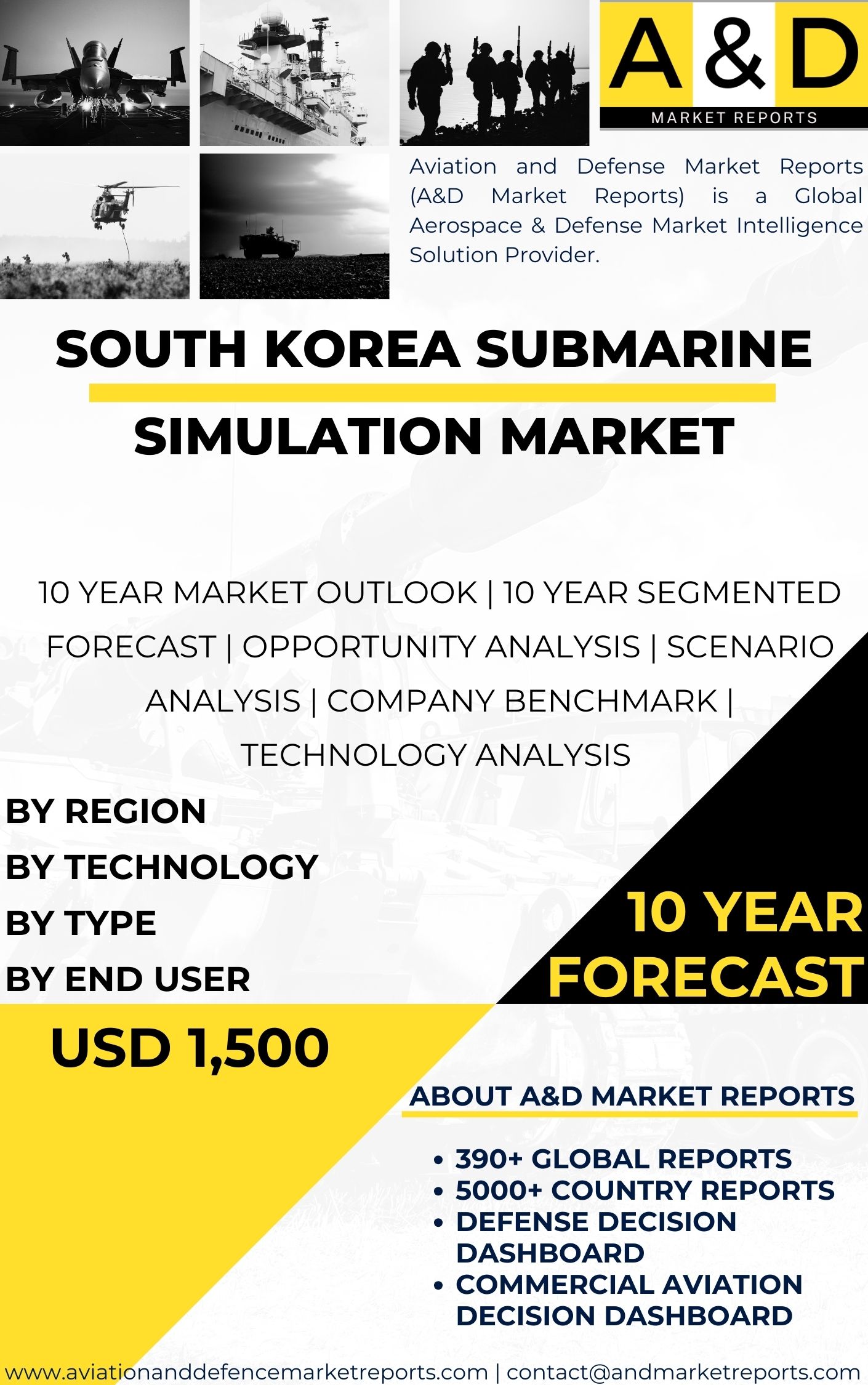
South Korea Submarine Simulation Market

$1,500.00

Enquire Now

The submarine simulation market in South Korea is emerging as a significant segment within the broader defense and immersive simulation industry, driven by the country’s increasing focus on advancing its naval capabilities. South Korea, with its strategic geopolitical position and growing maritime interests, is prioritizing the development of sophisticated submarine technologies and the training systems necessary to operate them effectively. The evolving maritime security environment in the Asia-Pacific region has made submarine operations critical, which in turn propels the demand for advanced simulation solutions that can replicate the complexities of underwater warfare scenarios.

Go To Global Report Page Track this market real time on DDD

Description

The submarine simulation market in South Korea is emerging as a significant segment within the broader defense and immersive simulation industry, driven by the country’s increasing focus on advancing its naval capabilities. South Korea, with its strategic geopolitical position and growing maritime interests, is prioritizing the development of sophisticated submarine technologies and the training systems necessary to operate them effectively. The evolving maritime security environment in the Asia-Pacific region has made submarine operations critical, which in turn propels the demand for advanced simulation solutions that can replicate the complexities of underwater warfare scenarios.

In South Korea, the submarine simulation market benefits from the nation’s broader immersive simulation market, which is experiencing robust growth. The immersive simulation market in South Korea generated substantial revenue in recent years and is forecasted to continue its rapid expansion with a high compound annual growth rate through 2030. Within this context, submarine simulation forms an essential part of the defense training ecosystem, leveraging advances in hardware and software technologies to create realistic and high-fidelity training environments. These environments help submarine crews enhance their operational readiness, tactical skills, and decision-making under pressure while mitigating risks associated with live training exercises.

South Korea’s defense industry is actively investing in next-generation submarine technologies, including core underwater systems such as advanced sonar, acoustic stealth capabilities, and materials engineered for extreme underwater conditions. These technologies are integral to the effectiveness of submarine simulation systems, as realistic simulation depends on accurately modeling the dynamic underwater environment, acoustic signals, vessel stealth characteristics, and sensor feedback. The country’s Ministry of National Defense and related agencies have hosted forums and seminars to advance underwater core technology research and development, reflecting the national priority placed on strengthening submarine capabilities and associated training infrastructure.

The submarine simulation systems in South Korea incorporate state-of-the-art technologies such as virtual reality (VR), artificial intelligence (AI), and machine learning, which are transforming training processes by providing immersive, adaptive, and interactive scenarios. These simulations allow operators to experience complex naval combat situations including sonar detection and evasion, missile launches, and covert operational tactics in a controlled and safe environment. The use of AI enhances simulation by generating realistic and unpredictable enemy behaviors, pushing trainees to improve their tactical adaptability and real-time decision-making competencies.

South Korea’s submarine simulation market is also shaped by the modernization and expansion of the country?s submarine fleet. As South Korea develops more sophisticated submarines with enhanced stealth features, automation, and firepower, the need for comprehensive and advanced simulation solutions grows correspondingly. These simulators support both individual skill development and full mission rehearsals, encompassing command and control functionalities, sensor management, and coordination with allied naval forces. The simulators also facilitate joint training exercises, improving interoperability with partner navies in multinational operations. This aspect is increasingly important in Korea’s strategic context, given regional security dynamics and alliances.

The economic impact and potential export market for South Korean submarine simulation technologies are notable. The country aims to position itself as a leader in submarine manufacturing and related defense technologies globally. By investing in simulation technology, South Korea is not only enhancing its defense readiness but also increasing the export competitiveness of its submarine platforms. Simulation technology plays a critical role in this by enabling prospective buyers to understand and train on complex systems without operational risk.

Globally and regionally, the submarine simulation market growth is driven by similar strategic and technological trends, such as the need for stealth, operational complexity, and the high cost of live training. In South Korea, these factors are magnified by geopolitical tensions, rapidly evolving naval threats, and ambition to lead in underwater defense technology. Simulation systems help bridge training gaps caused by the physical and environmental constraints of operational submarines and support sustained personnel proficiency as naval forces cycle through new technology upgrades.

In conclusion, the submarine simulation market in South Korea is poised for significant growth fueled by national defense priorities, technological advancements, and regional security demands. The integration of cutting-edge simulation technology with next-generation submarine platforms enhances training effectiveness, readiness, and strategic deterrence, making it a cornerstone of South Korea’s maritime defense strategy. This growth is also supported by the country’s flourishing immersive simulation industry, underlining South Korea’s commitment to leveraging sophisticated digital tools to maintain a competitive edge in undersea warfare training and operations.

Table of content

Table Of Contents

1 Market Introduction

1.1 Market Introduction
1.2 Market Definition
1.3 Market Segmentation
1.4 10 Year Market Outlook

2 Market Technologies

3 Global Market Forecast

3.1 Global Market Forecast
3.2 By Technology
3.3 By Type

4 APAC Market Trends & Forecast

4.1 Drivers, Restraints And Challenges
4.2 PEST
4.3 Market Forecast
4.3.1 Market Forecast By Technology
4.3.2 Market Forecast By Type
4.4 Scenario Analysis
4.5 Key Companies& Profiling

5 South Korea Analysis

5.1 Current Levels Of Technology Maturation In This Market
5.2 Market Forecast
5.2.1 Market Forecast By Technology
5.2.2 Market Forecast By Type
5.3 Scenario Analysis
5.4 Country Defense Budget (Historical and 10- year forecast)
5.5 Defense Budget Category Spending- 10- year forecast
5.6 Procurement Analysis
5.7 EXIM Data
5.8 Patents

6 Opportunity Matrix

6.1 By Technology
6.2 By Type

7 Scenario Analysis

7.1 Scenario 1

7.1.1 By Technology (Scenario-1)
7.1.2 By Type (Scenario-1)

7.2 Scenario 2

7.2.1 By Technology (Scenario-2)
7.2.2 By Type (Scenario-2)

8 Company Benchmark

9 Strategic Conclusions

10 About Aviation And Defense Market Reports

Segments

By Technology
By Type

List of Tables

Table1: Global Market Forecast, Submarine Simulation Market
Table2: APAC Market Forecast, Submarine Simulation Market
Table3: APAC Market Forecast, By Technology
Table4: APAC Market Forecast, By Type
Table5: APAC, Scenario Analysis
Table6: South Korea Market Forecast, Submarine Simulation Market
Table7: South Korea Market Forecast, By Technology
Table8: South Korea Market Forecast, By Type
Table9: South Korea, Scenario Analysis
Table 10: South Korea Defense Budget 10 Year Forecast
Table 11: South Korea, Defense Budget Category Spending- 10- year forecast
Table 12: South Korea, Procurement Analysis
Table 13: South Korea, EXIM Data Analysis
Table 14: South Korea, Opportunity Analysis, By Technology
Table 15: South Korea, Opportunity Analysis, By Type
Table 16: South Korea, Scenario Analysis, By Technology
Table 17: South Korea, Scenario Analysis, By Type

List of Figures

Figure 1: Market Segmentation, South Korea Submarine Simulation Market
Figure 2: Key Technology Analysis, Submarine Simulation Market
Figure 3: Global Market Forecast, Submarine Simulation Market
Figure 4: APAC, Market Forecast, Submarine Simulation Market
Figure 5: APAC, Market Forecast, By Technology
Figure 6: APAC, Market Forecast, By Type
Figure 7: APAC, Scenario Analysis
Figure 8: South Korea, Market Forecast, Submarine Simulation Market
Figure 9: South Korea, Market Forecast, By Technology
Figure 10: South Korea, Market Forecast, By Type
Figure 11: South Korea, Scenario Analysis
Figure 12: South Korea, Defense Budget 10 Year Forecast
Figure 13: South Korea, Defense Budget Category Spending- 10- year forecast
Figure 14: South Korea, Procurement Analysis
Figure 15: South Korea, EXIM Data Analysis
Figure 16: South Korea, Opportunity Analysis, By Technology
Figure 17: South Korea, Opportunity Analysis, By Type
Figure 18: South Korea, Scenario Analysis, By Technology
Figure 19: South Korea, Scenario Analysis, By Type
Figure 20: Company Benchmark

Aviation and Defense Market Reports


TPA | TIA | Consulting | Market Reports | Defense Decision Dashboard


Our Defense Report - Our Team Has Worked on More Than 250+ Individual Products / Markets