
Description
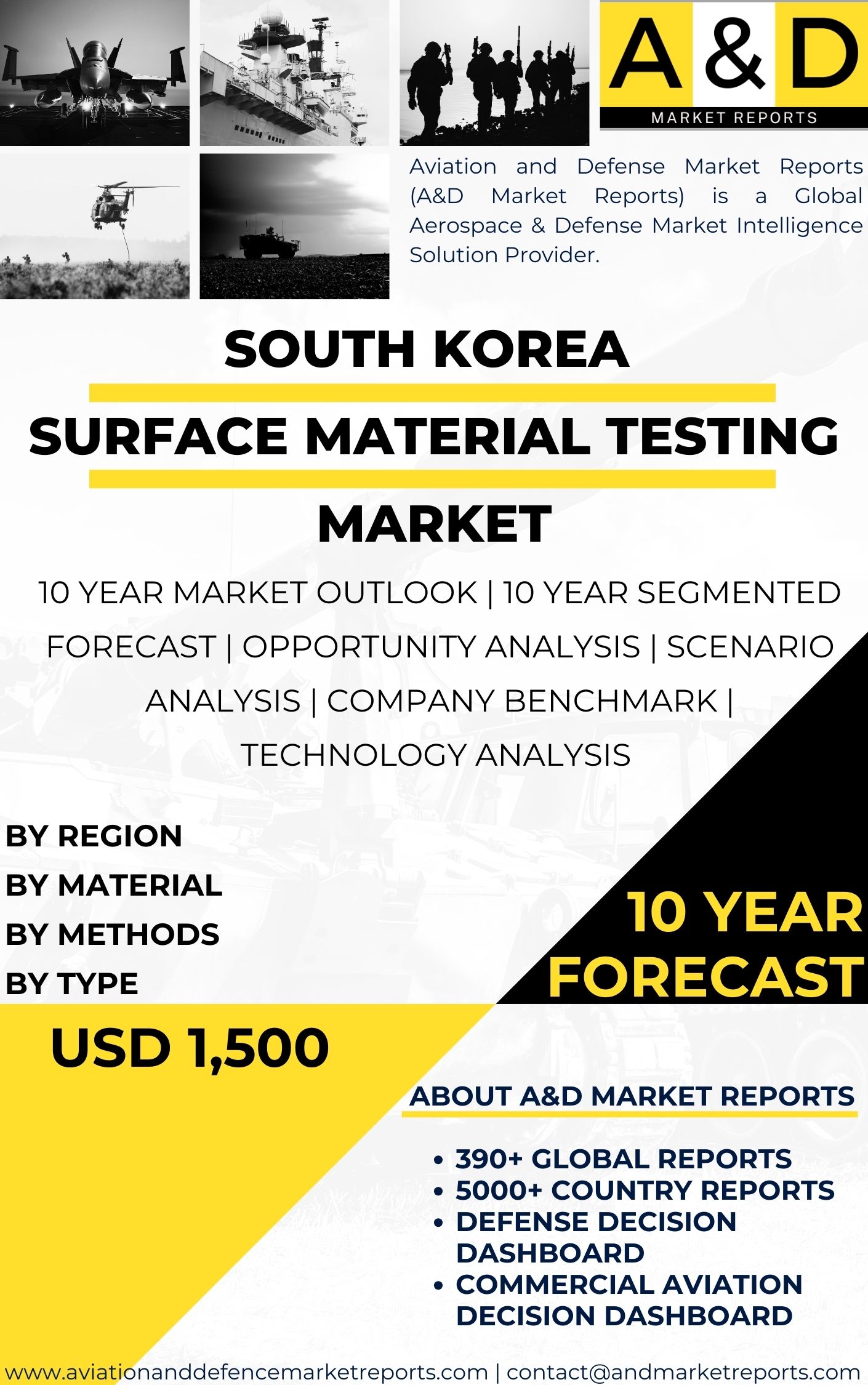
Surface Material Testing Market in South Korea
The Surface material testing in South Korea is a critical part of the aerospace and defense materials ecosystem. It supports the testing of materials used in aircraft, naval platforms, and defense systems. Reliable surface testing ensures strength, durability, and safety. These factors are essential for mission-critical platforms. Growing defense programs continue to increase demand.
South Korea focuses strongly on advanced aerospace and defense manufacturing. This focus drives the need for accurate material validation. Surface testing helps confirm performance in harsh environments. It also improves lifecycle reliability of components. As a result, testing capabilities are expanding steadily.
Market Size and Growth Drivers
The aerospace and defense materials sector in South Korea reached nearly USD 445 million in 2024. It is expected to grow at a strong pace through 2033. Demand for lightweight and high-strength materials fuels this growth. Manufacturers seek better performance with lower weight. Surface testing plays a key role in this shift.
Advanced alloys and composites drive testing demand. Titanium, aluminum, and thermoplastic composites see wide adoption. These materials improve fuel efficiency and payload capacity. However, they require strict surface validation. Testing ensures structural integrity and long-term durability.
Surface Material Testing Technologies in South Korea
Mechanical and Structural Testing Methods
Surface material testing includes tensile and compression tests. Hardness and fatigue testing measure durability under stress. These tests reveal material strength limits. Engineers rely on them for certification approval. They also support design optimization.
Microscopic analysis studies surface structure and bonding. This helps detect defects early. Surface uniformity remains a critical factor. These methods reduce failure risk in service. Testing improves overall system reliability.
Non-Destructive Testing Techniques
Non-destructive testing plays a vital role in South Korea. Ultrasonic testing detects internal flaws. X-ray and thermal imaging identify hidden damage. These methods protect high-value components. They also reduce material waste.
Non-destructive techniques support repeated inspections. They help track material degradation over time. This is essential for defense platforms. Safety and compliance depend on these checks. Adoption continues to rise across industries.
Defense and Aerospace Applications
Fighter Aircraft and Naval Platforms
The surface material testing market in South Korea supports major defense programs. Fighter aircraft like the KF-21 require strict material validation. Airframes and engine parts face extreme stress. Testing ensures performance under combat conditions. Survivability depends on material quality.
Naval platforms also rely on surface testing. Hull coatings must resist corrosion and impact. Testing confirms durability in marine environments. These checks extend service life. Maintenance costs also reduce over time.
Unmanned and Stealth Systems
Unmanned systems use advanced composite materials. Surface testing ensures bonding strength and fatigue life. Lightweight materials improve endurance. However, they require strict quality control. Testing guarantees mission reliability.
Stealth platforms use radar-absorbent materials. Surface properties directly affect detection levels. Testing verifies coating effectiveness. This supports survivability in hostile environments. Demand for such testing continues to grow.
Role of Research and Government Support
South Korea invests heavily in testing infrastructure. Research institutes work closely with industry. Joint programs develop new testing standards. These efforts improve self-reliance. They also strengthen export readiness.
Government-backed initiatives encourage innovation. Testing labs adopt advanced equipment. Standards align with international defense requirements. This boosts confidence in domestic materials. The ecosystem continues to mature.
Challenges in the Surface Material Testing Market
High testing equipment costs remain a challenge. Advanced machines require large investments. Skilled personnel are also limited. Training takes time and resources. These factors slow rapid expansion.
Material complexity increases testing difficulty. New composites require updated protocols. Additive manufacturing introduces new variables. Testing methods must evolve quickly. Continuous innovation remains essential.
Technology Trends Shaping the Market
Automation is transforming surface testing. AI improves defect detection accuracy. Data analytics speeds up decision-making. Testing cycles become shorter. Productivity improves across facilities.
Digital twin technology supports predictive analysis. Engineers simulate material behavior before failure. This reduces physical testing load. Quality control becomes more precise. Adoption is steadily increasing.
Future Outlook of the Market
The surface material testing market in South Korea shows strong long-term potential. Aerospace and defense programs will sustain demand. Advanced materials will dominate future designs. Testing accuracy will become even more important. Investment levels are expected to remain high.
Innovation and collaboration will shape growth. Automated and intelligent testing will expand. Export-driven manufacturing will increase quality needs. The market will support national defense goals. South Korea is well positioned for continued progress.