South Korea Transport Aircraft Simulation Market

$1,500.00

Enquire Now

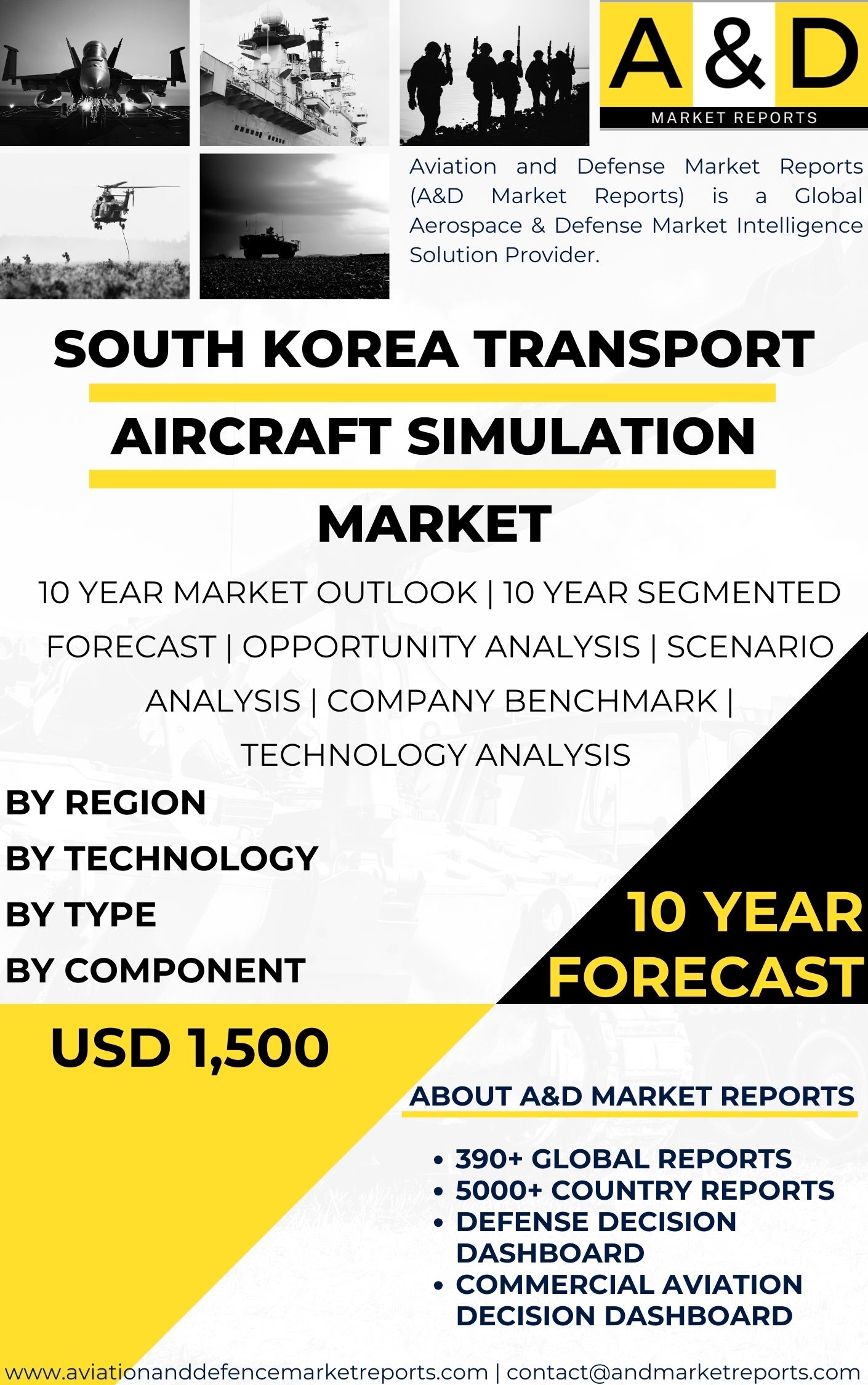
The transport aircraft simulation market in South Korea represents a vital segment within the nation?s aerospace training and defense readiness efforts. This market caters to the increasing need for advanced pilot training systems designed for large transport aircraft, which operate critical logistics, troop movement, and strategic airlift missions. Simulation is indispensable in enhancing pilot proficiency, reducing training costs, and ensuring operational safety across complex mission profiles.

Go To Global Report Page Track this market real time on DDD

Description

South Korea Transport Aircraft Simulation Market Overview

The South Korea transport aircraft simulation market supports pilot training and defense readiness. It focuses on large transport aircraft used for logistics and troop movement. Simulation helps pilots train safely and effectively.

These systems reduce training costs and improve mission success. They also support complex airlift operations.

Importance of Transport Aircraft Simulation Training

Transport aircraft fly long missions in demanding conditions. Pilots must manage cargo, crews, and systems at the same time. Simulation allows repeated training without real flight risk.

The South Korea transport aircraft simulation market improves pilot skills and operational safety. It also reduces aircraft wear and fuel use.

Advanced Simulator Technologies in South Korea

Modern simulators use high-quality visuals and full cockpit replicas. Motion platforms add realistic aircraft movement. Software modules match specific transport aircraft models.

Pilots train for cargo loading, aerial refueling, and formation flying. Emergency procedures and bad weather operations are also included.

Networked and Joint-Force Training

South Korea focuses on joint operations across its armed forces. Simulation systems support shared training exercises. These systems connect air, land, and naval units.

The South Korea transport aircraft simulation market benefits from virtual and augmented reality. These tools improve immersion and real-time scenario changes.

Indigenous Development and Industry Growth

Local aerospace firms develop certified simulation solutions. These systems meet strict safety and training standards. Indigenous production strengthens national capability.

South Korea is also expanding simulator exports. This supports long-term industry growth.

Regulatory Support and Training Standards

Government agencies promote simulation-based training. Regulations require simulator hours for certification and skill maintenance. These rules improve aviation safety.

Collaboration with universities and research centers supports innovation. Private technology firms also contribute.

Cost Efficiency and Sustainability

Simulation reduces fuel use and maintenance needs. This lowers environmental impact. It also extends aircraft service life.

Simulators support both military and commercial training needs. Growing air transport demand increases simulator use.

Market Challenges and Constraints

Full-flight simulators require high investment. Technology changes quickly. Systems must adapt to new aircraft and regulations.

Despite these challenges, demand continues to rise. Safety and efficiency remain top priorities.

Conclusion

The South Korea transport aircraft simulation market is essential to aviation safety and defense readiness. Advanced technology and strong policy support drive growth.

Simulation improves pilot performance and mission reliability. Continued investment will strengthen South Korea’s air transport capability and training excellence.
Table of content

Table Of Contents

1 Market Introduction

1.1 Market Introduction
1.2 Market Definition
1.3 Market Segmentation
1.4 10 Year Market Outlook

2 Market Technologies

3 Global Market Forecast

3.1 Global Market Forecast
3.2 By Type
3.3 By Component

4 APAC Market Trends & Forecast

4.1 Drivers, Restraints And Challenges
4.2 PEST
4.3 Market Forecast
4.3.1 Market Forecast By Type
4.3.2 Market Forecast By Component
4.4 Scenario Analysis
4.5 Key Companies& Profiling

5 South Korea Analysis

5.1 Current Levels Of Technology Maturation In This Market
5.2 Market Forecast
5.2.1 Market Forecast By Component
5.2.2 Market Forecast By Type
5.3 Scenario Analysis
5.4 Country Defense Budget (Historical and 10- year forecast)
5.5 Defense Budget Category Spending- 10- year forecast
5.6 Procurement Analysis
5.7 EXIM Data
5.8 Patents

6 Opportunity Matrix

6.1 By Type
6.2 By Component

7 Scenario Analysis

7.1 Scenario 1

7.1.1 By Type (Scenario-1)
7.1.2 By Component (Scenario-1)

7.2 Scenario 2

7.2.1 By Type (Scenario-2)
7.2.2 By Component (Scenario-2)

8 Company Benchmark

9 Strategic Conclusions

10 About Aviation And Defense Market Reports

Segments

By Type
By Component

List of Tables

Table1: Global Market Forecast, Transport Aircraft Simulation Market
Table2: APAC Market Forecast, Transport Aircraft Simulation Market
Table3: APAC Market Forecast, By Type
Table4: APAC Market Forecast, By Component
Table5: APAC, Scenario Analysis
Table6: South Korea Market Forecast, Transport Aircraft Simulation Market
Table7: South Korea Market Forecast, By Type
Table8: South Korea Market Forecast, By Component
Table9: South Korea, Scenario Analysis
Table 10: South Korea Defense Budget 10 Year Forecast
Table 11: South Korea, Defense Budget Category Spending- 10- year forecast
Table 12: South Korea, Procurement Analysis
Table 13: South Korea, EXIM Data Analysis
Table 14: South Korea, Opportunity Analysis, By Type
Table 15: South Korea, Opportunity Analysis, By Component
Table 16: South Korea, Scenario Analysis, By Type
Table 17: South Korea, Scenario Analysis, By Component

List of Figures

Figure 1: Market Segmentation, South Korea Transport Aircraft Simulation Market
Figure 2: Key Technology Analysis, Transport Aircraft Simulation Market
Figure 3: Global Market Forecast, Transport Aircraft Simulation Market
Figure 4: APAC, Market Forecast, Transport Aircraft Simulation Market
Figure 5: APAC, Market Forecast, By Type
Figure 6: APAC, Market Forecast, By Component
Figure 7: APAC, Scenario Analysis
Figure 8: South Korea, Market Forecast, Transport Aircraft Simulation Market
Figure 9: South Korea, Market Forecast, By Type
Figure 10: South Korea, Market Forecast, By Component
Figure 11: South Korea, Scenario Analysis
Figure 12: South Korea, Defense Budget 10 Year Forecast
Figure 13: South Korea, Defense Budget Category Spending- 10- year forecast
Figure 14: South Korea, Procurement Analysis
Figure 15: South Korea, EXIM Data Analysis
Figure 16: South Korea, Opportunity Analysis, By Type
Figure 17: South Korea, Opportunity Analysis, By Component
Figure 18: South Korea, Scenario Analysis, By Type
Figure 19: South Korea, Scenario Analysis, By Component
Figure 20: Company Benchmark

Aviation and Defense Market Reports


TPA | TIA | Consulting | Market Reports | Defense Decision Dashboard


Our Defense Report - Our Team Has Worked on More Than 250+ Individual Products / Markets