
Description
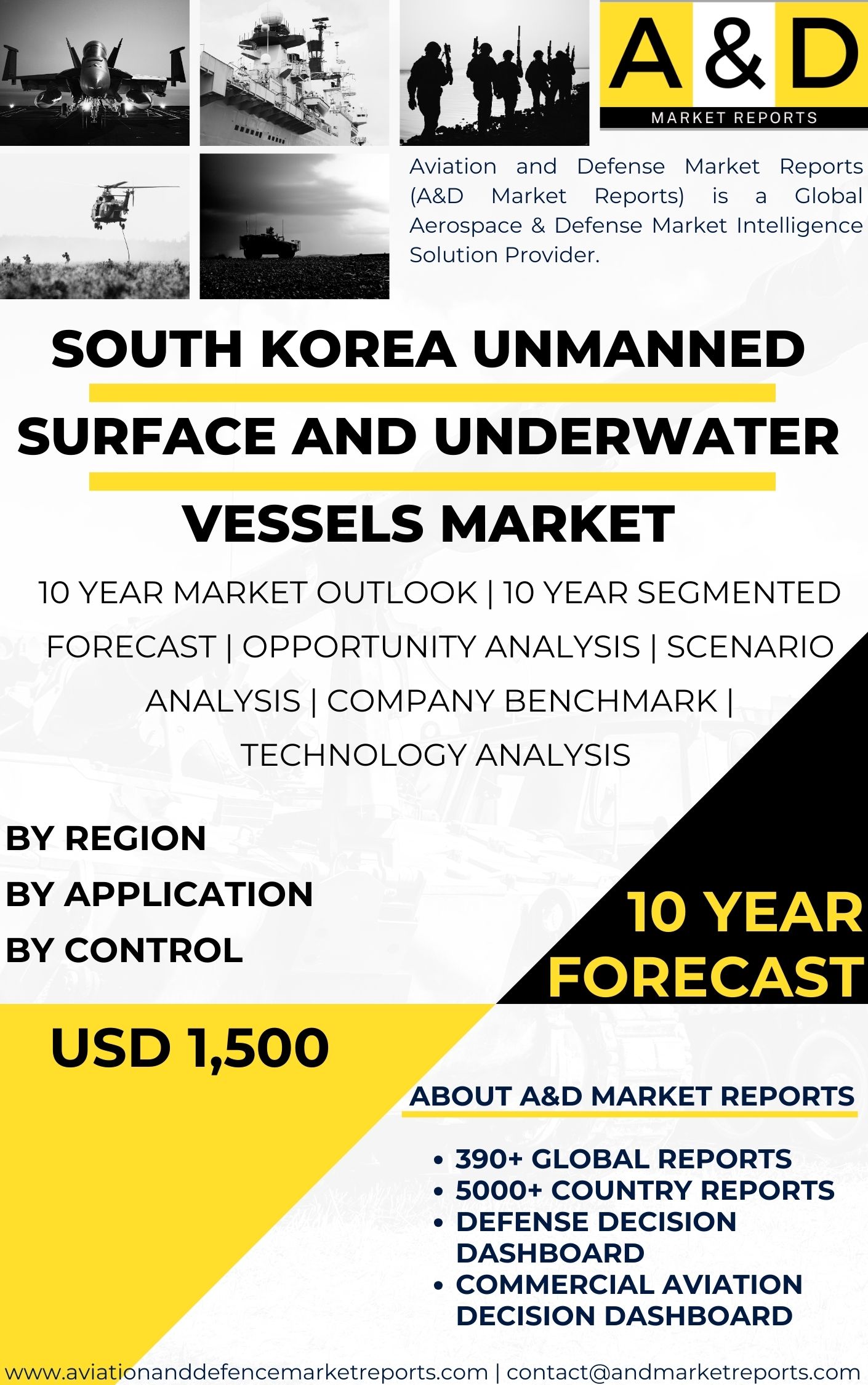
South Korea Unmanned Surface and Underwater Vessels Market Overview
The South Korea unmanned surface and underwater vessels market is a rapidly expanding segment of the defense and maritime security industry. It focuses on advanced autonomous systems designed to enhance naval operations, strengthen surveillance capabilities, and improve underwater situational awareness. Unmanned Surface Vessels (USVs) and Unmanned Underwater Vehicles (UUVs) are increasingly deployed for intelligence gathering, reconnaissance, mine countermeasures, and coastal security missions. Continuous indigenous innovation and strong technological development are driving market growth, while also reducing operational risks to naval personnel.
Applications of Unmanned Surface and Underwater Vessels
Unmanned surface and underwater vessels are designed to operate autonomously or with minimal human intervention, using advanced sensors, sonar systems, and mission-specific payloads. These platforms perform a wide range of missions, including maritime surveillance, underwater mapping, intelligence gathering, environmental monitoring, and mine detection. Their ability to operate in hazardous and hard-to-reach environments significantly improves mission safety and efficiency. With enhanced autonomy and real-time data transmission capabilities, these systems play a crucial role in improving decision-making and maritime domain awareness.
Indigenous Development in South Korea
The South Korea unmanned surface and underwater vessels market is strongly supported by domestic research, development, and manufacturing capabilities. Leading defense companies such as Hanwha Aerospace and LIG Nex1 are actively developing advanced USV and UUV platforms tailored to South Korea’s naval requirements. Indigenous development ensures greater operational reliability, secure supply chains, and reduced dependence on foreign technology. This focus on self-reliance also strengthens national defense capability and supports long-term technological sovereignty in maritime robotics.
Military Applications of Unmanned Vessels
The South Korean Navy extensively utilizes unmanned surface and underwater vessels to enhance maritime security and operational readiness. These systems are deployed for coastal surveillance, underwater reconnaissance, mine detection, and anti-submarine warfare support. Real-time data collection and transmission from these platforms improve situational awareness and enable faster, more informed decision-making. Their integration into naval operations significantly enhances mission success rates and strengthens South Korea’s maritime defense posture in contested waters.
Civilian Applications of USVs and UUVs
Beyond defense applications, unmanned surface and underwater vessels also serve important civilian roles in South Korea. UUVs are widely used in oceanographic research, underwater exploration, and environmental monitoring. These systems help collect valuable marine data for climate studies, resource mapping, and ecological assessments. The adaptation of military-grade technologies for civilian applications promotes innovation, supports marine industries, and strengthens South Korea’s broader ocean technology ecosystem.
Research and Development Initiatives
Research and development activities are a key driver of growth in the South Korea unmanned surface and underwater vessels market. Continuous investment is being made in improving autonomous navigation, endurance, sensor integration, and underwater communication systems. Advanced technologies such as artificial intelligence, machine learning, and real-time data analytics are being incorporated to enhance operational efficiency. These R&D efforts ensure that unmanned platforms can perform reliably in complex and harsh maritime environments while supporting future naval requirements.
Strategic Partnerships and Technology Integration
Strategic collaborations with international defense organizations and technology firms play an important role in advancing South Korea’s unmanned vessel capabilities. These partnerships enable technology transfer, joint development programs, and integration of advanced systems into domestic platforms. Cooperation also helps improve interoperability with allied naval forces and enhances operational effectiveness. Such partnerships accelerate innovation cycles and contribute to the rapid evolution of unmanned maritime technologies in South Korea.
Training, Safety, and Reliability
Effective training programs are essential for the successful deployment of unmanned surface and underwater vessels. Operators are trained in mission planning, system control, autonomous navigation, and emergency procedures. Strict safety protocols and maintenance standards are implemented to ensure reliable system performance during operations. Regular testing and system validation help minimize operational risks and ensure mission success in challenging maritime environments.
Conclusion
The South Korea unmanned surface and underwater vessels market plays a vital role in strengthening maritime security and modern naval capabilities. Indigenous development, technological innovation, and strategic partnerships collectively drive continuous advancement in this sector. Unmanned vessels significantly enhance surveillance, reconnaissance, and mine countermeasure operations while reducing risks to personnel. With sustained investment and innovation, South Korea is expected to remain a leader in unmanned maritime systems technology.