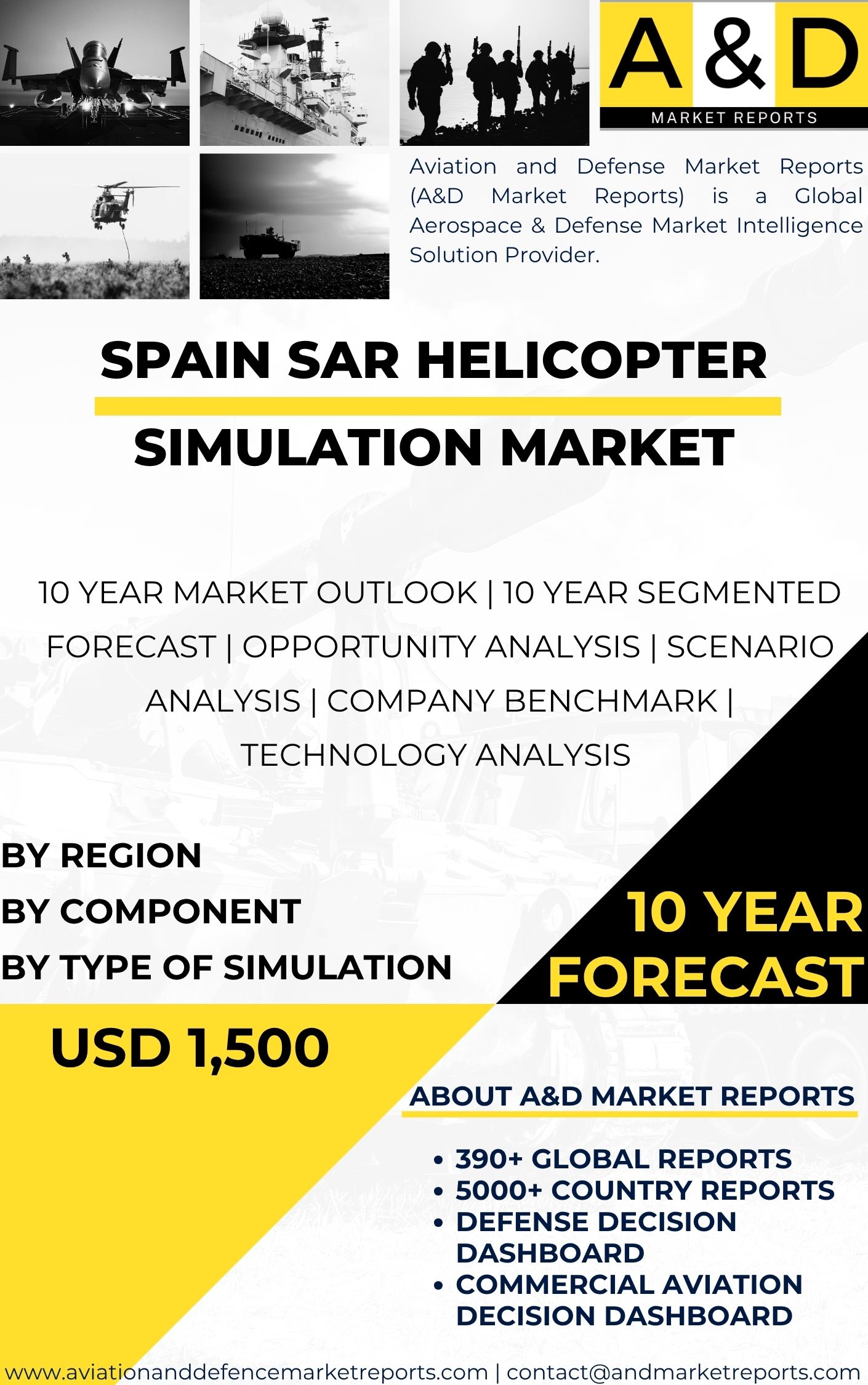
Spain SAR Helicopter Simulation Market

$1,500.00

Enquire Now

Spain?s search and rescue (SAR) helicopter simulation market represents a vital segment of the country?s aerospace and defense training ecosystem, reflecting the strategic importance of life-saving missions, emergency response operations, and operational preparedness. SAR helicopters play a critical role in Spain?s maritime, mountainous, and urban environments, supporting missions that include disaster relief, medical evacuation, maritime rescue, and search operations for missing persons. The SAR helicopter simulation market in Spain is driven by the need to train crews in realistic, high-pressure environments without risking personnel or expensive aircraft. These simulators enable operators to practice complex rescue maneuvers, navigation under adverse weather conditions, hoisting operations, and coordination with ground and maritime units, ensuring operational readiness in life-critical situations.

Go To Global Report Page Track this market real time on DDD

Description

Spain?s search and rescue (SAR) helicopter simulation market represents a vital segment of the country?s aerospace and defense training ecosystem, reflecting the strategic importance of life-saving missions, emergency response operations, and operational preparedness. SAR helicopters play a critical role in Spain?s maritime, mountainous, and urban environments, supporting missions that include disaster relief, medical evacuation, maritime rescue, and search operations for missing persons. The SAR helicopter simulation market in Spain is driven by the need to train crews in realistic, high-pressure environments without risking personnel or expensive aircraft. These simulators enable operators to practice complex rescue maneuvers, navigation under adverse weather conditions, hoisting operations, and coordination with ground and maritime units, ensuring operational readiness in life-critical situations.

The Spanish SAR helicopter simulation market includes a variety of training solutions ranging from full-motion flight simulators to fixed-base procedural trainers. Full-motion simulators replicate the dynamics of helicopter flight, including rotor effects, vibration, and environmental factors, providing highly realistic training experiences. Fixed-base simulators focus on cockpit procedures, avionics operation, mission planning, and emergency handling, allowing trainees to develop proficiency in operational workflows. High-fidelity visual systems with 360-degree panoramic displays enable pilots and crew to experience realistic terrain, urban environments, and maritime scenarios. Simulation systems also incorporate weather modeling, night operations, and obstacle navigation, ensuring that crews are prepared for the diverse conditions they may encounter during SAR missions.

Technological innovation is a key driver of Spain?s SAR helicopter simulation market. Modern simulators integrate advanced avionics replication, real-time mission scenario programming, and multi-crew interaction modules to simulate coordinated operations between pilots, sensor operators, and rescue personnel. Systems often incorporate immersive audio-visual cues, instrumented hoist operations, and virtual patients or rescue targets to enhance realism. Integration with mission planning software and communication systems ensures that crews can practice inter-agency coordination with maritime authorities, medical teams, and ground forces. Artificial intelligence and scenario automation enable dynamic event generation, such as sudden weather changes, equipment malfunctions, or emergency medical situations, providing crews with challenging, unpredictable training conditions.

Operationally, SAR helicopter simulators in Spain are used for initial pilot and crew training, recurrent proficiency programs, and mission rehearsal. They allow personnel to practice takeoff and landing in confined spaces, hovering over vessels, maneuvering in mountainous terrain, and conducting winch operations safely and repeatedly. Simulators also facilitate teamwork and decision-making exercises, enabling pilots, co-pilots, and rescue operators to develop coordination, communication, and situational awareness skills. The use of simulation reduces operational costs, extends the lifespan of real aircraft, and minimizes the risk of accidents during training. Furthermore, simulators enable testing of new procedures, tactics, or equipment integration, ensuring that SAR crews remain prepared for evolving operational requirements.

Challenges in Spain?s SAR helicopter simulation market include the high cost of acquiring and maintaining advanced simulators, the complexity of replicating rotorcraft aerodynamics accurately, and ensuring realistic representation of diverse operational environments. Environmental factors such as maritime conditions, complex mountainous terrain, and extreme weather require sophisticated modeling and programming, while maintaining system reliability and usability. Despite these challenges, demand for SAR helicopter simulators continues to grow due to the operational necessity of training highly skilled crews capable of executing life-saving missions under challenging conditions.
Table of content

Table Of Contents

1 Market Introduction

1.1 Market Introduction
1.2 Market Definition
1.3 Market Segmentation
1.4 10 Year Market Outlook

2 Market Technologies

3 Global Market Forecast

3.1 Global Market Forecast
3.2 By Component
3.3 By Type of Simulation

4 Europe Market Trends & Forecast

4.1 Drivers, Restraints And Challenges
4.2 PEST
4.3 Market Forecast
4.3.1 Market Forecast By Component
4.3.2 Market Forecast By Type of Simulation
4.4 Scenario Analysis
4.5 Key Companies& Profiling

5 Spain Analysis

5.1 Current Levels Of Technology Maturation In This Market
5.2 Market Forecast
5.2.1 Market Forecast By Component
5.2.2 Market Forecast By Type of Simulation
5.3 Scenario Analysis
5.4 Country Defense Budget (Historical and 10- year forecast)
5.5 Defense Budget Category Spending- 10- year forecast
5.6 Procurement Analysis
5.7 EXIM Data
5.8 Patents

6 Opportunity Matrix

6.1 By Component
6.2 By Type of Simulation

7 Scenario Analysis

7.1 Scenario 1

7.1.1 By Component (Scenario-1)
7.1.2 By Type of Simulation (Scenario-1)

7.2 Scenario 2

7.2.1 By Component (Scenario-2)
7.2.2 By Type of Simulation (Scenario-2)

8 Company Benchmark

9 Strategic Conclusions

10 About Aviation And Defense Market Reports

Segments

By Component
By Type of Simulation

List of Tables

Table1: Global Market Forecast, SAR Helicopter Simulation Market
Table2: Europe Market Forecast, SAR Helicopter Simulation Market
Table3: Europe Market Forecast, By Component
Table4: Europe Market Forecast, By Type of Simulation
Table5: Europe, Scenario Analysis
Table6: Spain Market Forecast, SAR Helicopter Simulation Market
Table7: Spain Market Forecast, By Component
Table8: Spain Market Forecast, By Type of Simulation
Table9: Spain, Scenario Analysis
Table 10: Spain Defense Budget 10 Year Forecast
Table 11: Spain, Defense Budget Category Spending- 10- year forecast
Table 12: Spain, Procurement Analysis
Table 13: Spain, EXIM Data Analysis
Table 14: Spain, Opportunity Analysis, By Component
Table 15: Spain, Opportunity Analysis, By Type of Simulation
Table 16: Spain, Scenario Analysis, By Component
Table 17: Spain, Scenario Analysis, By Type of Simulation

List of Figures

Figure 1: Market Segmentation, Spain SAR Helicopter Simulation Market
Figure 2: Key Technology Analysis, SAR Helicopter Simulation Market
Figure 3: Global Market Forecast, SAR Helicopter Simulation Market
Figure 4: Europe, Market Forecast, SAR Helicopter Simulation Market
Figure 5: Europe, Market Forecast, By Component
Figure 6: Europe, Market Forecast, By Type of Simulation
Figure 7: Europe, Scenario Analysis
Figure 8: Spain, Market Forecast, SAR Helicopter Simulation Market
Figure 9: Spain, Market Forecast, By Component
Figure 10: Spain, Market Forecast, By Type of Simulation
Figure 11: Spain, Scenario Analysis
Figure 12: Spain, Defense Budget 10 Year Forecast
Figure 13: Spain, Defense Budget Category Spending- 10- year forecast
Figure 14: Spain, Procurement Analysis
Figure 15: Spain, EXIM Data Analysis
Figure 16: Spain, Opportunity Analysis, By Component
Figure 17: Spain, Opportunity Analysis, By Type of Simulation
Figure 18: Spain, Scenario Analysis, By Component
Figure 19: Spain, Scenario Analysis, By Type of Simulation
Figure 20: Company Benchmark