
Description
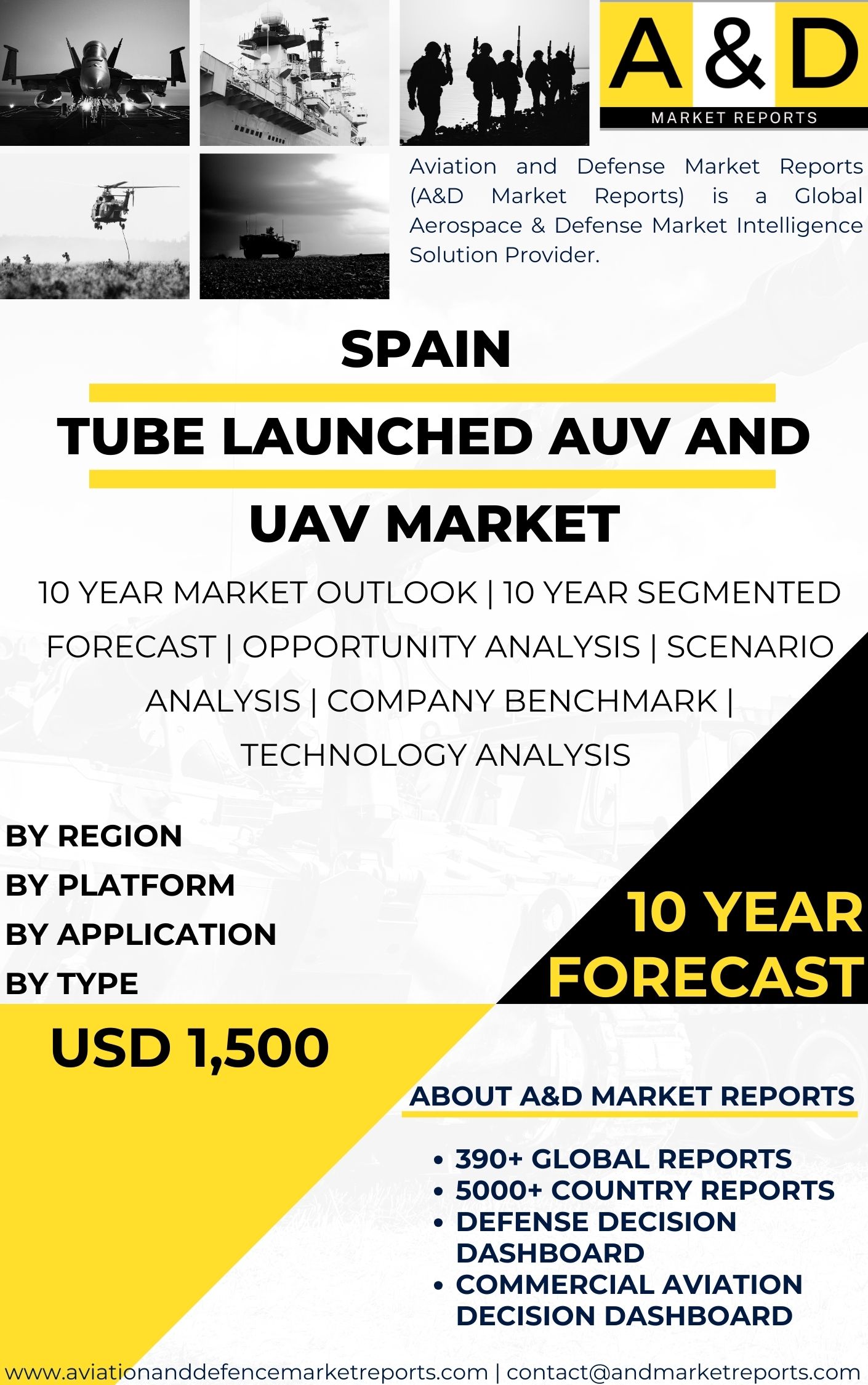
Spain?s tube-launched AUV and UAV market is a rapidly expanding field that reflects the convergence of modular platform technology, advanced autonomous systems, and the evolving tactical landscape of modern defense operations. Tube-launched vehicles?whether autonomous underwater vehicles (AUVs) or unmanned aerial vehicles (UAVs)?are engineered for discreet, flexible deployment from compact launch systems mounted on submarines, surface ships, armored vehicles, aircraft, or mobile ground launchers. Spain, with its extensive coastline, strong naval tradition, and rising investment in unmanned assets, is investing heavily in tube-launched solutions to bolster its multi-domain operational capabilities and meet NATO modernization goals.
In the maritime domain, Spain?s defense agencies utilize tube-launched AUVs for missions ranging from underwater intelligence gathering and mine countermeasures to environmental monitoring and submarine support. These systems exploit stealth launch capabilities, avoiding surface detection and thus multiplying operational reach in contested waters. Tube-launched AUVs also enable detailed mapping of the seabed, search and recovery operations, and safe transit of naval assets through hazardous or mined maritime choke points. Their modular payloads?sonars, cameras, data acquisition modules?can be tailored for specific mission profiles, with the tube-launched configuration enabling rapid response and flexible operational planning.
On the aerial side, tube-launched UAVs provide Spanish ground and naval forces with rapid tactical ISR (intelligence, surveillance, reconnaissance) support, signals intelligence collection, and battlefield awareness. The compact launch mechanism allows for covert, expedient deployment close to operational fronts or from mobile assets traversing difficult terrain. Spanish integrators are fielding tube-launched UAVs that feature vertical launch capability, electric propulsion, high-performance sensor suites, and secure, low-latency communications?ensuring tactical flexibility and survivability in both conventional and asymmetric warfare environments. Missions range from forward observation, battle damage assessment, and perimeter security to delivering precision payloads in denied areas.
Technological advances in Spain?s market are shaping the next generation of tube-launched vehicles. Miniaturization of electronics, propulsion, and battery systems enables compact platforms to carry sophisticated sensors, autonomous navigation options, and enhanced energy reserves for longer operation times. Improved launch integration with multi-platform deployment designs ensures Spanish forces can rapidly field AUVs and UAVs from submarines, armored vehicles, and maritime patrol vessels as operational scenarios demand. Artificial intelligence, machine learning, and real-time mission adaptability are being embedded to facilitate autonomous navigation in complex terrain, object recognition, and in-mission objective reassignment. Encrypted communication channels and advanced C2 (command and control) links guarantee operational security, even in contested electromagnetic environments.
Spain?s market growth is supported by strong collaboration between defense primes, public research institutions, and innovative technology SMEs clustered around Madrid, Andalusia, and the Basque Country. National and European funding for unmanned and autonomous systems projects catalyzes the development and export of advanced tube-launched solutions, with Spanish integrators increasingly supplying platforms to allied NATO and EU operators who require modular, quickly deployable ISR and combat assets. The market is also responding to the demand for mission-specific configurations, enabling operators to tailor payloads and behaviors to meet changing operational contexts while minimizing logistics requirements.
Challenges exist, including the high cost of technology integration, the complexity of safe multi-platform deployment, and evolving safety, regulatory, and operational standards. Spain?s multi-agency approach mitigates these hurdles through coordinated R&D, standardized test and validation protocols, and operational trials. Ongoing investments in skills development, export promotion, and multilateral project partnerships will continue to reinforce Spain?s market strengths.
Outlook for Spain?s tube-launched AUV and UAV market is strong, shaped by the triple drivers of defense modernization, maritime security, and autonomous systems innovation. With operational theaters becoming more dispersed and unpredictable, the strategic value of discreetly deployable autonomous vehicles will grow, and Spain?s industry actors are well-positioned to provide these critical technologies for national and international defense needs.