
Description
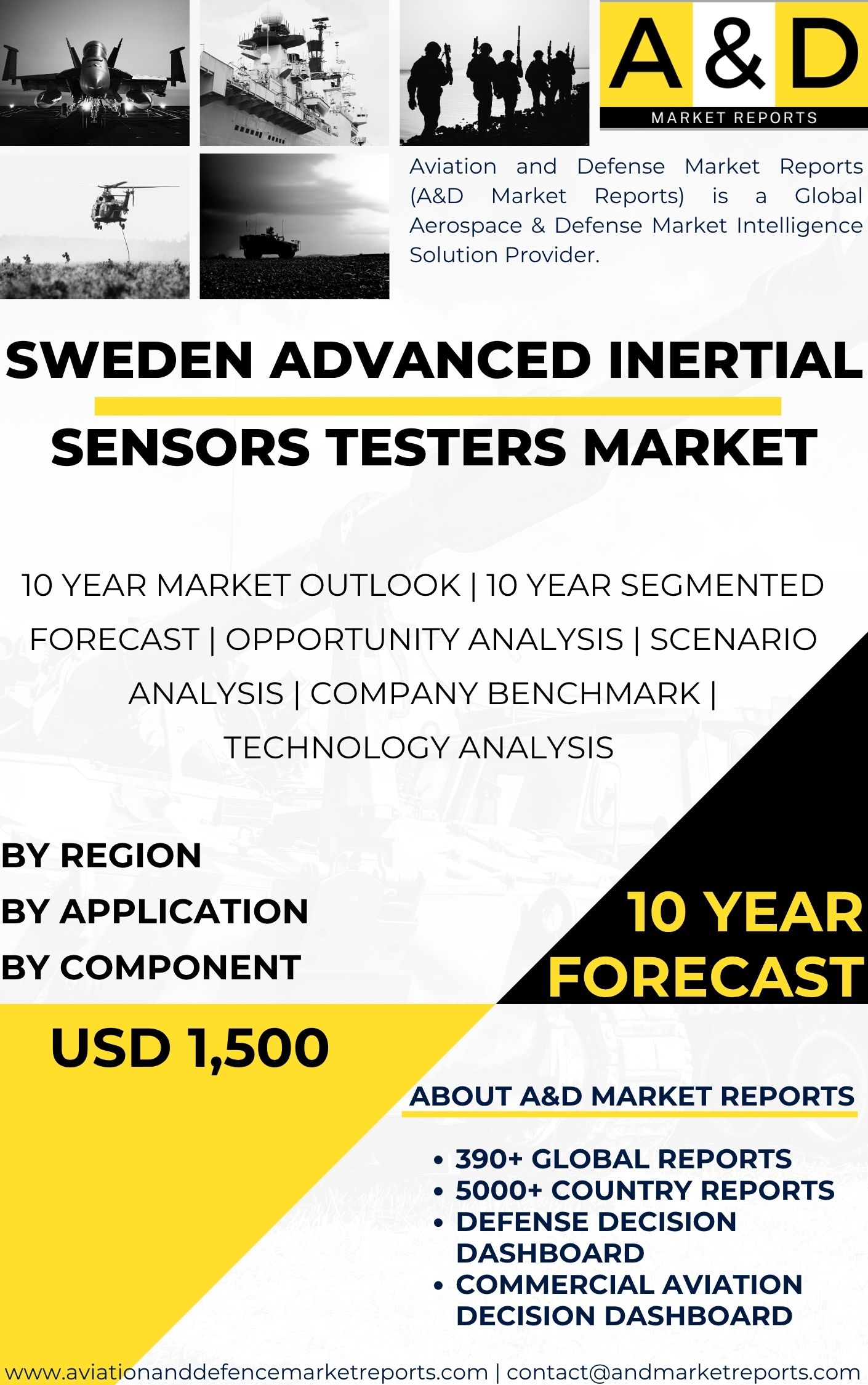
Advanced Inertial Sensors Testers Market in Sweden: Overview
Sweden advanced inertial sensors testers market in is a specialized segment driven by the country’s strong focus on defense modernization, aerospace innovation, and high-precision navigation technologies. Inertial sensors such as gyroscopes, accelerometers, and inertial measurement units (IMUs) are essential for autonomous systems, guided weaponry, and navigation platforms that must perform reliably under harsh and signal-denied conditions. Advanced testers validate sensor accuracy, reliability, and resilience by simulating vibration, shock, temperature extremes, and dynamic maneuvers, ensuring performance levels critical to mission success in defense applications.
Role of Inertial Sensor Testing in Defense Systems
In Sweden’s defense ecosystem, inertial sensors form the backbone of navigation and targeting systems that operate independently of external references such as GPS. The growing reliance on autonomous platforms and precision-guided systems amplifies the need for rigorous sensor validation. Advanced inertial sensor testers ensure consistent and accurate output across operational environments, directly supporting the reliability of drones, submarines, tactical aircraft, and missile guidance systems deployed by the Swedish Armed Forces.
Defense Procurement and Lifecycle Validation Needs
Sweden’s defense procurement strategies increasingly emphasize sophisticated testing solutions to support both development and sustainment phases. Advanced inertial sensor testers are deployed in research and development environments for initial validation, as well as in maintenance and upgrade cycles for ongoing performance monitoring. Integration with real-time data acquisition, automated calibration, and embedded diagnostics reduces operational risk, enhances fault detection, and improves maintenance scheduling across the sensor lifecycle.
Technological Advancements in Testing Solutions
Technological innovation is a defining factor shaping the Swedish market. Modern testers incorporate high-resolution motion simulators, thermal chambers, electromagnetic shielding, and real-time feedback mechanisms to emulate extreme operational conditions. Customizable software platforms allow tailored test profiles for fiber-optic gyroscopes, ring laser gyroscopes, and MEMS-based accelerometers. Machine learning and predictive analytics are increasingly integrated to anticipate sensor degradation and enable proactive maintenance strategies.
Portability, Modularity, and Field Deployment
There is a growing focus on portable and modular inertial sensor testers that support field-level validation in addition to laboratory testing. These solutions enable rapid diagnostics and calibration in deployed environments, improving system readiness and operational flexibility. Scalability and modular design allow testing systems to adapt to evolving sensor architectures and platform requirements, aligning with Sweden’s emphasis on agile and interoperable defense systems.
Influence of Sweden’s Broader Industrial Ecosystem
Beyond defense, Sweden’s advanced industrial base significantly contributes to market growth. Aerospace manufacturing, civil aviation, automotive suppliers, and research institutions increasingly rely on inertial sensors for navigation, safety, and automation. The expansion of autonomous vehicle development and high-end industrial robotics further drives demand for precise inertial testing. Additionally, advancements in consumer electronics and IoT applications indirectly support innovation in inertial sensor technologies and testing methodologies.
Government Support and Collaborative Innovation
Strong government backing for defense modernization and research initiatives plays a central role in market expansion. Increased defense spending enables investment in advanced navigation and sensor validation infrastructure. Sweden’s emphasis on indigenous technological development encourages collaboration between defense primes, technology firms, and academic institutions. Participation in multinational defense programs and adherence to interoperability standards further necessitate standardized, scalable testing solutions compatible with allied platforms.
Market Challenges and Competitive Landscape
High initial capital investment requirements and stringent regulatory frameworks governing defense testing present challenges to market entry and expansion. However, these constraints are offset by the mission-critical importance of accurate inertial sensor validation. Ongoing advancements in MEMS technology, miniaturization, and power efficiency gradually reduce costs and broaden adoption. The competitive landscape includes established global suppliers and innovative startups offering specialized solutions tailored to Sweden’s defense and aerospace needs.
Market Outlook and Strategic Importance
Overall, the advanced inertial sensors testers market in Sweden is characterized by strong demand driven by defense priorities, rapid technological progress, and a diversified industrial base. The increasing adoption of autonomous systems, sensor fusion architectures, and precision navigation platforms positions inertial sensor testing as a vital enabler of Sweden’s defense and aerospace capabilities. Continued innovation and integration of advanced diagnostics ensure this market remains strategically important in supporting mission-critical applications and maintaining Sweden’s leadership in high-precision sensor technologies.