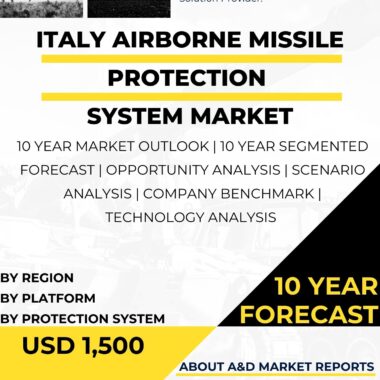

Description
Overview of the UK Airborne Missile Protection System Market
The Missile Protection System Market plays a critical role in strengthening national defense and ensuring aircraft survivability during combat and high-risk missions. These systems are designed to detect, track, and neutralize missile threats before they can damage aircraft. The UK has consistently invested in advanced protection technologies to safeguard military aircraft operating in hostile environments. Such systems enhance mission success by reducing vulnerability to surface-to-air and air-to-air missiles. As modern conflicts become more technology-driven, airborne missile protection systems have become essential for maintaining operational superiority.
Historical Development of Airborne Protection Systems in the UK
The UK’s efforts in airborne protection systems date back to World War I and World War II, when aircraft first faced organized ground-based and aerial threats. Early defensive measures were basic and focused on armor and evasive tactics. As missile technology advanced, the need for electronic detection and countermeasures became evident. During the Cold War, the UK expanded research into radar warning receivers and infrared countermeasures. Over time, these developments evolved into integrated protection suites that combine sensors, processors, and countermeasures. This long history of innovation laid the groundwork for today’s advanced systems.
Key Players in the UK Airborne Missile Protection System Market
The Ministry of Defence plays a central role by defining requirements and supporting development programs. Defense manufacturers and specialized technology firms handle system design, testing, and integration. Research organizations contribute innovations in sensors, signal processing, and electronic warfare. Close cooperation among these stakeholders ensures that protection systems meet modern operational needs. Export-focused companies also support allied nations, strengthening the UK’s global defense position. Together, these players maintain a strong and competitive domestic market.
Technological Advancements Strengthening the Market
Technology continues to drive progress in the UK airborne missile protection system market. Advanced sensors now offer improved threat detection across multiple spectrums. Electronic warfare systems provide faster and more accurate threat identification. Countermeasure deployment systems have become more precise and responsive. The integration of artificial intelligence enables real-time analysis and automated responses. These advancements allow aircraft to react quickly in complex and contested environments, significantly improving survivability and mission effectiveness.
International Collaborations and Defense Partnerships
International collaboration is a key factor supporting market growth. The UK works closely with allied nations through joint research and development programs. These partnerships allow shared access to advanced technologies and reduce development risks. Cooperation improves interoperability during multinational operations. Knowledge exchange also accelerates innovation and enhances system reliability. Such partnerships strengthen long-term defense relationships and open opportunities for exports.
Policy and Regulatory Framework Supporting the Market
The UK enforces a strong regulatory framework governing airborne missile protection technologies. National defense policies ensure that systems meet strict safety and performance requirements. International regulations guide the responsible export and transfer of sensitive technologies. Compliance with these standards ensures reliability and operational effectiveness. Clear policies encourage industry investment and long-term planning. This regulatory structure supports sustainable growth and ethical defense practices.
Future Prospects of the UK Airborne Missile Protection System Market
The future outlook for the UK airborne missile protection system market is positive. Rising global security threats are increasing demand for advanced aircraft protection. Defense modernization programs continue to prioritize survivability and electronic warfare capabilities. New platforms will require integrated and scalable protection solutions. Continuous investment in innovation will drive further improvements. These factors point to steady market expansion in the coming years.
Emerging Market Opportunities
Emerging opportunities are shaping the next generation of airborne protection systems. Artificial intelligence will enhance threat recognition and decision-making speed. Adaptive countermeasures will improve response effectiveness against diverse missile types. Lightweight materials will reduce system weight and improve aircraft performance. Multi-layered defense architectures will offer stronger and more resilient protection. These innovations will define future market growth.
Challenges Facing the UK Airborne Missile Protection System Market
Despite strong prospects, the market faces several challenges. Missile threats are becoming faster, smarter, and harder to detect. Hypersonic weapons present new detection and response difficulties. Directed-energy threats require advanced countermeasure solutions. Rapid technological change demands continuous research and high investment. Addressing these challenges will be essential to maintain competitiveness.
Conclusion
The UK airborne missile protection system market remains a vital pillar of national defense. Its development is supported by advanced technology, strong industry collaboration, and effective government policies. International partnerships further enhance innovation and capability. As threats evolve, continuous research and investment will be essential. With sustained focus and innovation, the UK is well positioned to remain a leader in airborne missile protection technologies for the future.