United Kingdom Infantry Helmet Market

$1,500.00

Enquire Now
Category: Tag: Report ID: ANDCGB0184

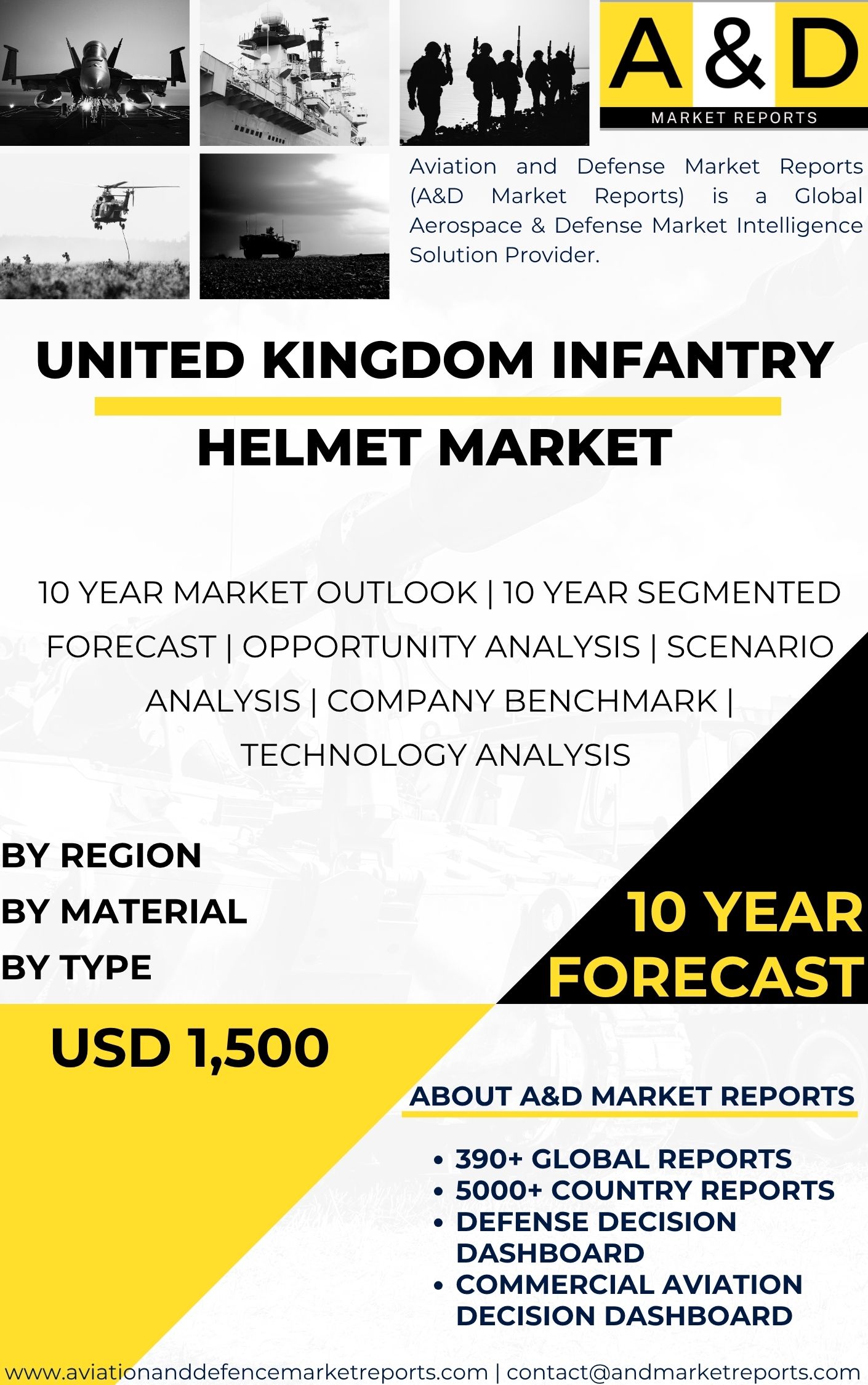
Infantry Helmet Market in the United Kingdom represents an essential segment of military personal protective equipment, focused on delivering advanced head protection to infantry soldiers. This market is driven by the ongoing need for modernized protective gear that enhances soldier survivability in contemporary combat environments characterized by complex threats such as ballistic impacts, fragmentation, blunt force trauma, and environmental hazards. The evolution of infantry helmets in the UK has seen a shift from traditional steel designs to lightweight, composite materials designed to balance protection, comfort, and operational effectiveness. The contemporary demand emphasizes helmets capable of integrating with modern communication systems, night vision devices, and modular attachments, thereby supporting situational awareness and battlefield connectivity.

Go To Global Report Page Track this market real time on DDD

Description

Infantry Helmet Market in the United Kingdom

The United Kingdom Infantry  is a key part of military personal protective equipment. This sector focuses on advanced head protection for infantry soldiers. Modern helmets enhance survivability against ballistic impacts, fragmentation, blunt force trauma, and environmental hazards. UK helmet designs have evolved from steel to lightweight composites, balancing protection, comfort, and operational effectiveness. Current demand emphasizes helmets compatible with communication systems, night vision devices, and modular attachments, improving situational awareness and battlefield connectivity.

Materials and Technological Innovation

UK manufacturers focus on research and development to produce cutting-edge helmets. Materials like Kevlar, Twaron, and ultra-high-molecular-weight polyethylene provide strong ballistic protection while reducing weight. Lighter helmets improve soldier mobility and endurance. Helmets meet stringent military standards to perform reliably in extreme temperatures and harsh conditions. Integration of sensors, electronics, and communication devices ensures helmets support multiple mission-critical functions beyond protection.

Ergonomics and User Comfort

Comfort and ergonomics drive helmet design in the UK market. Adjustable suspension systems, enhanced padding, and ventilation reduce fatigue during long missions. Helmets are compatible with eye and ear protection, respiratory masks, and communication headsets. This approach ensures that the helmet serves as both a protective barrier and a functional platform for modern warfare needs.

Supply Chain and Procurement

The UK infantry helmet market relies on a robust supply chain, including raw material suppliers, component fabricators, and assembly specialists. Government defense acquisition programs drive procurement through competitive tendering, emphasizing innovation, value, and lifecycle support. Feedback from frontline soldiers informs design improvements, aligning products with real-world operational requirements.

Market Competition and Customization

The competitive landscape includes established defense contractors and emerging technology providers. Partnerships leverage expertise in materials science, electronics integration, and design engineering. Modular and customizable helmet systems allow adaptation to different mission profiles, from conventional combat to peacekeeping and counterinsurgency operations. Flexibility is critical to meet diverse and evolving operational demands.

Manufacturing and Technological Advances

Helmet manufacturers increasingly use advanced molding, laser cutting, and additive manufacturing. These techniques improve production efficiency, quality, and durability. Technological improvements reduce lead times and costs while maintaining high standards for ballistic protection. The integration of new materials and designs continues to enhance operational effectiveness.

Regulatory and Government Support

The UK market follows strict military standards for ballistic protection, impact resistance, and environmental resilience. Compliance ensures consistent performance in combat scenarios. Government policies support domestic capability development, encouraging investments in indigenous technology and manufacturing. These efforts sustain growth and strengthen the industrial base for infantry helmets.

International Collaboration and Innovation

International partnerships influence market dynamics. The UK supplies protective helmets compatible with allied operational standards, enhancing interoperability. Collaboration often includes technology transfer and standardization with NATO forces. Research institutions drive innovation in improved ballistic materials, impact mitigation, and sensor integration. Emerging technologies like augmented reality and biometrics are explored to enhance situational awareness and real-time health monitoring.

Market Outlook

Overall, the infantry helmet market in the United Kingdom combines protection, comfort, and technology to meet modern combat needs. Strong industrial capabilities, government partnerships, and ongoing innovation ensure soldiers are equipped with state-of-the-art helmets. The sector remains dynamic, with positive growth driven by defense modernization programs, international cooperation, and the need to protect military personnel against evolving threats.
Table of content

Table Of Contents

1 Market Introduction

1.1 Market Introduction
1.2 Market Definition
1.3 Market Segmentation
1.4 10 Year Market Outlook

2 Market Technologies

3 Global Market Forecast

3.1 Global Market Forecast
3.2 By Type
3.3 By Material

4 Europe Market Trends & Forecast

4.1 Drivers, Restraints And Challenges
4.2 PEST
4.3 Market Forecast
4.3.1 Market Forecast By Type
4.3.2 Market Forecast By Material
4.4 Scenario Analysis
4.5 Key Companies& Profiling

5 United Kingdom Analysis

5.1 Current Levels Of Technology Maturation In This Market
5.2 Market Forecast
5.2.1 Market Forecast By Type
5.2.2 Market Forecast By Material
5.3 Scenario Analysis
5.4 Country Defense Budget (Historical and 10- year forecast)
5.5 Defense Budget Category Spending- 10- year forecast
5.6 Procurement Analysis
5.7 EXIM Data
5.8 Patents

6 Opportunity Matrix

6.1 By Type
6.2 By Material

7 Scenario Analysis

7.1 Scenario 1

7.1.1 By Type (Scenario-1)
7.1.2 By Material (Scenario-1)

7.2 Scenario 2

7.2.1 By Type (Scenario-2)
7.2.2 By Material (Scenario-2)

8 Company Benchmark

9 Strategic Conclusions

10 About Aviation And Defense Market Reports

Segments

By Type
By Material

List of Tables

Table1: Global Market Forecast, Infantry Helmet Market
Table2: Europe Market Forecast, Infantry Helmet Market
Table3: Europe Market Forecast, By Type
Table4: Europe Market Forecast, By Material
Table5: Europe, Scenario Analysis
Table6: United Kingdom Market Forecast, Infantry Helmet Market
Table7: United Kingdom Market Forecast, By Type
Table8: United Kingdom Market Forecast, By Material
Table9: United Kingdom, Scenario Analysis
Table 10: United Kingdom Defense Budget 10 Year Forecast
Table 11: United Kingdom, Defense Budget Category Spending- 10- year forecast
Table 12: United Kingdom, Procurement Analysis
Table 13: United Kingdom, EXIM Data Analysis
Table 14: United Kingdom, Opportunity Analysis, By Type
Table 15: United Kingdom, Opportunity Analysis, By Material
Table 16: United Kingdom, Scenario Analysis, By Type
Table 17: United Kingdom, Scenario Analysis, By Material

List of Figures

Figure 1: Market Segmentation, United Kingdom Infantry Helmet Market
Figure 2: Key Technology Analysis, Infantry Helmet Market
Figure 3: Global Market Forecast, Infantry Helmet Market
Figure 4: Europe, Market Forecast, Infantry Helmet Market
Figure 5: Europe, Market Forecast, By Type
Figure 6: Europe, Market Forecast, By Material
Figure 7: Europe, Scenario Analysis
Figure 8: United Kingdom, Market Forecast, Infantry Helmet Market
Figure 9: United Kingdom, Market Forecast, By Type
Figure 10: United Kingdom, Market Forecast, By Material
Figure 11: United Kingdom, Scenario Analysis
Figure 12: United Kingdom, Defense Budget 10 Year Forecast
Figure 13: United Kingdom, Defense Budget Category Spending- 10- year forecast
Figure 14: United Kingdom, Procurement Analysis
Figure 15: United Kingdom, EXIM Data Analysis
Figure 16: United Kingdom, Opportunity Analysis, By Type
Figure 17: United Kingdom, Opportunity Analysis, By Material
Figure 18: United Kingdom, Scenario Analysis, By Type
Figure 19: United Kingdom, Scenario Analysis, By Material
Figure 20: Company Benchmark

Aviation and Defense Market Reports


TPA | TIA | Consulting | Market Reports | Defense Decision Dashboard


Our Defense Report - Our Team Has Worked on More Than 250+ Individual Products / Markets