Description
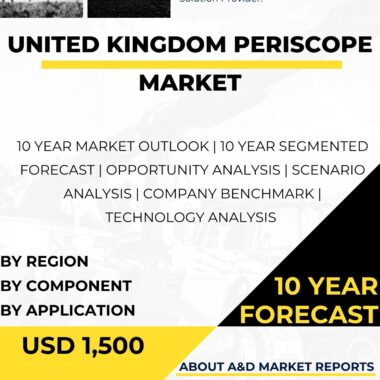
The periscope market in the United States reflects a specialized yet significant segment of the defense and industrial optics landscape. Rooted historically in naval warfare, periscopes originally provided submariners the ability to observe above the surface while remaining concealed beneath the waterline. This legacy continues to shape the market, as submarine modernization programs reinforce demand for advanced periscopic systems that integrate seamlessly with electronic sensors. Unlike older periscopes that relied solely on optical pathways, modern periscopes employ fiber optics, digital enhancement, and advanced coatings, making them more compact and capable of connecting data streams directly into combat management systems. The U.S. has long been a leader in naval innovation, and periscope operators benefit from integration with sensors capable of infrared, thermal, and low-light imaging. This capability allows modern periscopes to cover a broader spectrum of threat detection and situational awareness. Beyond the traditional naval role, the U.S. periscope market also includes specialized applications in armored vehicles, enabling crews to maintain visibility while under armored protection. These designs focus on ruggedness, resistance to battlefield damage, and adaptability to confined spaces. Economically, the periscope market engages defense primes, optical technology specialists, and smaller manufacturers dedicated to modifying systems for unique mission requirements. The trends highlight a shift from purely mechanical optics toward blended sensor platforms that merge traditional viewing with digital overlays, image stabilization, and potential integration with augmented reality applications. This transformation demonstrates that periscopes are no longer static observation tools but dynamic nodes in larger defense surveillance networks, underscoring the market?s importance as a connector between physical observation and digital situational awareness.
Table of content
Table Of Contents
1 Market Introduction
1.1 Market Introduction
1.2 Market Definition
1.3 Market Segmentation
1.4 10 Year Market Outlook
2 Market Technologies
3 Global Market Forecast
3.1 Global Market Forecast
3.2 By Component
3.3 By Application
4 North America Market Trends & Forecast
4.1 Drivers, Restraints And Challenges
4.2 PEST
4.3 Market Forecast
4.3.1 Market Forecast By Component
4.3.2 Market Forecast By Application
4.4 Scenario Analysis
4.5 Key Companies& Profiling
5 US Analysis
5.1 Current Levels Of Technology Maturation In This Market
5.2 Market Forecast
5.2.1 Market Forecast By Component
5.2.2 Market Forecast By Application
5.3 Scenario Analysis
5.4 Country Defense Budget (Historical and 10- year forecast)
5.5 Defense Budget Category Spending- 10- year forecast
5.6 Procurement Analysis
5.7 EXIM Data
5.8 Patents
6 Opportunity Matrix
6.1 By Component
6.2 By Application
7 Scenario Analysis
7.1 Scenario 1
7.1.1 By Component (Scenario-1)
7.1.2 By Application (Scenario-1)
7.2 Scenario 2
7.2.1 By Component (Scenario-2)
7.2.2 By Application (Scenario-2)
8 Company Benchmark
9 Strategic Conclusions
10 About Aviation And Defense Market Reports
Segments
By Component
By Application
List of Tables
Table1: Global Market Forecast, Periscope Market
Table2: North America Market Forecast, Periscope Market
Table3: North America Market Forecast, By Component
Table4: North America Market Forecast, By Application
Table5: North America, Scenario Analysis
Table6: United States Market Forecast, Periscope Market
Table7: United States Market Forecast, By Component
Table8: United States Market Forecast, By Application
Table9: United States, Scenario Analysis
Table 10: United States Defense Budget 10 Year Forecast
Table 11: United States, Defense Budget Category Spending- 10- year forecast
Table 12: United States, Procurement Analysis
Table 13: United States, EXIM Data Analysis
Table 14: United States, Opportunity Analysis, By Component
Table 15: United States, Opportunity Analysis, By Application
Table 16: United States, Scenario Analysis, By Component
Table 17: United States, Scenario Analysis, By Application