
Description
Introduction to the Spain Unmanned Battlefield Logistics and Support Systems Market
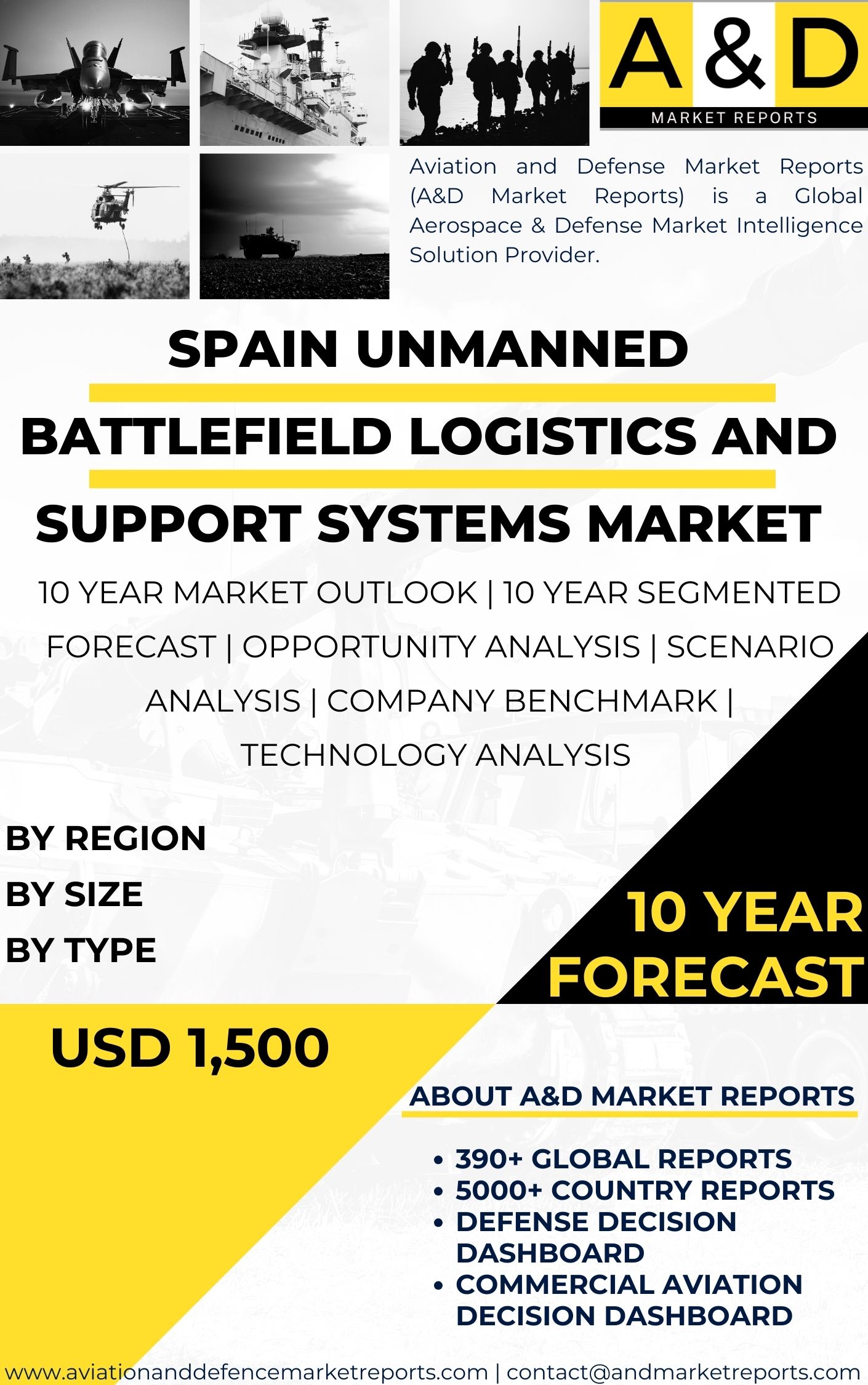
The Spain Unmanned Battlefield Logistics and Support Systems Market is a critical and rapidly evolving sector that plays a major role in strengthening the country’s military capabilities and improving battlefield operations. Unmanned battlefield logistics and support systems include autonomous and remotely operated technologies designed to transport supplies, deliver ammunition, support troops, conduct surveillance, and perform operational tasks without exposing military personnel to danger. These systems improve operational efficiency while reducing risks during combat and support missions. Spain continues to invest heavily in defense modernization programs, which has increased the adoption of advanced unmanned technologies across military operations. The growing focus on troop safety, rapid response capabilities, and operational flexibility is encouraging the Spanish Armed Forces to deploy advanced support systems in complex battlefield environments. In addition, the increasing use of artificial intelligence, robotics, and autonomous navigation technologies is helping to expand the capabilities of these systems across multiple military applications.
Technological Advancements Driving Market Growth
The growth of the Spain Unmanned Battlefield Logistics and Support Systems Market is strongly supported by rapid advancements in unmanned technology. Modern unmanned systems now offer improved mobility, enhanced navigation, higher payload capacity, and better autonomous decision-making capabilities. These improvements allow military forces to conduct supply and logistics operations with greater precision and speed across difficult terrain and high-risk combat zones. Advanced communication systems and integrated sensors have also improved the effectiveness of unmanned support platforms. Real-time monitoring, route optimization, obstacle detection, and remote-control operations allow military commanders to coordinate logistics missions more effectively. Furthermore, the integration of artificial intelligence and machine learning technologies helps unmanned systems adapt to changing battlefield conditions and perform missions with minimal human intervention.
Rising Demand for Battlefield Support and Logistics Efficiency
The changing nature of modern warfare has significantly increased the demand for unmanned battlefield logistics systems in Spain. Military operations increasingly require fast, flexible, and secure supply chain support in hostile and unpredictable environments. Unmanned systems help transport critical equipment, ammunition, fuel, food supplies, and medical resources directly to frontline units while reducing the exposure of personnel to enemy threats. These systems also improve battlefield sustainability by enabling continuous logistics support during extended military operations. Unmanned ground vehicles and aerial systems can operate in areas that are difficult or dangerous for traditional vehicles and personnel. As a result, the Spanish Armed Forces are increasingly adopting autonomous support platforms to improve mission readiness and operational endurance during combat operations and peacekeeping missions.
Importance in International Peacekeeping Operations
Spain’s participation in international peacekeeping and coalition missions is another major factor driving the market. Unmanned battlefield logistics and support systems play a vital role in multinational military operations by improving supply delivery, reconnaissance, casualty evacuation, and mission coordination. These systems help military units maintain operational effectiveness in remote and high-risk regions where traditional logistics support may be difficult to maintain. In addition, Spain’s collaboration with NATO allies and European defense partners is encouraging the development of interoperable unmanned support technologies. Joint military exercises and defense cooperation programs are creating opportunities for technology exchange and collaborative innovation in autonomous logistics systems. This international cooperation strengthens Spain’s ability to deploy advanced support capabilities during global security and humanitarian missions.
Versatility and Operational Applications
One of the key strengths of unmanned battlefield logistics and support systems is their versatility across different military operations. These systems can be adapted for logistics transport, battlefield resupply, reconnaissance, medical evacuation, engineering support, and surveillance missions. Their flexibility allows military forces to use the same platform for multiple operational tasks, improving efficiency and reducing operational costs. Unmanned aerial vehicles, autonomous ground vehicles, and robotic support platforms are increasingly being integrated into Spain’s military infrastructure. These systems can support operations in urban warfare environments, mountainous regions, desert conditions, and maritime operations. Their ability to function in harsh environments and dangerous combat zones makes them valuable assets for modern military forces seeking rapid and reliable battlefield support capabilities.
Cybersecurity and System Resilience Challenges
Despite strong growth opportunities, the Spain Unmanned Battlefield Logistics and Support Systems Market faces several important challenges. One major concern is cybersecurity and system resilience. As unmanned systems rely heavily on digital communication networks, satellite connectivity, and autonomous software, they are vulnerable to cyberattacks, electronic warfare, and signal interference. Protecting unmanned systems from hacking, jamming, and unauthorized access has become a top priority for defense organizations. Strong encryption technologies, secure communication protocols, and advanced cybersecurity measures are essential to ensure the reliability and integrity of battlefield operations. In addition, system redundancy and backup communication capabilities are becoming increasingly important to maintain mission continuity during hostile electronic warfare conditions.
Budget Constraints and Operational Costs
Budget limitations also present challenges for the expansion of unmanned battlefield logistics programs in Spain. The development, acquisition, integration, and maintenance of advanced autonomous systems require substantial financial investment. Military organizations must carefully balance modernization priorities while maintaining cost-effective defense spending. In addition, ongoing maintenance, software upgrades, spare parts supply, and system support services contribute to long-term operational costs. Smaller defense programs may face difficulties in funding large-scale unmanned system deployments. Therefore, the Spanish government and defense industry must focus on developing affordable and scalable unmanned support solutions that can meet operational requirements while remaining financially sustainable.
Training and Human-Machine Integration
The increasing complexity of unmanned technologies has created new training and operational challenges for military personnel. Effective operation of autonomous logistics systems requires specialized technical skills, system management expertise, and advanced mission planning capabilities. Proper training programs are necessary to ensure that military personnel can safely and efficiently operate these systems during combat and support missions. Human-machine integration is also becoming a major focus area within the market. Military operators must be able to interact effectively with autonomous platforms through user-friendly interfaces and reliable control systems. Improving operator training, mission coordination, and decision-making processes will help maximize the operational benefits of unmanned battlefield support technologies.
Regulatory and Compliance Considerations
The Spain Unmanned Battlefield Logistics and Support Systems Market must also address regulatory and legal considerations. International arms control agreements, export regulations, and defense compliance standards play an important role in governing the development and deployment of unmanned military systems. Spain must ensure that its unmanned platforms comply with international defense regulations and responsible military usage standards. Additionally, ethical considerations surrounding autonomous military technologies continue to gain attention globally. Governments and defense organizations are increasingly discussing the legal and ethical implications of autonomous systems in combat operations. Addressing these concerns through clear operational guidelines and international cooperation will be essential for maintaining responsible and transparent use of unmanned battlefield technologies.
Future Outlook of the Spain Unmanned Battlefield Logistics and Support Systems Market
The future of the Spain Unmanned Battlefield Logistics and Support Systems Market remains highly promising as defense organizations continue to prioritize modernization, automation, and operational efficiency. Advancements in artificial intelligence, robotics, autonomous navigation, and communication technologies are expected to further enhance the capabilities of unmanned support platforms in the coming years. The growing need for rapid logistics support, troop protection, and battlefield flexibility will continue to drive market expansion across military applications. Spain’s defense modernization programs, international military partnerships, and investment in emerging technologies will further strengthen the country’s unmanned logistics capabilities. As modern warfare continues to evolve, unmanned battlefield logistics and support systems will remain a critical component of Spain’s future defense strategy and military operational readiness.