
Description
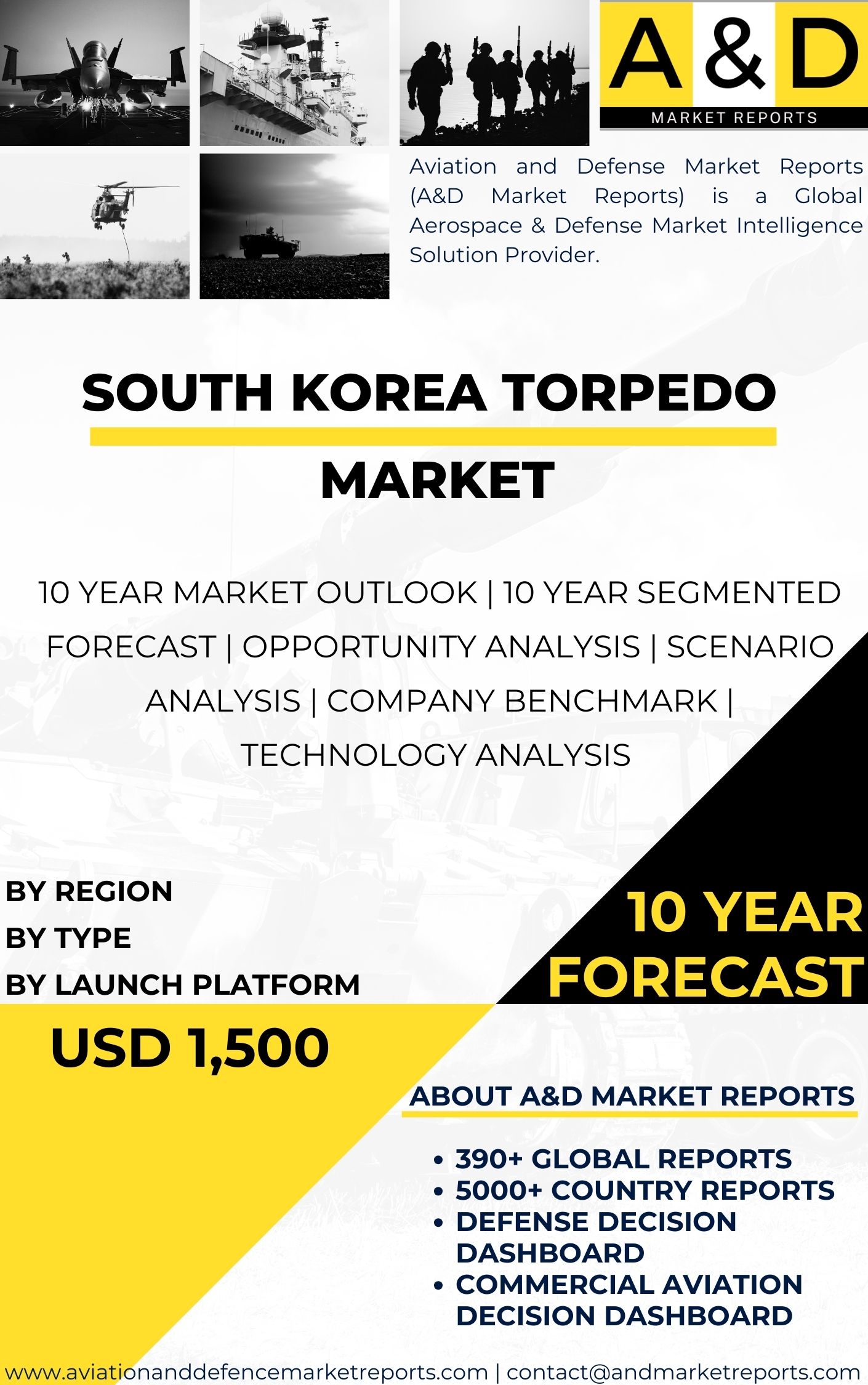
South Korea Torpedo Market Overview
The South Korea torpedo market is a critical segment of the country’s naval defense industry, supporting maritime security, underwater warfare, and strategic deterrence capabilities. Torpedoes serve as one of the most effective underwater weapons for engaging submarines and surface vessels in modern naval operations. As regional maritime security concerns continue to evolve, South Korea has increased its focus on strengthening underwater combat capabilities through advanced torpedo technologies. The market benefits from strong government investment, indigenous research programs, and continuous modernization of naval assets. Domestic defense companies play a significant role in developing next-generation torpedo systems that meet the operational requirements of the South Korean Navy. Continued innovation and technological advancement are expected to drive steady growth across the market.
Role of Torpedoes in Naval Warfare
Torpedoes play a fundamental role in naval warfare by providing stealthy and highly effective underwater strike capabilities. Unlike many other naval weapons, torpedoes can engage targets beneath the sea surface while remaining difficult to detect. They are designed to destroy hostile submarines, surface combatants, and other maritime threats. Modern torpedoes use sophisticated guidance systems that allow them to track and engage moving targets with high accuracy. Their ability to operate in complex underwater environments makes them a vital component of anti-submarine warfare operations. By strengthening offensive and defensive capabilities, torpedoes contribute significantly to maintaining maritime superiority and protecting national interests at sea.
Indigenous Development of Torpedo Systems
Indigenous development remains a major driver of the South Korea torpedo market. Domestic defense companies such as LIG Nex1 and Hanwha Aerospace play leading roles in designing and producing advanced torpedo systems. Local manufacturers focus on developing guidance technologies, propulsion systems, warheads, and underwater communication capabilities that meet the specific needs of the South Korean Navy. Indigenous production strengthens supply chain security and reduces reliance on foreign suppliers. It also enables faster upgrades and customization of systems to address emerging threats and operational requirements. These efforts support South Korea’s broader goal of defense self-reliance and technological leadership.
Naval Dependence on Torpedoes
The South Korean Navy relies heavily on torpedoes as a key element of its underwater warfare strategy. Torpedoes are deployed from submarines, surface warships, maritime patrol aircraft, and naval helicopters, providing flexible engagement options across different mission scenarios. They support anti-submarine warfare operations by detecting and neutralizing hostile underwater threats before they can pose a danger to naval assets. Torpedoes also contribute to anti-surface warfare by targeting enemy ships and protecting maritime trade routes. Their integration across multiple naval platforms enhances operational flexibility and improves response capabilities during both peacetime patrols and combat operations.
Civilian and Research Applications
Although primarily developed for military use, some technologies associated with torpedo systems have applications in civilian and scientific fields. Underwater propulsion technologies contribute to the development of autonomous underwater vehicles and research platforms used in oceanographic studies. Guidance and navigation systems developed for torpedoes can support underwater exploration and environmental monitoring missions. Marine research organizations use advanced underwater sensors and communication technologies derived from defense applications to improve data collection and ocean analysis. These civilian applications help maximize the value of technological investments while supporting scientific advancement and maritime resource management.
Research and Development Initiatives
Research and development play a crucial role in advancing the South Korea torpedo market. Significant investments are directed toward improving propulsion efficiency, target detection capabilities, and guidance accuracy. Engineers continue to develop quieter propulsion systems that enhance stealth and operational effectiveness. Advanced sonar technologies improve target acquisition and tracking performance in challenging underwater environments. Research also focuses on enhancing warhead effectiveness, resistance to countermeasures, and autonomous decision-making capabilities. Continuous innovation ensures that South Korean torpedo systems remain capable of addressing future maritime threats and maintaining a competitive technological edge.
Strategic Partnerships and Collaboration
Strategic partnerships contribute significantly to the growth and modernization of the South Korea torpedo market. Collaboration between domestic defense companies, government agencies, research institutions, and international defense partners facilitates technology transfer and knowledge sharing. Joint development programs enable access to advanced technologies and engineering expertise that support system improvements. These partnerships also help accelerate research efforts and reduce development risks. By integrating global best practices with domestic capabilities, South Korea strengthens its ability to produce highly effective and reliable torpedo systems while expanding opportunities in international defense markets.
Training and Operational Readiness
Comprehensive training programs are essential for ensuring the effective deployment and operation of torpedo systems. Naval personnel receive specialized instruction in torpedo launch procedures, target identification, tactical planning, and weapon system management. Simulation technologies allow crews to practice engagement scenarios in realistic environments without the cost and complexity of live exercises. Regular operational drills help maintain proficiency and improve coordination between submarines, ships, aircraft, and command centers. Well-trained personnel contribute to higher mission success rates and ensure that torpedo systems can be employed effectively during critical naval operations.
Safety and Reliability Standards
Safety and reliability are fundamental requirements for torpedo systems due to the complexity and destructive nature of these weapons. South Korea enforces strict testing, maintenance, and quality assurance standards throughout the lifecycle of torpedo systems. Comprehensive inspections evaluate propulsion performance, guidance accuracy, warhead safety, and overall system functionality. Maintenance programs help prevent malfunctions and ensure operational readiness at all times. Safety protocols protect personnel during storage, transport, and deployment activities. These rigorous standards help ensure that torpedoes perform reliably under demanding operational conditions while minimizing risks to naval crews and platforms.
Future Growth Opportunities
The future of the South Korea torpedo market is expected to be shaped by advances in autonomous systems, artificial intelligence, and underwater networking technologies. Emerging torpedo designs may incorporate enhanced target recognition capabilities, greater resistance to electronic countermeasures, and longer operational ranges. Increased integration with network-centric naval warfare systems will improve information sharing and mission coordination across multiple platforms. The growing use of unmanned underwater vehicles may also create new opportunities for torpedo deployment and mission support. Continued investment in innovation and modernization programs will position South Korea as a leading developer of advanced underwater warfare technologies.
Conclusion
The South Korea torpedo market remains a cornerstone of the nation’s maritime defense strategy. Indigenous development, technological innovation, and strategic partnerships continue to strengthen the country’s underwater warfare capabilities. Torpedoes provide critical offensive and defensive capabilities that support anti-submarine warfare, maritime security, and naval deterrence missions. Investments in research, training, and advanced manufacturing ensure that South Korea maintains a highly capable and reliable torpedo inventory. As maritime challenges evolve and naval modernization efforts continue, the South Korea torpedo market will remain essential for safeguarding national interests and maintaining strong naval power in the region.