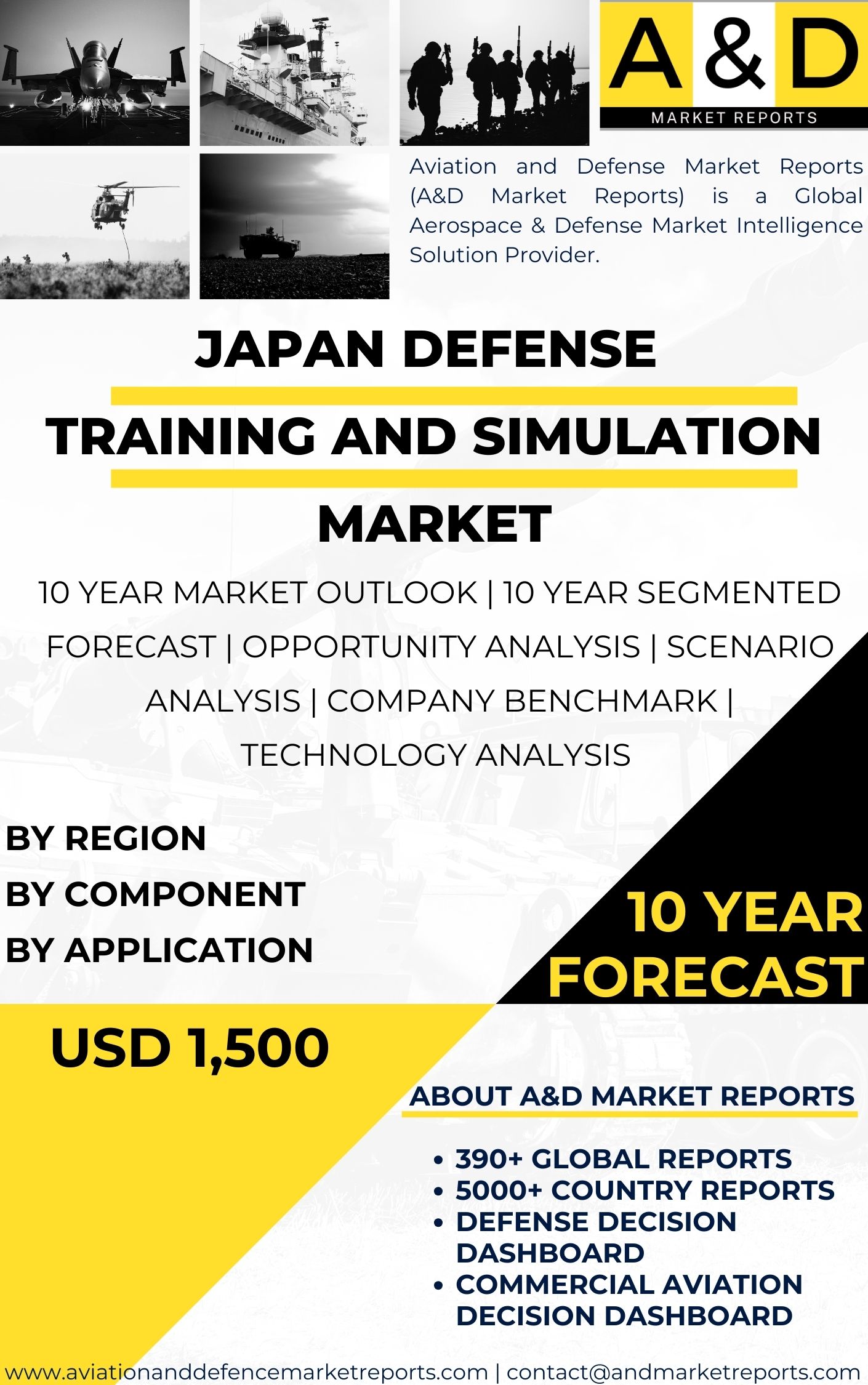
Japan Defense Training and Simulator Market

$1,500.00

Enquire Now

The defense training and simulator market in Japan has experienced significant growth and strategic importance in recent years due to the nation’s focus on enhancing its defense capabilities and addressing security challenges in the Indo-Pacific region. Defense training and simulators play a critical role in military preparedness by providing realistic and immersive training experiences for military personnel across various branches of the Japan Self-Defense Forces (JSDF).

Go To Global Report Page Track this market real time on DDD

Description

Japan Defense Training and Simulator Market has seen significant growth and strategic relevance as the nation emphasizes enhancing its defense capabilities and addressing security challenges in the Indo-Pacific region. Training and simulation systems are essential for military preparedness, offering realistic and immersive experiences for personnel across all branches of the Japan Self-Defense Forces (JSDF). These technologies provide safe and cost-effective ways to prepare military personnel for complex operational scenarios, enabling them to develop tactical skills and decision-making capabilities in controlled environments.

Applications – Defense Training and Simulator Market in Japan

The JSDF employs training and simulators across ground, naval, and air forces, as well as command and control centers. Individual soldier training uses virtual reality (VR) and augmented reality (AR) simulators to replicate combat scenarios, enhancing tactical proficiency. Collective training involves coordinated exercises for units, simulating complex operations such as urban warfare, amphibious assaults, and air-to-air combat. Simulators are also applied in mission planning, allowing military planners to evaluate strategies, assess potential risks, and optimize operational effectiveness. Additionally, R&D activities leverage simulation to test new defense systems and technologies virtually, reducing the cost and time of physical trials.

Market Drivers – Defense Training and Simulator Market in Japan

The domestic development of training and simulator technologies has been a key driver, supported by collaboration among the government, defense industry, and research institutions. Japan’s alliance with the United States provides access to advanced simulation technologies, strengthening national defense capabilities and regional security. Commercial advancements in gaming and virtual reality have also enhanced defense simulators by introducing realistic graphics, interactive interfaces, and more engaging training environments, accelerating innovation in the sector.

Challenges – Defense Training and Simulator Market in Japan

The market faces challenges including high costs, interoperability issues, data security, and workforce requirements. Developing and maintaining advanced simulators is expensive and requires careful budget management. Ensuring seamless interoperability between diverse simulation systems and military platforms is critical for effective joint exercises involving multiple JSDF branches. Maintaining data security is also essential, given the sensitive nature of operational scenarios and classified information. Furthermore, a skilled workforce is necessary to operate, analyze, and design simulation systems, requiring ongoing training and development programs.

Conclusion – Defense Training and Simulator Market in Japan

The defense training and simulator market in Japan has grown substantially, providing realistic and immersive training solutions that enhance military readiness and operational effectiveness. Collaboration between the government, domestic defense industry, research institutions, and international partners fosters innovation and strengthens the domestic market. Addressing challenges related to cost, interoperability, data security, and workforce development is critical to maintaining a high-performance defense force. With its strategic focus on modernization, Japan continues to invest in advanced training and simulation technologies to enhance its defense capabilities and contribute to regional and global security.

Table of content

Table Of Contents

1 Market Introduction

1.1 Market Introduction
1.2 Market Definition
1.3 Market Segmentation
1.4 10 Year Market Outlook

2 Market Technologies

3 Global Market Forecast

3.1 Global Market Forecast
3.2 By Component
3.3 By Application

4 APAC Market Trends & Forecast

4.1 Drivers, Restraints And Challenges
4.2 PEST
4.3 Market Forecast
4.3.1 Market Forecast By Component
4.3.2 Market Forecast By Application
4.4 Scenario Analysis
4.5 Key Companies& Profiling

5 Japan Analysis

5.1 Current Levels Of Technology Maturation In This Market
5.2 Market Forecast
5.2.1 Market Forecast By Component
5.2.2 Market Forecast By Application
5.3 Scenario Analysis
5.4 Country Defense Budget (Historical and 10- year forecast)
5.5 Defense Budget Category Spending- 10- year forecast
5.6 Procurement Analysis
5.7 EXIM Data
5.8 Patents

6 Opportunity Matrix

6.1 By Component
6.2 By Application

7 Scenario Analysis

7.1 Scenario 1

7.1.1 By Component (Scenario-1)
7.1.2 By Application (Scenario-1)

7.2 Scenario 2

7.2.1 By Component (Scenario-2)
7.2.2 By Application (Scenario-2)

8 Company Benchmark

9 Strategic Conclusions

10 About Aviation And Defense Market Reports

Segments

By Component
By Application

List of Tables

Table1: Global Market Forecast, Japan Defense Training and Simulator Market
Table2: APAC Market Forecast, Japan Defense Training and Simulator Market
Table3: APAC Market Forecast, By Component
Table4: APAC Market Forecast, By Application
Table5: APAC, Scenario Analysis
Table6: Japan Market Forecast, Japan Defense Training and Simulator Market
Table7: Japan Market Forecast, By Component
Table8: Japan Market Forecast, By Application
Table9: Japan, Scenario Analysis
Table 10: Japan Defense Budget 10 Year Forecast
Table 11: Japan, Defense Budget Category Spending- 10- year forecast
Table 12: Japan, Procurement Analysis
Table 13: Japan, EXIM Data Analysis
Table 14: Japan, Opportunity Analysis, By Component
Table 15: Japan, Opportunity Analysis, By Application
Table 16: Japan, Scenario Analysis, By Component
Table 17: Japan, Scenario Analysis, By Application

List of Figures

Figure 1: Market Segmentation, Japan Defense Training and Simulator Market
Figure 2: Key Technology Analysis, Japan Defense Training and Simulator Market
Figure 3: Global Market Forecast, Japan Defense Training and Simulator Market
Figure 4: APAC, Market Forecast, Japan Defense Training and Simulator Market
Figure 5: APAC, Market Forecast, By Component
Figure 6: APAC, Market Forecast, By Application
Figure 7: APAC, Scenario Analysis
Figure 8: Japan, Market Forecast, Japan Defense Training and Simulator Market
Figure 9: Japan, Market Forecast, By Component
Figure 10: Japan, Market Forecast, By Application
Figure 11: Japan, Scenario Analysis
Figure 12: Japan, Defense Budget 10 Year Forecast
Figure 13: Japan, Defense Budget Category Spending- 10- year forecast
Figure 14: Japan, Procurement Analysis
Figure 15: Japan, EXIM Data Analysis
Figure 16: Japan, Opportunity Analysis, By Component
Figure 17: Japan, Opportunity Analysis, By Application
Figure 18: Japan, Scenario Analysis, By Component
Figure 19: Japan, Scenario Analysis, By Application
Figure 20: Company Benchmark

Aviation and Defense Market Reports


TPA | TIA | Consulting | Market Reports | Defense Decision Dashboard


Our Defense Report - Our Team Has Worked on More Than 250+ Individual Products / Markets