
Description
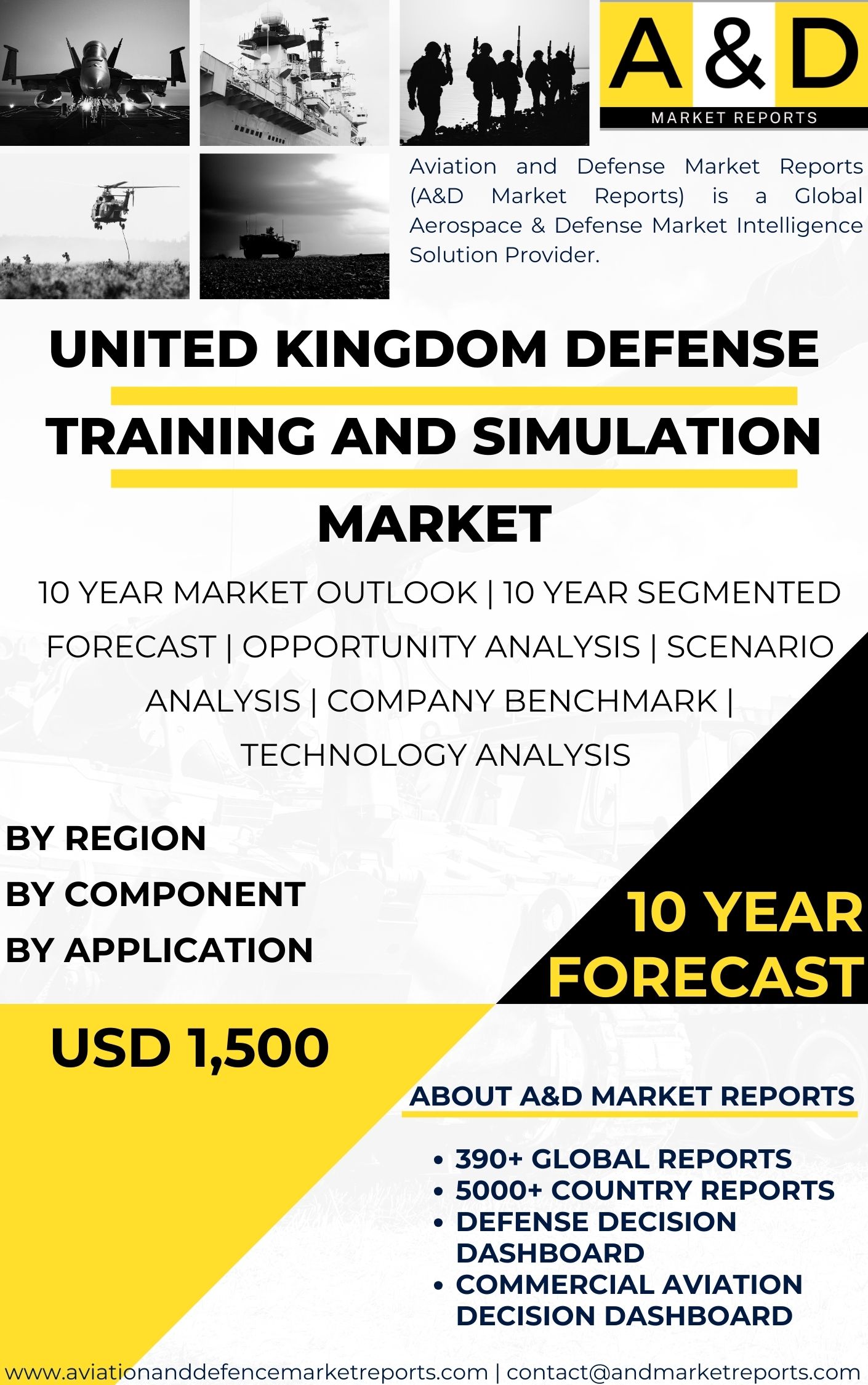
United Kingdom Defense Training and Simulator Market Overview
The United Kingdom defense training and simulator market is a vital sector that enhances military readiness, operational effectiveness, and combat capabilities. Training and simulator systems provide realistic and immersive environments where personnel can practice tactical scenarios safely. These systems replicate real-world conditions, offering cost-effective alternatives to live exercises while ensuring forces are prepared for modern warfare challenges.
Virtual Simulation-Based Training in the UK Defense Market
Virtual simulation is a major focus of the United Kingdom defense training and simulator market. Advanced computer graphics, artificial intelligence (AI), and realistic scenarios create interactive training experiences. Personnel can practice combat operations, peacekeeping missions, and disaster responses in a risk-free environment, improving skills and decision-making.
Flight Simulators for Aviation Training
Flight simulators are a cornerstone of aviation training in the United Kingdom defense sector. These systems replicate military aircraft cockpits with high accuracy, allowing pilots to practice routine and complex flight maneuvers, navigation exercises, emergency procedures, and combat scenarios. By simulating high-risk situations without physical danger, these tools reduce operational costs and preserve aircraft lifespan. Additionally, simulators enable repetitive practice, allowing pilots to refine decision-making under stress and improve reaction times in real-world combat situations.
Combat Simulators for Ground Forces
Combat simulators provide realistic training for ground forces, replicating diverse battlefield conditions. Soldiers can practice urban warfare, reconnaissance, tactical maneuvers, and squad coordination within virtual environments. These systems improve situational awareness, teamwork, and leadership skills. By recreating high-intensity combat scenarios, simulators prepare troops for complex operations while reducing the risks associated with live training exercises. They also allow commanders to test and refine tactics before deployment.
Joint and Integrated Training Systems
Integrated training systems allow multiple branches of the armed forces to conduct coordinated exercises in a shared virtual environment. This capability is critical for modern military operations that demand interoperability between army, navy, air force, and allied units. Personnel can share intelligence, coordinate maneuvers, and execute joint missions in real-time. Integrated systems also support multinational exercises, enabling the United Kingdom to strengthen cooperation with allied forces and standardize tactics across coalition operations.
Maritime and Submarine Simulators
Naval training in the United Kingdom leverages advanced maritime and submarine simulators. These systems replicate ship bridges, control rooms, and underwater navigation environments. Personnel can practice ship handling, submarine operations, anti-piracy tactics, and naval combat scenarios safely. These simulators also allow crews to respond to emergencies such as fires, collisions, or system failures, enhancing preparedness and reducing operational risks. The immersive training experience ensures crews are mission-ready in high-pressure maritime environments.
Technological Innovation in the UK Defense Training Market
Innovation drives continuous improvement in the defense training sector. Advanced graphics engines, AI-driven adaptive scenarios, and physics-based simulations make virtual environments highly realistic. VR and AR systems allow trainees to interact with virtual elements, enhancing spatial cognition, decision-making, and problem-solving skills. AI can personalize training programs by adapting scenarios to individual performance levels, while distributed simulation networks enable large-scale joint exercises across multiple locations, providing realistic multinational operational experience.
Key Challenges in the UK Defense Training and Simulator Market
The sector faces several challenges. High-fidelity simulations are essential to replicate real-world operational conditions accurately, but they require substantial computational power and specialized equipment. Interoperability is crucial for joint exercises, as systems from different manufacturers must work seamlessly together. Balancing simulator-based training with live exercises is also important; while virtual training is safe and cost-effective, hands-on experience with real equipment is irreplaceable for building confidence and operational skill. Ensuring cybersecurity and protecting simulation data is another growing concern, especially as systems become networked and integrated.
Future Trends
The United Kingdom defense training and simulator market is expected to grow as military operations become more complex. Emerging technologies, including AI-driven analytics, cloud-based simulation, haptic feedback systems, and augmented reality overlays, will expand the realism and adaptability of training programs. Simulators may also integrate with live exercises to create “mixed reality” training environments that combine virtual and real-world elements for comprehensive operational preparation.
Conclusion
The United Kingdom defense training and simulator market plays a vital role in preparing personnel for modern combat and operational challenges. Flight simulators, combat simulators, maritime systems, and integrated training networks provide safe, realistic, and cost-effective environments for skill development. Continuous innovation, research, and development are essential to enhance system realism, interoperability, and efficiency. Investing in advanced training technologies ensures that the United Kingdom maintains highly skilled, ready, and adaptable military forces capable of responding effectively to future threats.