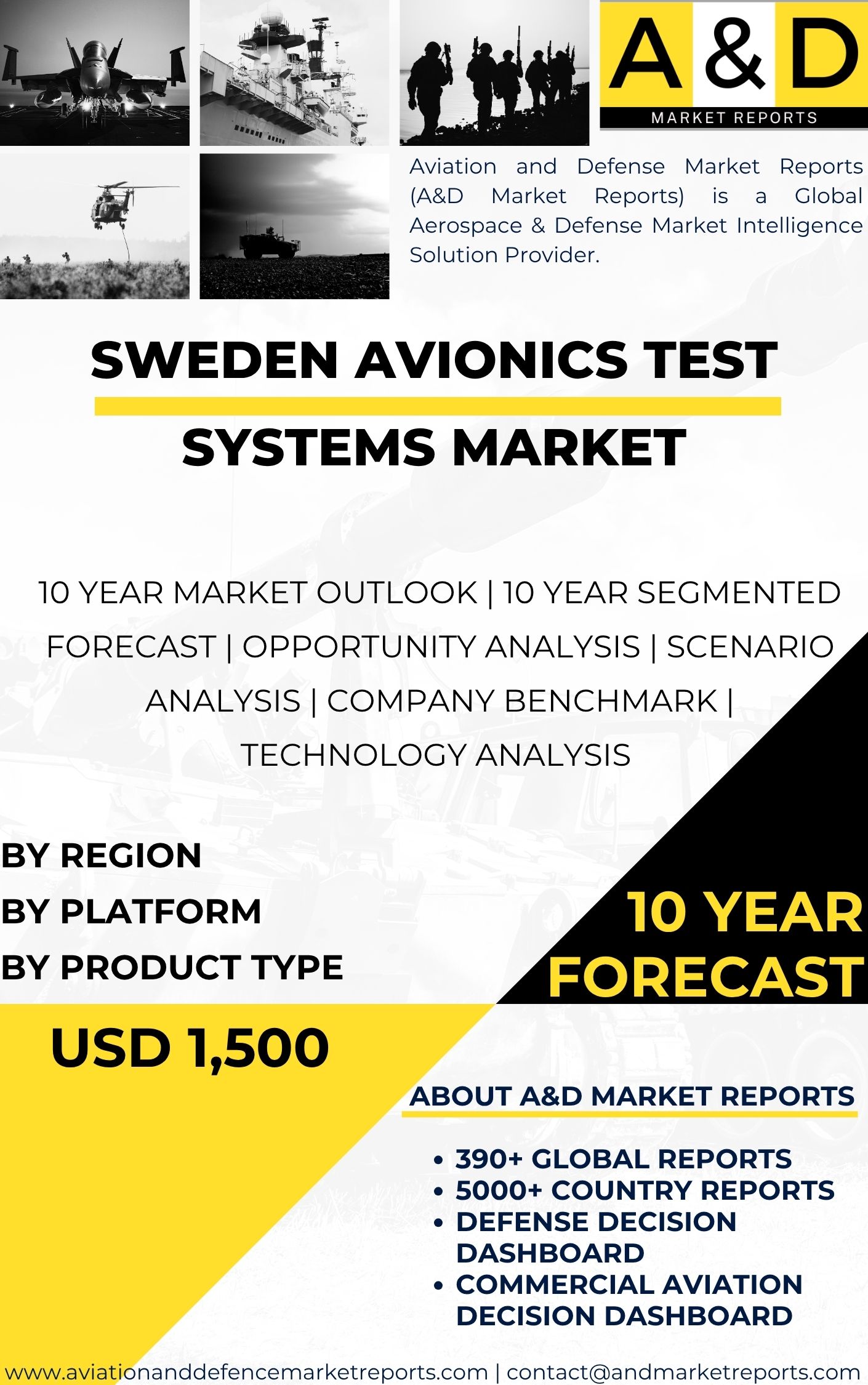
Sweden Avionics Test Systems

$1,500.00

Enquire Now
Category: Tag: Report ID: ANDCSE0200

Avionics test systems in Sweden play a central role in the aerospace sector by ensuring the reliability, safety, and performance of electronic systems embedded in aircraft used for civilian, commercial, and military applications. The industry is known for its rigorous approach to testing, which encompasses the entire lifecycle of avionics equipment, from research and development to manufacturing, installation, and long-term maintenance. Swedish engineers and manufacturers leverage a combination of simulation, hardware replication, and sophisticated software tools to evaluate the behavior and resilience of avionics systems under realistic and extreme conditions. These test processes include environmental stress testing, functional testing, and signal integrity assessments, all designed to catch potential flaws early in development and minimize costly post-production fixes, thereby reducing downtime and boosting operational dependability.

Go To Global Report Page Track this market real time on DDD

Description

Avionics test systems in Sweden play a central role in the aerospace sector by ensuring the reliability, safety, and performance of electronic systems embedded in aircraft used for civilian, commercial, and military applications. The industry is known for its rigorous approach to testing, which encompasses the entire lifecycle of avionics equipment, from research and development to manufacturing, installation, and long-term maintenance. Swedish engineers and manufacturers leverage a combination of simulation, hardware replication, and sophisticated software tools to evaluate the behavior and resilience of avionics systems under realistic and extreme conditions. These test processes include environmental stress testing, functional testing, and signal integrity assessments, all designed to catch potential flaws early in development and minimize costly post-production fixes, thereby reducing downtime and boosting operational dependability.

A distinctive feature of Swedish avionics testing is the tailored use of internationally recognized standards, such as ARINC-429 and MIL-STD-1553, which enable compatibility and communication across various aircraft subsystems. Test systems often include modular interfaces and multi-protocol solutions that can be quickly adapted or expanded to meet the specific needs of diverse aircraft configurations. This adaptability is crucial in a country where custom-built or specialized aerospace projects frequently drive technological innovation. The advanced simulation capabilities allow for effective analysis of aircraft data busses, real-time communication links, and networked avionics components, helping testers ensure seamless integration and true-to-life operational performance before systems are installed on flying platforms.

Sweden’s approach to avionics system testing encompasses both individual component analysis and integrated system evaluations. The process typically starts by verifying that each avionic subsystem performs reliably under expected and adverse conditions, progressing to holistic system-level examinations where how different devices interact is scrutinized. This comprehensive perspective is vital for detecting interface issues or integration challenges that may not be apparent during isolated testing. Engineers frequently use test rigs that simulate flight dynamics, generating input and output signals representative of real aircraft operations. Through these tests, data is captured in real time and analyzed for outliers, performance bottlenecks, or intermittent faults that may impede safety or mission capability.

Continuous improvements in Swedish avionics testing arise from the growing adoption of automation, machine learning, and cloud-based test management. Automated test equipment enables rapid, repeatable assessments and facilitates the collection of granular performance data, which engineers utilize for trend analysis and predictive maintenance. Cloud solutions allow for centralized data sharing across teams and organizations, accelerating benchmarking and comparative studies. Intelligent software tools support robust test planning and help translate regulatory requirements into actionable test parameters, simplifying compliance documentation and certification processes. The interplay between hardware and software development is especially evident in Sweden?s avionics ecosystem, where specialized companies working in concert with universities and research institutes drive both incremental and disruptive advances in test methodologies.

Sustainability and cost-efficiency also form part of the Swedish avionics test systems landscape. Industry players are focused on minimizing environmental impact by optimizing test schedules, reducing waste, and designing equipment for longevity and low energy consumption. The emphasis on modular and scalable solutions reduces capital expenditure and future-proofs test setups to keep pace with technological evolution. Swedish firms are recognized for creating future-proof, flexible test systems that can pivot quickly to support new aircraft programs or updated avionics protocols, helping operators avoid obsolescence and maximize the utility of their investments.

The rigorous culture around avionics system testing translates directly into higher aircraft safety, improved flight efficiency, and enhanced passenger experience. Reliable communication, navigation, and control systems underpin all aspects of flight, and the data-driven approach employed during Swedish test campaigns ensures that even subtle divergences from expected performance are investigated and corrected well before aircraft enter service. Manufacturers and maintenance organizations benefit from this diligence through better regulatory compliance, fewer field failures, and robust documentation supporting system certification and re-certification processes. The Swedish avionics test systems industry remains highly collaborative, drawing on expertise from government agencies, global avionics vendors, and local technology partners to ensure best practices and continual progress.

Table of content

Table Of Contents

1 Market Introduction

1.1 Market Introduction
1.2 Market Definition
1.3 Market Segmentation
1.4 10 Year Market Outlook

2 Market Technologies

3 Global Market Forecast

3.1 Global Market Forecast
3.2 By Platform
3.3 By Product Type

4 Europe Market Trends & Forecast

4.1 Drivers, Restraints And Challenges
4.2 PEST
4.3 Market Forecast
4.3.1 Market Forecast By Platform
4.3.2 Market Forecast By Product Type
4.4 Scenario Analysis
4.5 Key Companies& Profiling

5 Sweden Analysis

5.1 Current Levels Of Technology Maturation In This Market
5.2 Market Forecast
5.2.1 Market Forecast By Platform
5.2.2 Market Forecast By Product Type
5.3 Scenario Analysis
5.4 Country Defense Budget (Historical and 10- year forecast)
5.5 Defense Budget Category Spending- 10- year forecast
5.6 Procurement Analysis
5.7 EXIM Data
5.8 Patents

6 Opportunity Matrix

6.1 By Platform
6.2 By Product Type

7 Scenario Analysis

7.1 Scenario 1

7.1.1 By Platform (Scenario-1)
7.1.2 By Product Type (Scenario-1)

7.2 Scenario 2

7.2.1 By Platform (Scenario-2)
7.2.2 By Product Type (Scenario-2)

8 Company Benchmark

9 Strategic Conclusions

10 About Aviation And Defense Market Reports

Segments

By Platform
By Product Type

List of Tables

Table1: Global Market Forecast, Avionics Test Systems
Table2: Europe Market Forecast, Avionics Test Systems
Table3: Europe Market Forecast, By Platform
Table4: Europe Market Forecast, By Product Type
Table5: Europe, Scenario Analysis
Table6: Sweden Market Forecast, Avionics Test Systems
Table7: Sweden Market Forecast, By Platform
Table8: Sweden Market Forecast, By Product Type
Table9: Sweden, Scenario Analysis
Table 10: Sweden Defense Budget 10 Year Forecast
Table 11: Sweden, Defense Budget Category Spending- 10- year forecast
Table 12: Sweden, Procurement Analysis
Table 13: Sweden, EXIM Data Analysis
Table 14: Sweden, Opportunity Analysis, By Platform
Table 15: Sweden, Opportunity Analysis, By Product Type
Table 16: Sweden, Scenario Analysis, By Platform
Table 17: Sweden, Scenario Analysis, By Product Type

List of Figures

Figure 1: Market Segmentation, Sweden Avionics Test Systems
Figure 2: Key Technology Analysis, Avionics Test Systems
Figure 3: Global Market Forecast, Avionics Test Systems
Figure 4: Europe, Market Forecast, Avionics Test Systems
Figure 5: Europe, Market Forecast, By Platform
Figure 6: Europe, Market Forecast, By Product Type
Figure 7: Europe, Scenario Analysis
Figure 8: Sweden, Market Forecast, Avionics Test Systems
Figure 9: Sweden, Market Forecast, By Platform
Figure 10: Sweden, Market Forecast, By Product Type
Figure 11: Sweden, Scenario Analysis
Figure 12: Sweden, Defense Budget 10 Year Forecast
Figure 13: Sweden, Defense Budget Category Spending- 10- year forecast
Figure 14: Sweden, Procurement Analysis
Figure 15: Sweden, EXIM Data Analysis
Figure 16: Sweden, Opportunity Analysis, By Platform
Figure 17: Sweden, Opportunity Analysis, By Product Type
Figure 18: Sweden, Scenario Analysis, By Platform
Figure 19: Sweden, Scenario Analysis, By Product Type
Figure 20: Company Benchmark

Aviation and Defense Market Reports


TPA | TIA | Consulting | Market Reports | Defense Decision Dashboard


Our Defense Report - Our Team Has Worked on More Than 250+ Individual Products / Markets