
Description
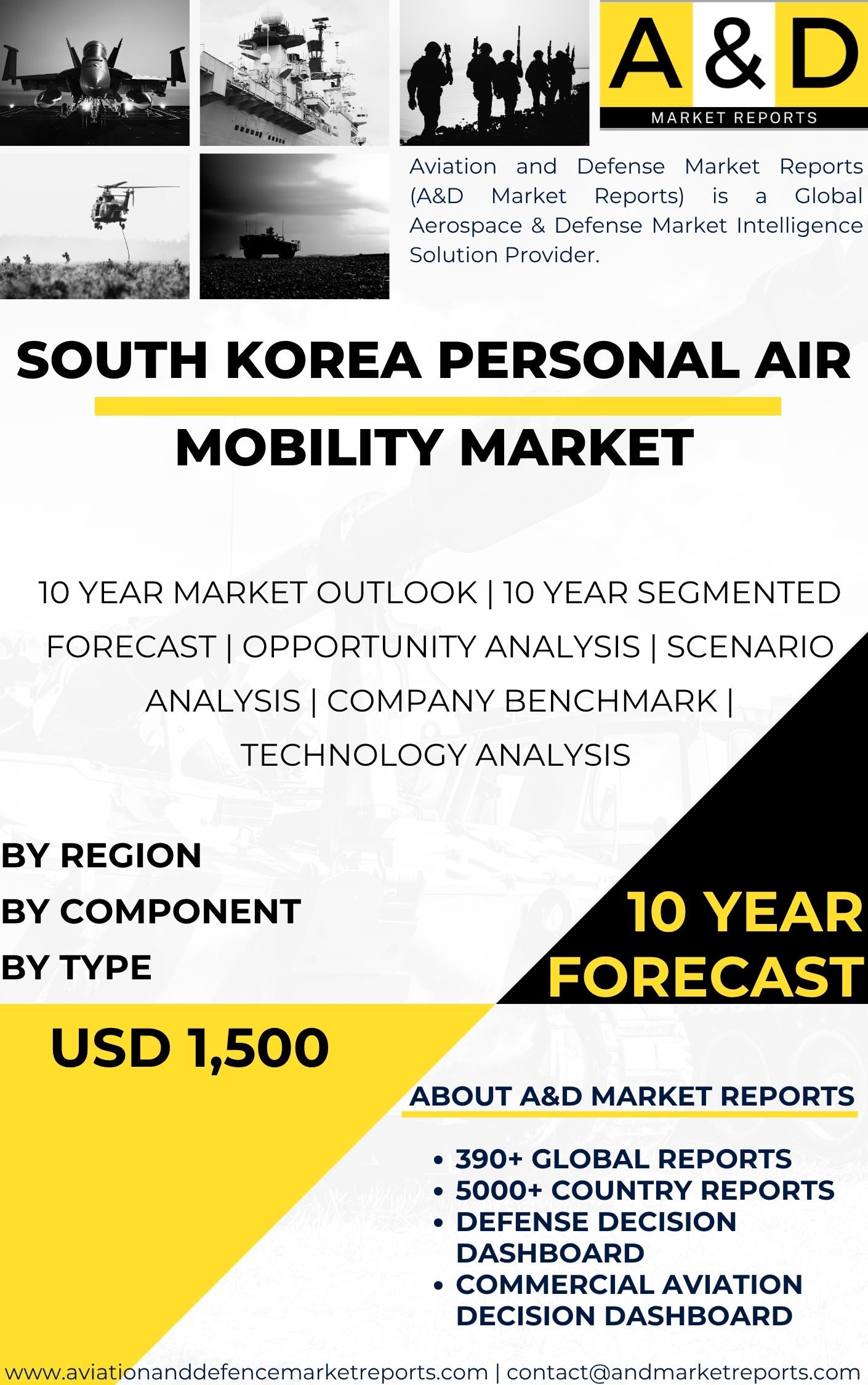
Personal Air Mobility Market in South Korea: Overview
The Personal Air Mobility market in South Korea is expanding rapidly. Growth is driven by new technology, strong government support, and urban air mobility programs. South Korea aims to build a safe and efficient low-altitude transport system.
The government follows a phased rollout plan. Demonstration flights are planned for 2025. Commercial services are expected by 2030. A full metropolitan network is targeted by 2040. A dedicated UAM law supports this roadmap and provides funding and legal clarity.
Government Support for the Personal Air Mobility Market in South Korea
Regulatory Framework and Policy Initiatives
South Korea has introduced a Special Act for UAM commercialization. This law enables testing and deployment in urban areas. It also ensures safety and airspace security. Few countries offer such regulatory flexibility.
Defense agencies, local governments, and civil authorities work together. This cooperation allows controlled access to restricted airspace. As a result, UAM operations can move forward faster.
Market Size and Growth Outlook
The Personal Air Mobility market in South Korea shows strong revenue potential. In 2024, the advanced air mobility sector generated about USD 439.1 million. Forecasts project growth to nearly USD 6.25 billion by 2035. This reflects a compound annual growth rate of 27.7%.
The personal air vehicle segment alone was valued at about USD 2.5 billion in 2024. It is expected to reach USD 10 billion by 2033. Hardware accounts for the largest share today. Software shows the fastest growth.
Technology and System Components
Aircraft and Platform Technologies
The market includes electric vertical takeoff and landing aircraft. These vehicles rely on electric or hybrid propulsion. Key components include aerostructures, propulsion units, avionics, and flight control systems.
Software and Digital Systems
Software platforms support navigation, traffic control, and mission planning. Applications include passenger travel, cargo delivery, and surveillance. Integrated systems improve safety and efficiency.Urban Infrastructure and Air Corridor Development
Planned Air Routes and City Integration
South Korea is building dedicated air corridors. These routes link major hubs around Seoul. Key locations include Incheon Airport, Gimpo Airport, and central districts along the Han River.
Flights operate at about 450 meters altitude. Mobile and digital networks manage traffic. Helicopters and air taxis share routes during early stages. Urban projects align ground transport with aerial travel.
Industry Partnerships and Ecosystem Growth
Manufacturer and Operator Collaboration
Local firms partner with international aircraft developers. These partnerships focus on eVTOL standards and operations. Industry players also invest in sustainability and low-noise designs.
Integrated Mobility Platforms
Companies develop platforms that combine air and ground travel. Users can plan trips, book tickets, and pay in one system. This supports seamless urban movement.
Consumer Adoption and Mobility-as-a-Service
Rising Demand for On-Demand Transport
Urban commuters increasingly prefer mobility-as-a-service models. These systems offer convenience and lower emissions. Real-time planning and payment drive adoption.
Personal air mobility fits well into this model. It reduces congestion and travel time. This boosts interest in air taxis and point-to-point services.
Challenges and Market Opportunities
Technical challenges remain. These include autonomy, safety validation, and infrastructure readiness. Regulatory compliance also requires constant updates.
Despite this, opportunities remain strong. Government backing reduces risk. Industry innovation accelerates progress. Together, they support long-term market growth.
Conclusion: Future of the Personal Air Mobility Market in South Korea
The Personal Air Mobility market in South Korea is set for rapid expansion. Strong policy support, advanced technology, and urban planning drive progress. Commercial services will begin within the next few years.
By 2040, South Korea aims to operate a full urban air network. This approach positions the country as a leader in next-generation transportation. Personal air mobility will play a major role in shaping future urban travel.