
Description
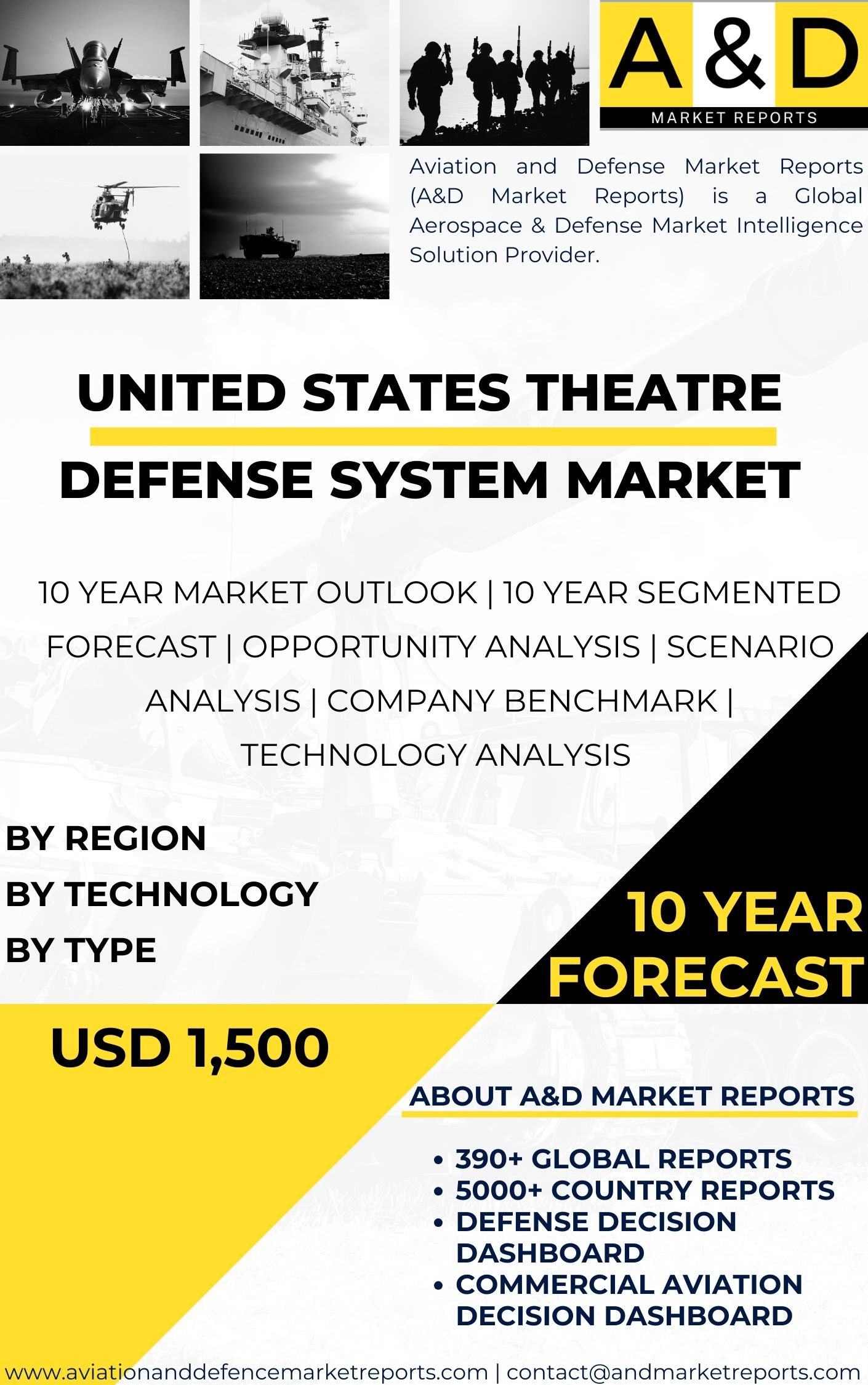
United States Theatre Defense System Market
The United States Theatre Defense System Market represents a critical segment of the nation’s missile defense infrastructure, designed to protect military forces, allied nations, and strategic assets from regional ballistic missile threats. Theatre defense systems focus on countering short, medium, and intermediate-range missile attacks within specific operational regions. These systems combine advanced radar technologies, interceptor missiles, command and control networks, and space-based surveillance systems to create a layered defensive shield. As missile threats continue to evolve globally, the United States continues to invest heavily in theatre missile defense technologies to strengthen national and regional security.
Evolution of Theatre Defense Systems
The origins of the United States Theatre Defense System can be traced back to the Cold War period when ballistic missile threats became a major concern for U.S. military planners. During this time, the United States focused on developing systems capable of protecting deployed forces and allied territories from regional missile attacks. Early missile defense programs concentrated on detecting and intercepting short and medium-range ballistic missiles before they could strike critical targets. Over time, advancements in radar systems, interceptor technologies, and satellite-based tracking systems significantly improved the effectiveness of theatre missile defense operations.
Importance of Theatre Missile Defense
Theatre missile defense systems play an essential role in safeguarding military personnel, civilian populations, and strategic infrastructure from aerial threats. These systems provide protection against ballistic missiles launched by hostile nations or non-state actors operating within regional conflict zones. Modern military operations increasingly depend on missile defense capabilities to ensure operational continuity and maintain deterrence against potential adversaries. Theatre defense systems also support allied nations by strengthening regional security cooperation and improving collective defense readiness.
Patriot Missile Defense System
One of the earliest and most recognized components of the U.S. Theatre Defense System is the Patriot missile defense system. Originally developed as an air defense platform during the 1980s, the Patriot system later evolved into a highly effective ballistic missile defense solution. The system gained significant attention during the Gulf War when it was used to intercept incoming ballistic missiles. Modern Patriot systems use advanced radar and interceptor technologies to detect, track, and destroy hostile missiles, aircraft, and drones. The Patriot Advanced Capability-3 (PAC-3) interceptor remains one of the most widely deployed missile defense systems used by the United States and its allies.
Missile Defense Agency and System Development
The Missile Defense Agency (MDA), formerly known as the Ballistic Missile Defense Organization (BMDO), has played a central role in advancing U.S. missile defense technologies. The agency oversees the research, development, testing, and deployment of integrated missile defense systems designed to counter threats during all phases of missile flight. The MDA works closely with military services, defense contractors, and allied nations to improve missile defense capabilities and ensure interoperability between various defense platforms.
Ground-Based Midcourse Defense System
The Ground-Based Midcourse Defense (GMD) system represents a major component of the broader U.S. missile defense architecture. Designed to defend the United States and its territories against intercontinental ballistic missile threats, the GMD system uses ground-based interceptors to engage incoming missiles during the midcourse phase of flight. The system relies on a network of long-range radars, sensors, and command centers to detect, track, and discriminate between actual warheads and decoys. Strategic interceptor sites located within the United States provide the capability to neutralize long-range missile threats before they reach their targets.
Aegis Ballistic Missile Defense System
The Aegis Ballistic Missile Defense (BMD) system is another critical element of the United States Theatre Defense System. Originally developed for naval air defense operations, the Aegis combat system was later adapted for missile defense missions. Installed on U.S. Navy destroyers and cruisers, the Aegis BMD system uses advanced radar systems and Standard Missile interceptors to detect and engage ballistic missiles during midcourse and terminal flight phases. Its mobility and flexibility allow naval forces to provide regional missile defense coverage in various operational theaters around the world.
Standard Missile-3 Interceptors
The Standard Missile-3 (SM-3) interceptor serves as the primary missile interceptor used within the Aegis BMD system. The SM-3 is designed to intercept short to intermediate-range ballistic missiles outside the Earth’s atmosphere using hit-to-kill technology. Successful operational tests and deployments have demonstrated the effectiveness of the SM-3 in defending naval forces and allied territories from missile attacks. Continued upgrades to the interceptor are improving its range, speed, and engagement capabilities against evolving missile threats.
Terminal High Altitude Area Defense System
The Terminal High Altitude Area Defense (THAAD) system is a highly mobile missile defense platform developed to intercept ballistic missiles during their terminal phase of flight. THAAD uses advanced radar systems and mobile launchers to provide rapid deployment and flexible operational capabilities. The system can engage incoming missiles both inside and outside the atmosphere, creating an additional layer of protection for critical assets and population centers. THAAD deployments in strategic regions have strengthened regional missile defense capabilities and enhanced deterrence against hostile missile threats.
Space-Based Surveillance and Tracking
Space-based assets have become increasingly important for modern theatre missile defense operations. Satellites equipped with infrared sensors provide early warning detection of missile launches and support real-time tracking of airborne threats. Space-based surveillance systems improve the speed and accuracy of threat identification while providing military commanders with critical situational awareness. These capabilities allow missile defense systems to respond rapidly and coordinate interception efforts more effectively during potential attacks.
Integration of Command and Control Networks
Modern theatre defense systems rely heavily on integrated command and control networks to coordinate defensive operations across multiple platforms and domains. Advanced communication systems connect radar installations, interceptor batteries, naval assets, and satellite systems into a unified defense architecture. This network-centric approach enables faster decision-making, real-time threat assessment, and coordinated engagement of multiple targets simultaneously. Integration between different defense systems also improves operational efficiency and increases overall missile defense effectiveness.
Cooperation with Allied Nations
The United States actively collaborates with allied nations to strengthen regional missile defense capabilities. Countries such as Japan, South Korea, and several NATO members have integrated U.S. missile defense technologies into their national defense strategies. Cooperative deployments of systems like Aegis BMD and Patriot strengthen regional security partnerships and enhance collective defense readiness against common missile threats. Joint exercises and information-sharing agreements further improve interoperability between allied missile defense systems.
Emerging Threats and Modern Challenges
Despite significant advancements, the U.S. Theatre Defense System faces growing challenges from increasingly sophisticated missile technologies. Potential adversaries are developing hypersonic weapons, maneuverable re-entry vehicles, and advanced countermeasures designed to evade traditional missile defense systems. These evolving threats require continuous modernization of sensors, interceptors, and command systems to maintain operational effectiveness. Electronic warfare attacks and cyber threats also present new risks to missile defense infrastructure and communication networks.
Artificial Intelligence and Advanced Technologies
The integration of artificial intelligence, machine learning, and advanced data analytics is expected to play a major role in the future development of theatre missile defense systems. AI-driven technologies can improve target recognition, threat prioritization, and interception decision-making processes. Machine learning algorithms help defense systems process large amounts of sensor data more efficiently while reducing response times. These advancements are expected to significantly improve the accuracy and reliability of future missile defense operations.
Next Generation Interceptor Program
The United States continues to invest in next-generation missile defense technologies to counter emerging threats. One of the most important modernization efforts is the development of the Next Generation Interceptor (NGI) program. The NGI is intended to provide improved interception capabilities against advanced ballistic missile threats, including those equipped with countermeasures and multiple warheads. The program reflects the U.S. commitment to maintaining a technological advantage in missile defense capabilities.
Strategic Importance of Layered Defense
The United States employs a layered missile defense strategy to maximize protection against a wide range of threats. By integrating systems such as Patriot, THAAD, Aegis BMD, and GMD, the military can engage incoming missiles during different phases of flight. This layered approach increases interception opportunities while reducing the probability of successful attacks. The integration of regional and national missile defense systems ensures comprehensive coverage and enhances overall strategic deterrence.
Future Outlook of the Market
The future of the United States Theatre Defense System Market appears highly promising as geopolitical tensions and missile proliferation continue to increase globally. Rising investments in defense modernization, autonomous technologies, and integrated command systems are expected to drive continued market growth. Future theatre defense systems are likely to feature improved automation, enhanced mobility, greater interoperability, and advanced interception capabilities against next-generation missile threats. Continued advancements in artificial intelligence, sensor technologies, and space-based tracking systems will further strengthen the effectiveness of missile defense architectures.
Conclusion
The United States Theatre Defense System Market remains a vital component of the nation’s overall security strategy. Through systems such as Patriot, THAAD, Aegis BMD, and Ground-Based Midcourse Defense, the United States has developed a highly integrated and layered missile defense architecture capable of countering a broad spectrum of ballistic missile threats. Continuous investments in research, development, and allied cooperation ensure that the United States maintains strong defensive capabilities against evolving regional and global missile threats. As warfare technologies continue to advance, theatre missile defense systems will remain essential for protecting military forces, civilian populations, and strategic assets around the world.