
Description
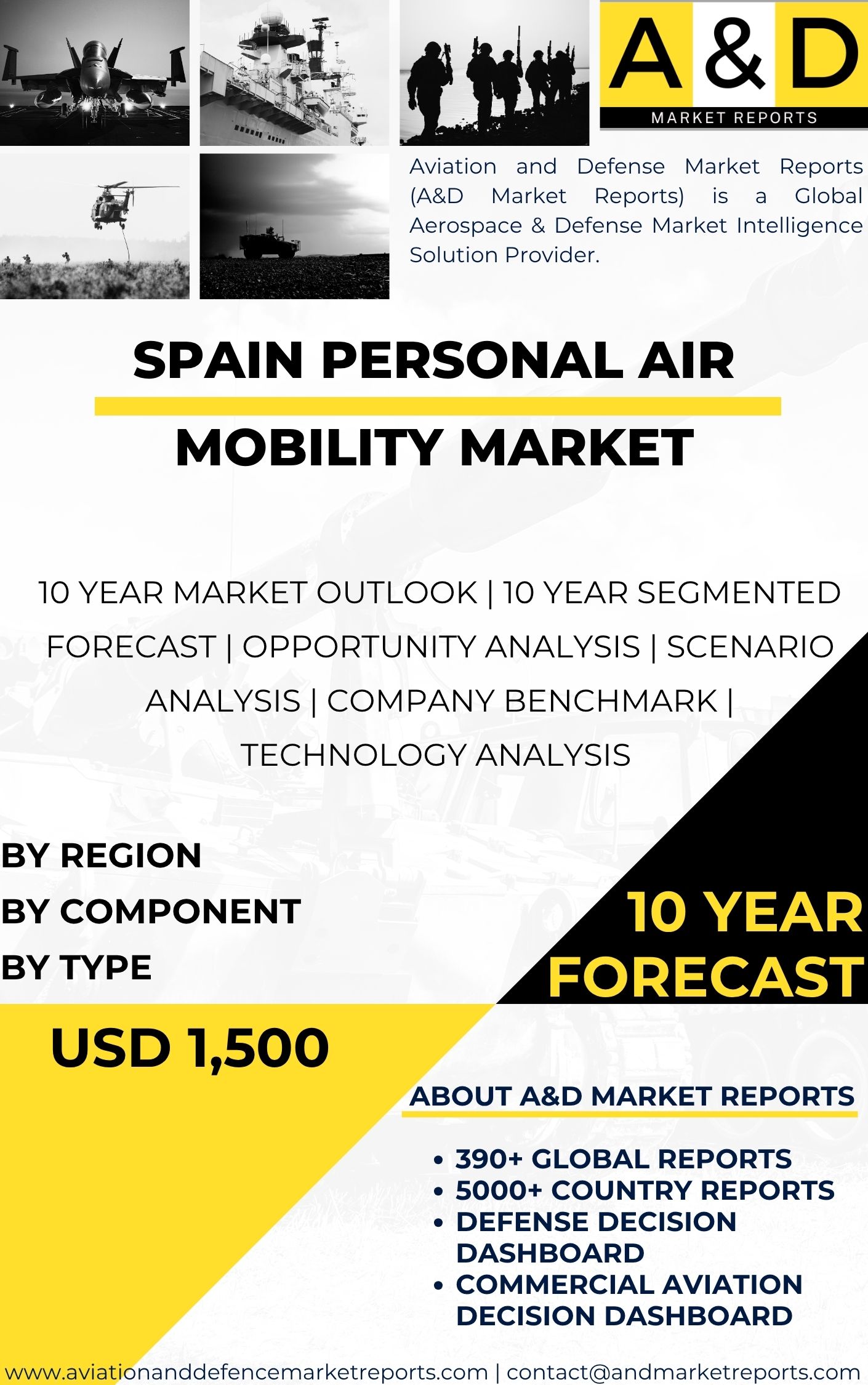
Spain’s Personal Air Mobility Market Overview
Spain Personal Air Mobility is becoming an important part of the country’s aerospace and defense industry. The market focuses on advanced transportation systems designed for rapid, flexible, and efficient movement of people, cargo, and emergency services. Personal air mobility platforms include electric vertical take-off and landing aircraft, air taxis, and lightweight unmanned aerial systems. Growing urbanization, traffic congestion, and advances in aerospace technology continue to increase interest in these next-generation mobility solutions. Spain is also exploring PAM systems for military and security applications, including tactical transport, reconnaissance missions, and rapid medical evacuation. In addition, the country’s strong aerospace manufacturing capabilities and participation in European innovation programs support the growth of this emerging sector. As transportation systems evolve, Spain sees personal air mobility as a strategic opportunity for both civilian and defense modernization.
eVTOL Aircraft and Advanced Mobility Platforms
Electric vertical take-off and landing aircraft are at the center of Spain’s personal air mobility market. These aircraft can operate without traditional runways and are designed for short-distance urban transportation and rapid deployment missions. Their ability to bypass road congestion makes them attractive for civilian passenger transport, emergency response, and logistics operations. Military-focused PAM platforms emphasize agility, mobility, and operation in difficult or remote environments. Many systems are equipped with advanced navigation, communication, and sensor technologies that support tactical reconnaissance and rapid troop deployment. In addition, modular platform designs allow operators to configure vehicles for passenger transport, cargo delivery, surveillance, or casualty evacuation missions. Spanish aerospace companies and European partners continue developing lightweight and energy-efficient PAM systems that can support a wide range of operational requirements.
Technological Innovation and Autonomous Systems
Technological advancement is one of the strongest drivers of Spain’s PAM market growth. Manufacturers are investing heavily in electric propulsion systems, lightweight composite materials, and advanced battery technologies to improve flight endurance and operational efficiency. In addition, autonomous flight control systems and artificial intelligence-based navigation technologies are improving aircraft safety and reducing pilot workload. Collision avoidance systems, automated route planning, and digital air traffic integration also support the safe expansion of urban air mobility operations. Spain collaborates with European aerospace organizations to develop interoperable PAM systems that comply with evolving aviation and defense standards. Noise reduction technologies and environmentally friendly propulsion systems are also major priorities as cities seek sustainable transportation alternatives. These innovations position Spain as an active participant in the future development of advanced aerial mobility systems.
Military and Civilian Operational Applications
Spain’s personal air mobility market supports both civilian and military operations across multiple mission environments. In civilian sectors, PAM systems help reduce urban traffic congestion and improve transportation efficiency for passengers, medical services, and cargo logistics. Emergency medical evacuation and disaster response operations can particularly benefit from rapid aerial mobility in crowded urban environments. On the military side, PAM platforms provide flexible tactical transport capabilities for rapid deployment of special operations forces, reconnaissance teams, and emergency casualty evacuation. These systems also improve logistical support for forward-deployed units operating in remote or contested areas. Furthermore, autonomous and semi-autonomous PAM platforms reduce operational risk by limiting direct human exposure during dangerous missions. Training and simulation programs continue to play an important role in ensuring operator proficiency and maintaining safety standards during both civilian and defense operations.
European Collaboration and Regulatory Development
Spain actively participates in European aerospace collaborations aimed at accelerating the development of personal air mobility technologies. Joint programs involving aerospace manufacturers, defense companies, and research institutions support innovation in autonomy, propulsion systems, and urban air traffic management. In addition, Spain works with European aviation authorities to establish regulatory frameworks that support safe and efficient PAM operations. Integration with urban airspace management systems remains a major focus as governments prepare for increasing numbers of low-altitude aerial vehicles. NATO interoperability considerations also influence military PAM platform development, especially for communication systems and operational coordination. These collaborative efforts strengthen Spain’s position within the European aerospace ecosystem while supporting long-term technological growth and international competitiveness.
Market Challenges and Future Outlook
Despite strong growth potential, Spain’s personal air mobility market faces several important challenges. Regulatory approval processes, airspace integration, and public acceptance remain key concerns for widespread adoption. In addition, electric propulsion systems still face limitations related to battery energy density and flight endurance. Cybersecurity also plays an increasingly important role as autonomous flight systems and connected aircraft networks become more common. Infrastructure development, including charging stations, landing zones, and maintenance facilities, requires significant investment to support future operations. However, ongoing technological innovation and rising demand for sustainable transportation continue to drive market expansion. Spain’s focus on smart mobility, aerospace modernization, and dual-use defense technologies positions the country for long-term growth in the PAM sector. As urban air mobility becomes more practical and technologically mature, Spain is expected to remain an active contributor to the future of advanced aerial transportation systems.