
Description
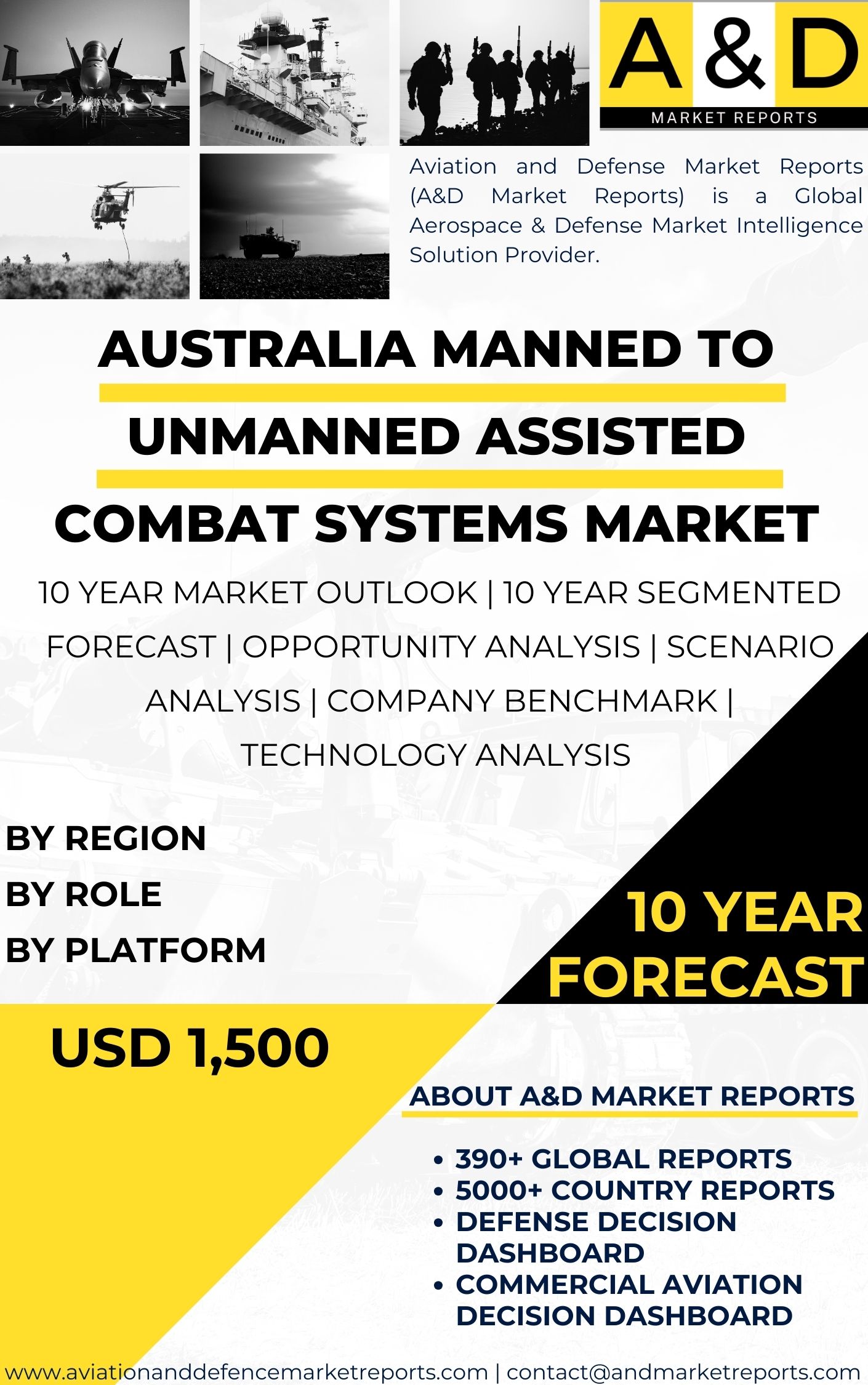
Australia Manned to Unmanned Assisted Combat Systems Market Overview
The Australia manned to unmanned assisted combat systems market represents a major evolution in the country’s defense operations. These systems integrate manned platforms with unmanned assets to improve operational effectiveness while reducing risks to personnel. As modern battlefields become more complex, Australia increasingly relies on this hybrid approach. Consequently, continued investment in MUACS supports long-term defense readiness, mission adaptability, and improved response to regional security challenges.
Concept of Manned to Unmanned Assisted Combat Systems
Manned to unmanned assisted combat systems function by linking human-controlled platforms with autonomous or remotely operated assets. These include aerial drones, unmanned ground vehicles, and robotic maritime platforms. Importantly, human operators maintain decision-making authority, which ensures accountability and flexibility. Meanwhile, unmanned systems execute surveillance and high-risk tasks. As a result, this coordinated structure enhances control, improves mission speed, and supports safer operations.
Role of Human Operators and Autonomous Platforms
Human operators remain central to MUACS operations by directing missions, interpreting intelligence, and adapting tactics in real time. Their experience allows informed judgment during unpredictable situations. At the same time, autonomous platforms extend operational reach by working continuously in hazardous or remote environments. These platforms collect data, monitor threats, and execute commands. Therefore, human-machine cooperation significantly improves situational awareness and reduces physical risk to personnel.
Operational Applications Across the Australian Defence Force
The Australia manned to unmanned assisted combat systems market supports a wide range of ADF missions. These include intelligence gathering, surveillance, border protection, and combat support operations. In addition, MUACS platforms assist with logistics, equipment transport, and infrastructure monitoring. Because these systems operate across land, air, and maritime domains, they offer high flexibility. Consequently, the ADF gains faster response capability and improved operational coordination.
Intelligence, Surveillance, and Situational Awareness Advantages
Unmanned assets in MUACS frameworks provide continuous intelligence and surveillance coverage. They use advanced sensors such as electro-optical, infrared, and radar systems. These sensors collect real-time battlefield data from land, air, and maritime zones. This data is sent instantly to commanders and operators through secure communication links. As a result, decision-makers react faster to emerging threats and changing conditions. In addition, better data sharing improves coordination between different military units. It also reduces delays in command decisions. This strengthens overall mission effectiveness and improves battlefield awareness in complex operations.
Force Protection and Risk Reduction Capabilities
Force protection is a major advantage of MUACS systems. Unmanned vehicles are used to handle high-risk missions such as route clearance and explosive detection. They also perform forward reconnaissance in hostile areas. These missions reduce the need for soldiers to enter dangerous zones. As a result, direct exposure of personnel to threats is significantly reduced. At the same time, these systems maintain operational speed during long missions. They can operate continuously without fatigue or loss of performance. Therefore, troop safety increases while mission continuity is maintained even in highly hostile environments.
Industry Collaboration and System Development
The Australia MUACS market depends on strong cooperation between defense companies, research bodies, and government agencies. This collaboration helps speed up innovation and system development cycles. It also allows faster integration of new technologies into operational platforms. In addition, joint efforts ensure systems match real battlefield requirements. Field feedback is used to improve design and performance. As a result, Australia develops reliable and scalable MUACS solutions. These systems are designed to adapt quickly to changing and unpredictable threats. This makes development more efficient and operationally relevant.
Role of the Australian Defence Industry
The Australian defense industry plays an important role in MUACS development and deployment. Local companies support system design, testing, integration, and long-term maintenance activities. They focus on areas such as autonomous software development and secure communication systems. They also work on platform interoperability across land, air, and naval systems. As a result, domestic capability is significantly improved. Dependence on foreign suppliers is reduced over time. It also strengthens national defense independence and technological self-reliance. Additionally, it supports long-term system upgrades and lifecycle sustainability.
Strategic Importance for Australia’s Regional Security
Australia’s geography and regional responsibilities increase the importance of MUACS capabilities. These systems enable rapid response across vast land and maritime areas. They are especially useful in monitoring remote and dispersed operational zones. In addition, they act as force multipliers during joint and coalition missions. This improves coordination with allied forces during shared operations. Therefore, MUACS enhances readiness and deterrence across the region. It also strengthens surveillance and response capabilities in critical maritime routes. This directly supports Australia’s long-term regional security objectives.
Market Outlook and Future Trends
The MUACS market in Australia is expected to grow steadily in the coming years. Advances in artificial intelligence and autonomous systems are driving this growth. Secure communication and networked battlefield systems also support adoption. In addition, defense modernization programs continue to increase investment. These systems are becoming more capable and more widely used. As a result, MUACS will remain a key part of future military operations. It will improve flexibility, mission speed, and operational resilience. It will also support smarter and more connected defense strategies.