
Description
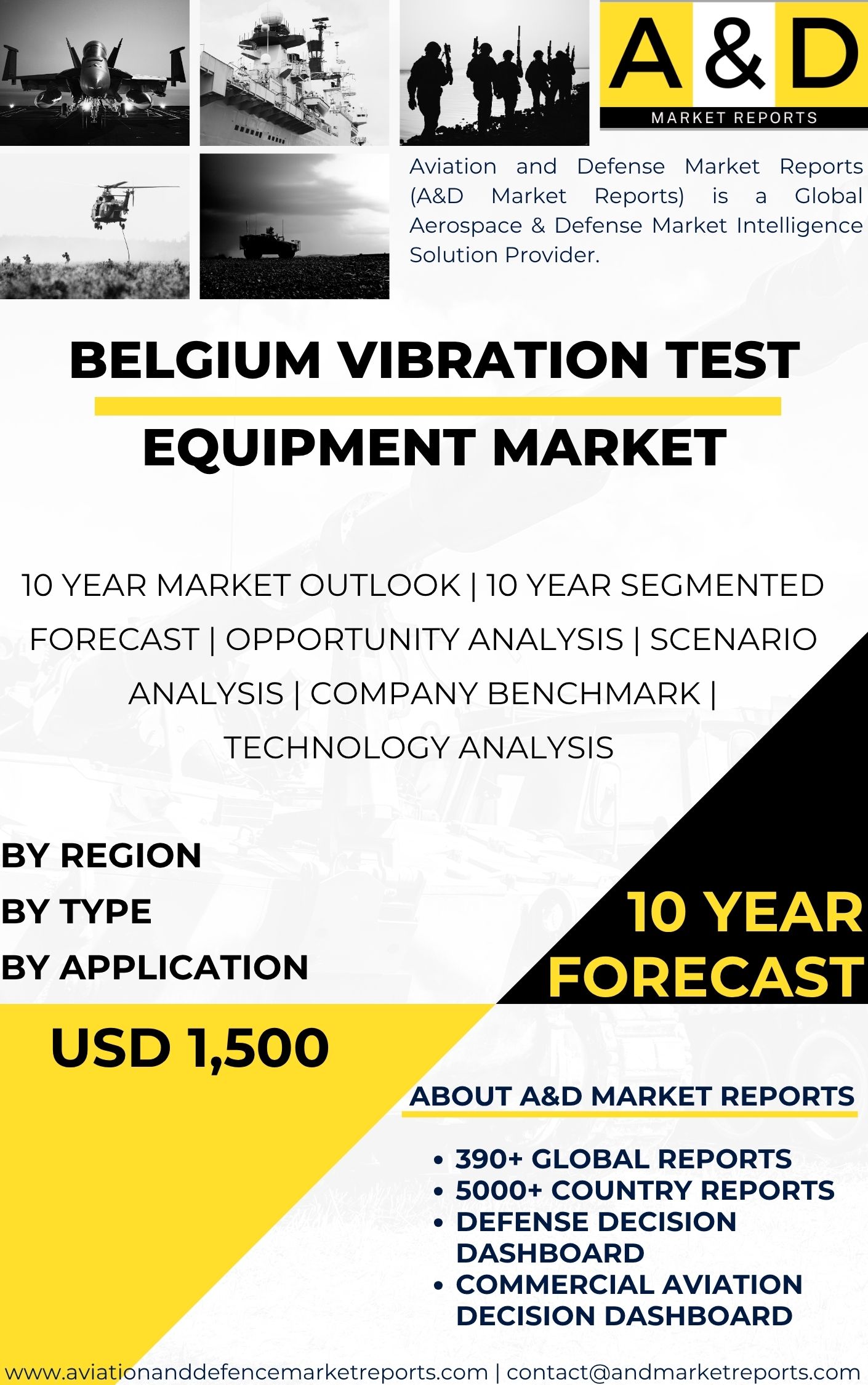
Belgium?s vibration test equipment market within the aerospace and defense sector has grown in importance as the country seeks to maintain its role in European collaborative projects, NATO modernization efforts, and the global aerospace supply chain. Vibration testing plays a crucial role in evaluating the durability, performance, and reliability of both defense and aerospace systems, ensuring that they meet stringent standards for safety and mission readiness. As Belgium participates in multinational aircraft programs, space initiatives through the European Space Agency, and the integration of advanced defense technologies, the demand for vibration test equipment has become an essential component of its engineering and testing infrastructure. This market is not only driven by defense procurement but also by the dual-use nature of aerospace technologies, where commercial aviation and defense platforms share overlapping testing requirements.
The Belgian aerospace industry, although not as large as those of neighboring France or Germany, is strategically positioned within European supply chains. This requires Belgian firms to adhere to international testing standards, often necessitating the use of advanced vibration test equipment capable of simulating real-world operational stresses. Vibration testing ensures that components ranging from avionics and sensors to airframes and propulsion systems can withstand the harsh conditions encountered during flight, combat, or space missions. With increased focus on system reliability and lifecycle management, Belgian companies are investing in state-of-the-art vibration testing systems that provide high precision, advanced data acquisition, and integration with digital modeling tools.
The rise of digital transformation has further influenced Belgium?s vibration test equipment market. Companies are increasingly integrating vibration testing with digital twin technology, predictive analytics, and advanced simulation platforms. These capabilities allow engineers to predict failures, improve designs, and shorten development cycles, all of which are crucial in a competitive global aerospace and defense environment. Belgium?s participation in projects like the F-35 fighter aircraft program, NATO-led modernization initiatives, and European satellite and UAV programs all require rigorous testing, creating a steady demand for advanced vibration test equipment.
Sustainability trends are also shaping the vibration test equipment market in Belgium. As aerospace and defense platforms are designed to be lighter, more fuel-efficient, and environmentally responsible, the use of advanced materials and new structural designs has increased. These materials, including composites and alloys, must undergo vibration testing to ensure they can perform under operational stress without compromising safety. Belgian firms, often working alongside European partners, are investing in equipment that can test these advanced materials under a variety of simulated operational conditions.
The defense side of the market has seen additional demand due to Belgium?s ongoing modernization of land, naval, and air systems. Vibration testing is critical not only for aircraft but also for armored vehicles, naval platforms, and missile systems, all of which must perform reliably under harsh environments. The growing adoption of unmanned aerial and ground systems within Belgian and NATO defense forces has also added new requirements for testing, as these systems often face unique vibration environments.
Belgium?s research ecosystem, including institutions such as KU Leuven and specialized engineering research centers, supports the development and deployment of advanced vibration testing technologies. These institutions often collaborate with industry and government agencies to create test methodologies that align with European and NATO standards. This collaboration ensures that Belgium?s aerospace and defense industry continues to remain competitive in the global market.
Looking forward, Belgium?s vibration test equipment market is expected to continue growing as technological complexity increases, sustainability goals demand more rigorous testing, and NATO defense requirements evolve. The market will be shaped by trends such as automation in testing processes, integration with big data analytics, and the expansion of testing to new domains like hypersonic systems and advanced unmanned platforms. While challenges exist in terms of limited domestic budgets, Belgium?s close integration with European programs ensures sustained demand for advanced vibration testing solutions.