
Description
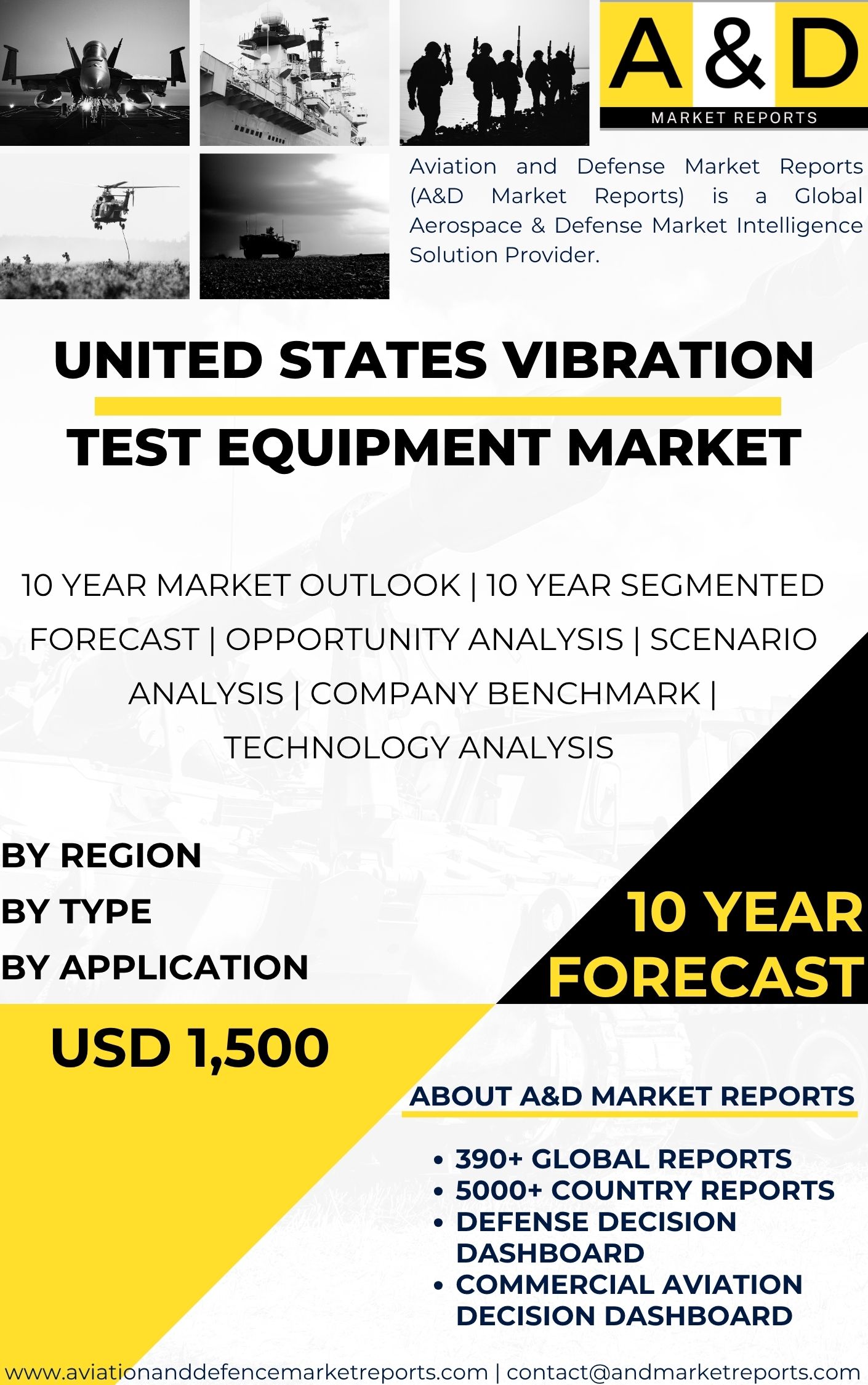
United States Vibration Test Equipment Market Overview
The United States Vibration Test Equipment market plays a critical role in the aerospace and defense industry by supporting the testing and validation of components and systems exposed to dynamic operational conditions. These testing systems help manufacturers evaluate the durability, reliability, and structural integrity of aerospace and defense products. Moreover, vibration testing supports product development, qualification, production verification, and lifecycle maintenance activities across military and aerospace platforms.
United States Vibration Test Equipment Market Testing Applications
The United States Vibration Test Equipment market supports a wide range of testing applications for aircraft, spacecraft, military vehicles, missiles, and defense electronics. Engineers use vibration testing systems to simulate turbulence, launch shocks, road vibrations, and other operational stresses experienced during real missions. In addition, these systems help identify structural weaknesses, resonance issues, and mechanical failures before deployment. As a result, aerospace and defense organizations can improve system safety and operational reliability.
United States Vibration Test Equipment Market Equipment Types
The United States Vibration Test Equipment market includes several advanced testing technologies designed for different testing requirements. Common systems include electrodynamic shakers, hydraulic shakers, multi-axis vibration simulators, and acoustic vibration testing platforms. Furthermore, these systems apply controlled vibration forces across multiple frequencies and motion axes with high precision. Therefore, manufacturers can accurately replicate complex operational environments during testing procedures.
United States Vibration Test Equipment Market Testing Methods
The United States Vibration Test Equipment market uses different vibration testing methods to evaluate component performance under stress conditions. Random vibration testing simulates broad operational vibration patterns encountered during service life. In contrast, sine vibration testing exposes systems to specific frequencies to identify resonance and structural weaknesses. Moreover, multi-axis vibration testing recreates complex three-dimensional motion conditions experienced by aerospace components during actual operations.
Market Standards and Compliance
The United States Vibration Test Equipment market operates under strict aerospace and defense testing standards. Organizations frequently conduct tests according to military and aerospace specifications such as MIL-STD-810, MIL-STD-167, and DEF STAN 00-35. In addition, regulatory agencies including the Federal Aviation Administration, NASA, and the United States Department of Defense establish strict requirements for testing accuracy, repeatability, and documentation. These standards help ensure operational safety and system reliability.
Market Technology Advancements
The United States Vibration Test Equipment market continues to evolve through advancements in sensors, digital controls, and software analytics. Modern testing systems now provide higher frequency ranges, improved force capacities, and advanced real-time data analysis capabilities. Furthermore, companies increasingly integrate artificial intelligence and machine learning into testing platforms for predictive analytics and anomaly detection. Consequently, manufacturers can improve testing efficiency and accelerate product validation processes.
United States Vibration Test Equipment Market Materials and Structural Testing
The United States Vibration Test Equipment market increasingly supports testing requirements for advanced aerospace materials and lightweight structures. Aerospace manufacturers now use composite materials, additive-manufactured components, and lightweight assemblies that require highly precise vibration testing. In addition, customizable testing platforms help engineers evaluate the behavior of these advanced materials under extreme operational stresses.
Market Operational and Economic Benefits
The United States Vibration Test Equipment market helps aerospace and defense organizations reduce operational risks and lower long-term maintenance costs. Early identification of structural weaknesses allows manufacturers to improve designs before systems enter service. Moreover, vibration testing extends component lifespan, improves mission readiness, and reduces the risk of in-service failures. Therefore, these systems contribute significantly to operational efficiency and lifecycle cost reduction.
United States Vibration Test Equipment Market Industry Landscape
The United States Vibration Test Equipment market benefits from strong participation by aerospace manufacturers, defense contractors, research institutions, and specialized testing equipment providers. Companies continue to develop advanced vibration testing systems that meet evolving aerospace requirements and support increasingly complex mission profiles. Furthermore, collaboration between industry and government agencies encourages continuous innovation in testing technologies and standards development.
United States Vibration Test Equipment Market Conclusion
The United States Vibration Test Equipment market remains an essential part of aerospace and defense testing infrastructure. These systems provide accurate simulation of operational stresses and help validate the durability, safety, and reliability of mission-critical aerospace components. Additionally, ongoing advancements in digital controls, predictive analytics, and advanced material testing will continue to strengthen the market’s importance in future aerospace and defense operations.