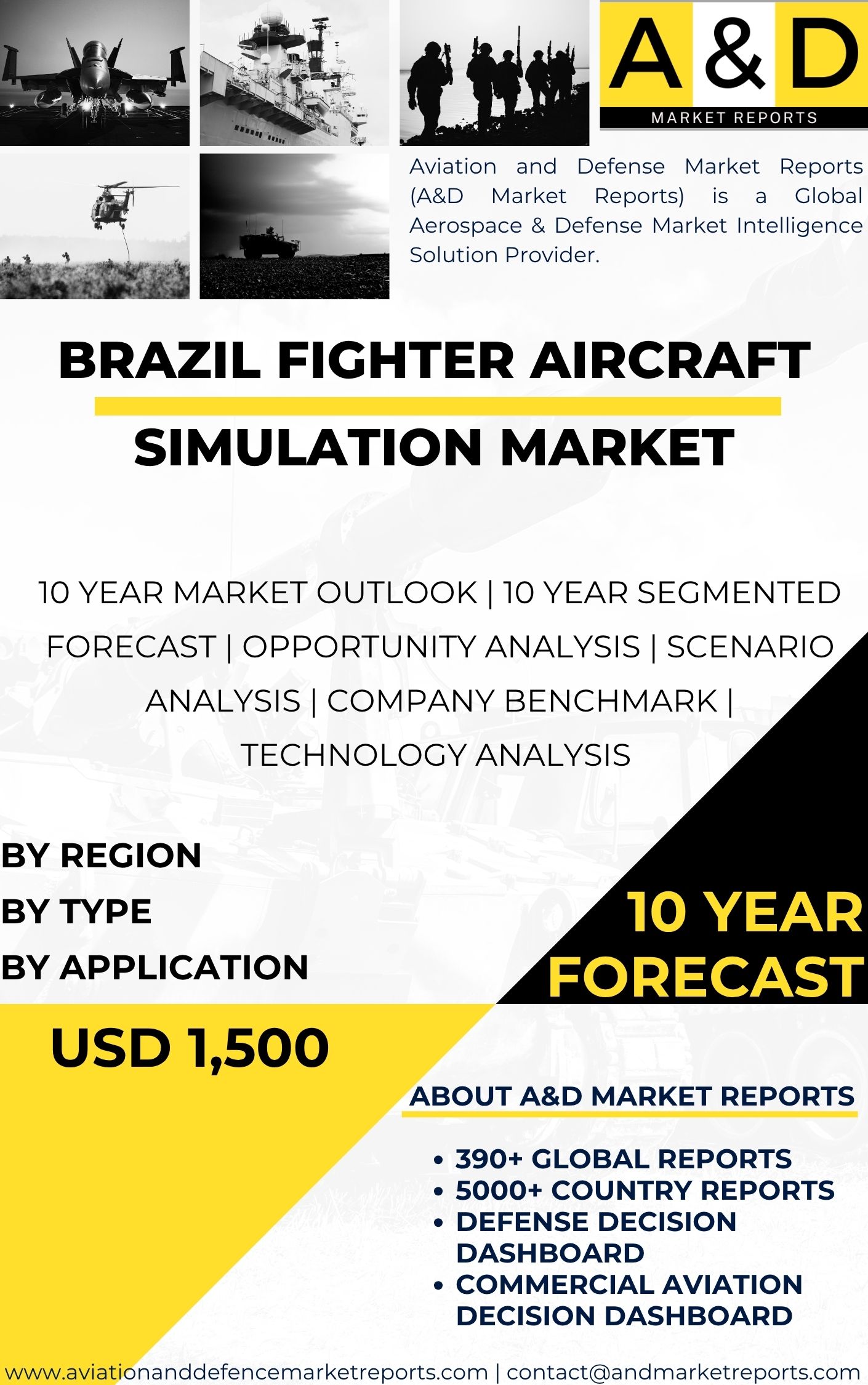
Brazil Fighter Aircraft Simulation Market

$1,500.00

Enquire Now

The fighter aircraft simulation market in Brazil is a specialized segment within the broader defense and aviation training industry, driven largely by the country’s strategic focus on enhancing its air force capabilities. This market revolves around sophisticated flight simulation technologies that enable realistic, cost-effective training environments for fighter pilots without the associated risks and expenses of using actual aircraft. Brazil, with its growing defense expenditures and modernization initiatives, has seen an increased emphasis on adopting advanced simulation systems as a key component in pilot training and operational readiness. These simulators offer high fidelity in replicating real-world flight conditions, avionics, and combat scenarios, which are essential in training pilots for complex missions and modern aerial warfare demands.

Go To Global Report Page Track this market real time on DDD

Description

Market Overview and Focus

The Brazil fighter aircraft simulation market is growing fast. The country wants to improve its air force capabilities safely. This market builds advanced flight simulators for pilot training. These tools create highly realistic and affordable training environments. Pilots learn without the high costs and risks of real flying. Brazil spends more on defense to modernize its armed forces. The military now relies heavily on these advanced simulation systems. They perfectly copy real flight conditions and combat scenarios. This realism prepares pilots for very complex modern missions.

Key Market Growth Drivers

Brazil constantly updates its military aviation fleet with new jets. New jets require cutting-edge training tools to build pilot skills. Regional security threats force Brazil to keep its pilots ready. Training systems use artificial intelligence and virtual reality today. High-performance computers make these simulation platforms incredibly effective. These modern tools reduce training costs while improving overall safety. Multirole fighters make modern aerial combat much more complex. Therefore, realistic scenario-based training is now absolutely essential.

Local Industry and Global Partners

Companies like Embraer lead Brazil’s domestic defense industry. Embraer builds military aircraft and creates custom flight simulators. These custom tools perfectly match their specific aircraft models. This matching ensures high synergy and great operational competence. Local companies also partner with international technology providers. These global partnerships bring new innovations into the country. They help Brazil meet strict international training and certification standards. Working together vastly improves the local simulation market.

Training Rules and Safety Standards

Military rules require regular, progressive training for all pilots. Simulators must meet strict standards set by military authorities. They must copy operational realities accurately and very safely. This strict oversight drives demand for updated, certified equipment. Buyers want full-motion platforms and highly immersive visual systems. They also need incredibly realistic cockpit replicas for training. Safety is the top priority for the military today. Simulation is vital from basic instruction to advanced combat tactics.

Economic Benefits and Budgets

High-end simulators require large initial investments from the government. However, they save money compared to live flight training. Real flying wastes fuel and wears down expensive aircraft. Therefore, simulators are a highly cost-effective choice for Brazil. The military is shifting quickly toward simulation-intensive programs. Brazil funds new technology, system upgrades, and routine maintenance. Government defense policies strongly prioritize self-reliance and local innovation. This focus spurs domestic development of new simulation systems.

Market Challenges and Integration

Building modern simulation infrastructure is complex and very expensive. Modern jets demand continuous software upgrades and expert knowledge. These high demands can easily stress military budgets. Brazil also depends on foreign suppliers for key parts. This dependence often complicates important technology transfers. Different jets from various countries must work together smoothly. Ensuring this interoperability poses a major challenge for developers.

Future Outlook and Technology Trends

The future of this simulation market looks very promising. Leaders know simulation is vital for mission success. New tools like AI power smart, adaptive training programs. Cloud-based platforms improve overall training quality and accessibility. Brazil plans to broaden its pilot training capabilities soon. This plan will increase the demand for advanced systems. Virtual training helps solve pilot shortages and counters new threats. It guarantees better operational readiness for the entire force.

Conclusion

Brazil perfectly blends military needs with new technological innovation. This dynamic market constantly improves how the country trains pilots. Modern aerial combat is highly demanding and deeply complex. Good training keeps Brazil’s air force strong and prepared.
Table of content

Table Of Contents

1 Market Introduction

1.1 Market Introduction
1.2 Market Definition
1.3 Market Segmentation
1.4 10 Year Market Outlook

2 Market Technologies

3 Global Market Forecast

3.1 Global Market Forecast
3.2 By Type
3.3 By Application

4 South?America Market Trends & Forecast

4.1 Drivers, Restraints And Challenges
4.2 PEST
4.3 Market Forecast
4.3.1 Market Forecast By Type
4.3.2 Market Forecast By Application
4.4 Scenario Analysis
4.5 Key Companies& Profiling

5 Brazil Analysis

5.1 Current Levels Of Technology Maturation In This Market
5.2 Market Forecast
5.2.1 Market Forecast By Type
5.2.2 Market Forecast By Application
5.3 Scenario Analysis
5.4 Country Defense Budget (Historical and 10- year forecast)
5.5 Defense Budget Category Spending- 10- year forecast
5.6 Procurement Analysis
5.7 EXIM Data
5.8 Patents

6 Opportunity Matrix

6.1 By Type
6.2 By Application

7 Scenario Analysis

7.1 Scenario 1

7.1.1 By Type (Scenario-1)
7.1.2 By Application (Scenario-1)

7.2 Scenario 2

7.2.1 By Type (Scenario-2)
7.2.2 By Application (Scenario-2)

8 Company Benchmark

9 Strategic Conclusions

10 About Aviation And Defense Market Reports

Segments

By Type
By Application

List of Tables

Table1: Global Market Forecast, Fighter Aircraft Simulation Market
Table2: South?America Market Forecast, Fighter Aircraft Simulation Market
Table3: South?America Market Forecast, By Type
Table4: South?America Market Forecast, By Application
Table5: South?America, Scenario Analysis
Table6: Brazil Market Forecast, Fighter Aircraft Simulation Market
Table7: Brazil Market Forecast, By Type
Table8: Brazil Market Forecast, By Application
Table9: Brazil, Scenario Analysis
Table 10: Brazil Defense Budget 10 Year Forecast
Table 11: Brazil, Defense Budget Category Spending- 10- year forecast
Table 12: Brazil, Procurement Analysis
Table 13: Brazil, EXIM Data Analysis
Table 14: Brazil, Opportunity Analysis, By Type
Table 15: Brazil, Opportunity Analysis, By Application
Table 16: Brazil, Scenario Analysis, By Type
Table 17: Brazil, Scenario Analysis, By Application

List of Figures

Figure 1: Market Segmentation, Brazil Fighter Aircraft Simulation Market
Figure 2: Key Technology Analysis, Fighter Aircraft Simulation Market
Figure 3: Global Market Forecast, Fighter Aircraft Simulation Market
Figure 4: South?America, Market Forecast, Fighter Aircraft Simulation Market
Figure 5: South?America, Market Forecast, By Type
Figure 6: South?America, Market Forecast, By Application
Figure 7: South?America, Scenario Analysis
Figure 8: Brazil, Market Forecast, Fighter Aircraft Simulation Market
Figure 9: Brazil, Market Forecast, By Type
Figure 10: Brazil, Market Forecast, By Application
Figure 11: Brazil, Scenario Analysis
Figure 12: Brazil, Defense Budget 10 Year Forecast
Figure 13: Brazil, Defense Budget Category Spending- 10- year forecast
Figure 14: Brazil, Procurement Analysis
Figure 15: Brazil, EXIM Data Analysis
Figure 16: Brazil, Opportunity Analysis, By Type
Figure 17: Brazil, Opportunity Analysis, By Application
Figure 18: Brazil, Scenario Analysis, By Type
Figure 19: Brazil, Scenario Analysis, By Application
Figure 20: Company Benchmark

Aviation and Defense Market Reports


TPA | TIA | Consulting | Market Reports | Defense Decision Dashboard


Our Defense Report - Our Team Has Worked on More Than 250+ Individual Products / Markets