
Description
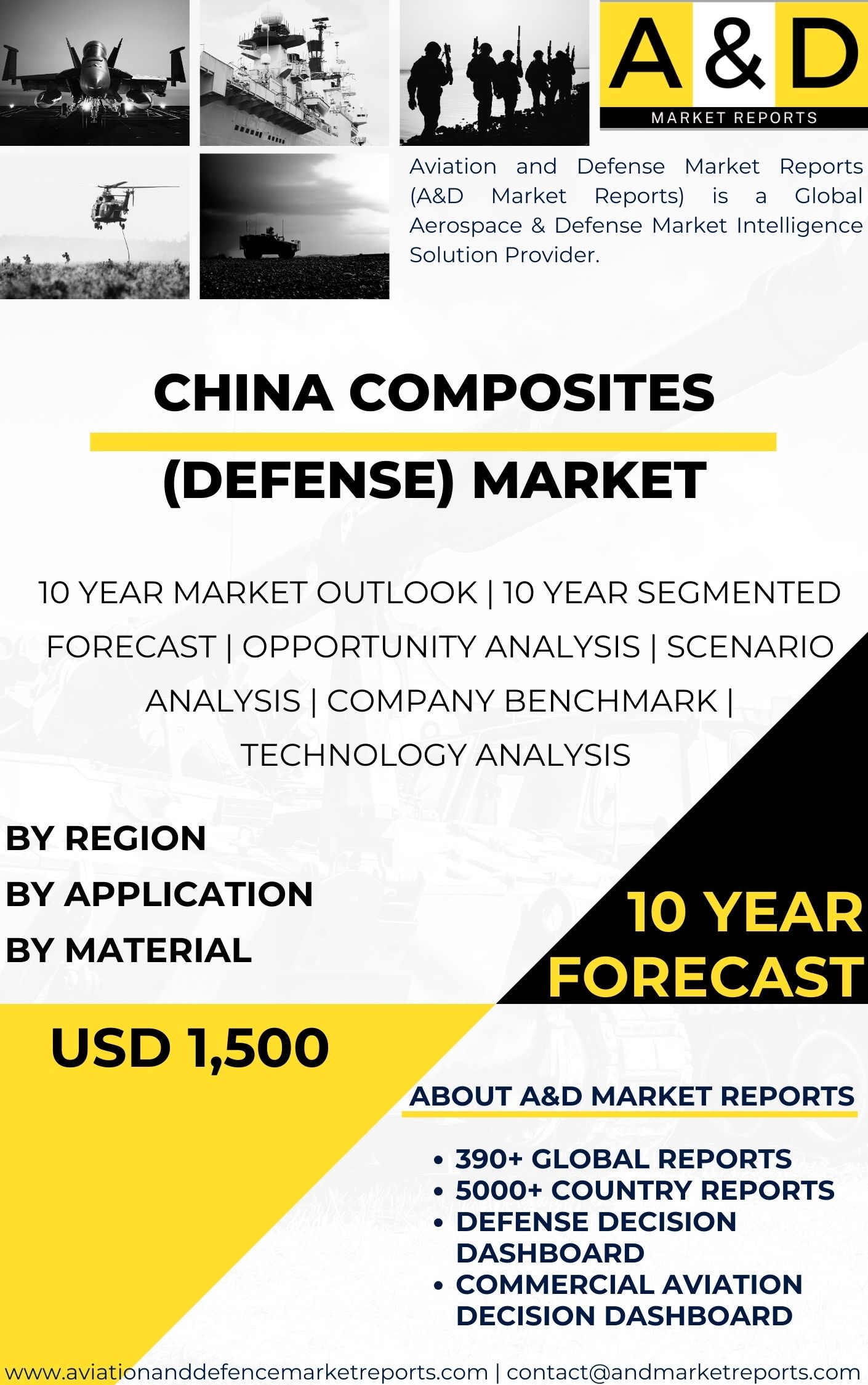
China Defense Composites Market Overview
The China Composites (Defense) in the defense sector represents a strategically important segment of the country’s military-industrial ecosystem, supporting the development of lightweight, durable, and high-performance materials for a wide range of defense applications. Composite materials have become essential for modern military platforms because they offer superior strength-to-weight ratios, corrosion resistance, and structural flexibility compared to traditional metallic materials. As China continues to modernize its armed forces and strengthen indigenous defense manufacturing capabilities, the demand for advanced composites has grown significantly across aerospace, naval, missile, and land-based defense systems. The increasing adoption of composite materials reflects China’s commitment to enhancing operational performance while reducing platform weight and maintenance requirements.
Strategic Importance of Composites in Defense
China recognizes composite materials as critical enablers of next-generation military capabilities. These materials contribute significantly to improving mobility, survivability, fuel efficiency, and payload capacity across various defense platforms. By reducing structural weight without compromising strength, composites enable military aircraft to achieve longer operational ranges, naval vessels to improve efficiency, and armored vehicles to enhance maneuverability. Consequently, the Chinese government has prioritized investments in composite research, manufacturing technologies, and material science innovation as part of broader military modernization initiatives aimed at reducing dependence on foreign suppliers and strengthening domestic production capabilities.
Key Market Participant: CASC
One of the leading organizations in China’s defense composites sector is the China Aerospace Science and Technology Corporation (CASC). As a major state-owned aerospace and defense enterprise, CASC develops and manufactures a wide range of advanced composite materials for military applications. Its portfolio includes carbon fiber composites, glass fiber composites, aramid fiber composites, and specialized structural materials designed for aircraft, missile systems, and space platforms. The company’s expertise in advanced materials contributes significantly to China’s efforts to develop lighter, stronger, and more efficient defense systems capable of operating in demanding environments.
Role of CSIC in Naval Composite Development
Another major contributor to the defense composites market is China Shipbuilding Industry Corporation (CSIC). The company specializes in developing composite materials for naval applications, particularly carbon fiber-reinforced polymer structures used in military vessels and marine systems. These materials offer significant advantages in terms of weight reduction, corrosion resistance, and structural durability. By incorporating advanced composites into shipbuilding programs, CSIC supports the development of more efficient naval platforms capable of operating effectively in challenging maritime environments while reducing lifecycle maintenance costs.
Types of Defense Composites Produced in China
China’s defense composites market encompasses a broad range of material categories designed to meet diverse operational requirements. Carbon fiber composites are among the most widely used materials due to their exceptional strength, stiffness, and lightweight properties. Glass fiber composites offer cost-effective solutions for structural applications requiring durability and corrosion resistance. Aramid fiber composites provide excellent impact resistance and ballistic protection, making them valuable for armor systems and protective equipment. Hybrid composites combine multiple reinforcement materials to achieve optimized performance characteristics tailored to specific defense applications. Together, these materials form the foundation of China’s expanding defense composites industry.
Advances in Composite Material Technology
China has achieved significant progress in composite material research and manufacturing capabilities over the past decade. Domestic research institutions and defense manufacturers have invested heavily in advanced fiber technologies, resin systems, automated manufacturing processes, and structural design methodologies. These efforts have improved the mechanical performance, durability, and environmental resistance of composite materials while reducing production complexities. Advances in automated fiber placement, resin transfer molding, and precision curing technologies have further enhanced manufacturing efficiency and product consistency, enabling large-scale production of advanced defense-grade composites.
Aerospace Applications of Composites
The aerospace sector represents one of the largest consumers of composite materials within China’s defense industry. Military aircraft, unmanned aerial vehicles, missiles, and space systems increasingly incorporate composites to reduce structural weight and improve operational performance. Lightweight composite airframes contribute to greater fuel efficiency, extended mission endurance, enhanced maneuverability, and increased payload capacity. Additionally, composites can help reduce radar signatures and improve survivability in contested environments. As China continues to expand its indigenous aerospace programs, demand for advanced composite materials is expected to increase substantially.
Naval and Maritime Applications
Composite materials are playing an increasingly important role in China’s naval modernization efforts. Warships, submarines, patrol vessels, and naval support platforms utilize composites for structural components, radar masts, deck structures, and specialized equipment housings. These materials provide superior corrosion resistance in harsh marine environments while reducing vessel weight and maintenance requirements. The adoption of composites also contributes to improved fuel efficiency and operational performance, supporting China’s efforts to build a technologically advanced and sustainable naval fleet.
Land-Based Defense Applications
The use of composites has expanded significantly within China’s land warfare systems. Armored vehicles, tactical transport platforms, artillery systems, and soldier protection equipment increasingly incorporate composite materials to improve protection levels while minimizing weight. Advanced armor solutions often combine ceramics, aramid fibers, and composite structures to provide enhanced ballistic resistance against modern threats. Lightweight composite components also improve vehicle mobility, fuel efficiency, and payload capacity, making them valuable assets in modern ground combat operations.
Manufacturing and Quality Control Challenges
Despite substantial progress, the defense composites sector faces ongoing challenges related to manufacturing consistency and quality assurance. Producing advanced composite materials requires precise control of raw materials, fabrication processes, and environmental conditions. Even minor variations can affect structural performance and reliability. As defense platforms increasingly depend on composite components, maintaining stringent quality standards becomes essential. Chinese manufacturers continue investing in advanced inspection technologies, automated production systems, and process control methodologies to ensure product reliability and operational safety.
Cost Reduction and Production Efficiency
One of the primary challenges facing the industry is reducing the cost of advanced composite production. High-performance carbon fibers, specialized resins, and complex manufacturing processes contribute to relatively high production expenses. To address this issue, China is investing in domestic raw material production, automated manufacturing technologies, and innovative fabrication techniques aimed at improving production efficiency and reducing costs. These efforts are expected to increase the affordability and accessibility of advanced composites across a broader range of defense programs.
Regulatory Compliance and Certification Requirements
The successful deployment and export of defense composite materials require compliance with strict quality standards and certification frameworks. Military-grade composites must undergo extensive testing to verify their structural integrity, environmental resistance, and operational performance. China continues working to align its manufacturing practices with internationally recognized standards while strengthening domestic certification processes. Achieving greater compliance with global quality requirements will enhance the competitiveness of Chinese composite products in international defense markets.
Emerging Technologies and Future Innovations
Emerging technologies are expected to play a transformative role in the future of China’s defense composites market. Nanocomposites, incorporating nanoscale reinforcement materials, offer the potential for significantly improved strength, durability, and multifunctional properties. Additive manufacturing and 3D printing technologies are enabling more efficient production of complex composite structures while reducing material waste. Advanced smart composites capable of monitoring structural health and environmental conditions may also become increasingly important in future military platforms. These innovations are likely to accelerate the adoption of composites across a growing range of defense applications.
Future Market Outlook
The future outlook for China’s defense composites market remains highly positive. Continued military modernization, increased defense spending, and sustained investments in material science research are expected to drive long-term growth. Expanding aerospace programs, naval fleet development, and next-generation armored vehicle initiatives will create strong demand for advanced composite solutions. At the same time, ongoing efforts to improve manufacturing efficiency and reduce production costs will further strengthen the competitiveness of China’s composite materials industry both domestically and internationally.
Conclusion
The China defense composites market plays a critical role in enhancing the performance, durability, and operational effectiveness of modern military platforms. Organizations such as CASC and CSIC continue to drive innovation in composite material development, supporting applications across aerospace, naval, and land warfare systems. While challenges related to manufacturing complexity, cost reduction, and certification remain, ongoing investments in research, advanced production technologies, and emerging material innovations position the sector for sustained growth. As military platforms become increasingly dependent on lightweight and high-strength materials, composites will remain a cornerstone of China’s future defense modernization strategy.