
Description
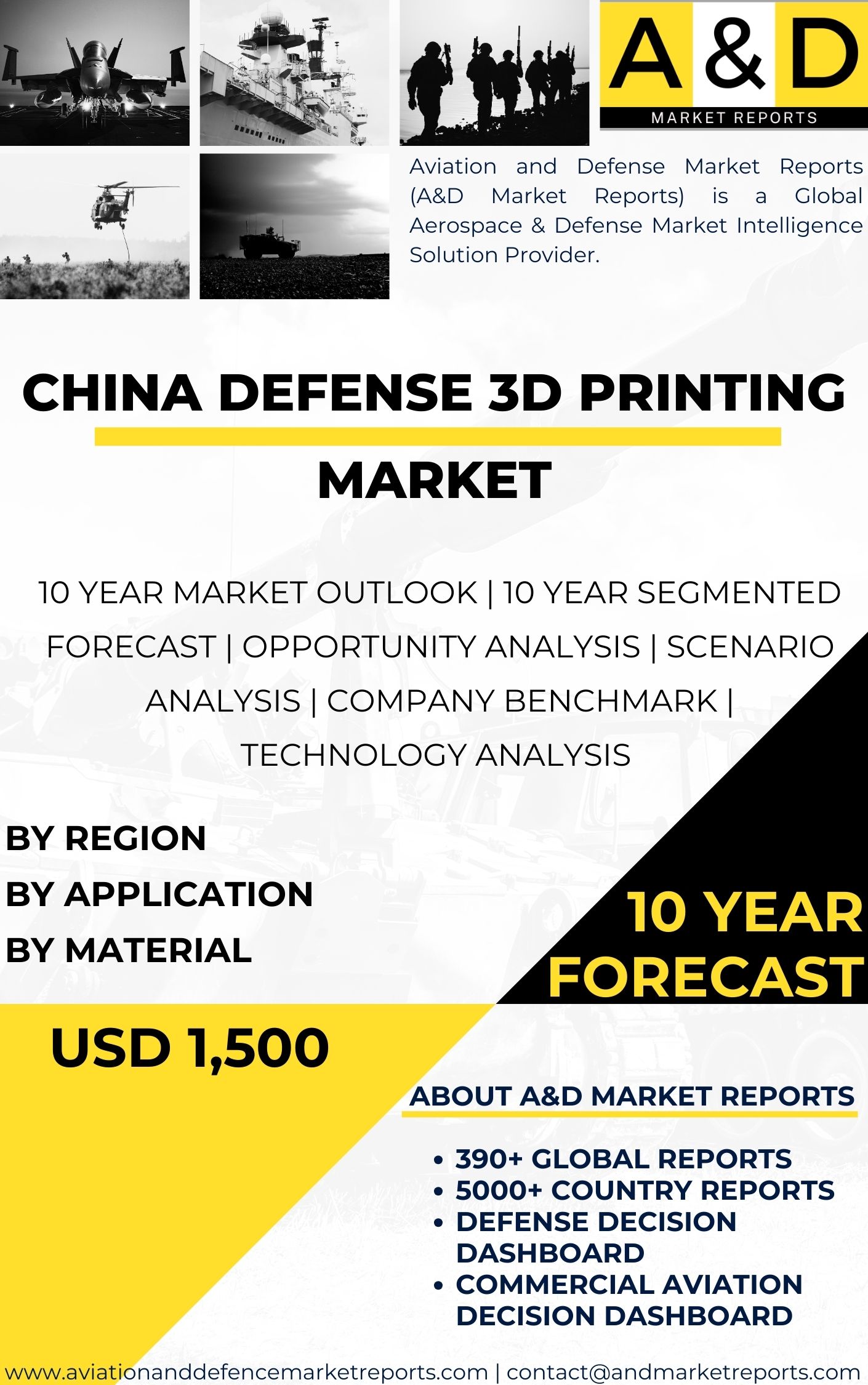
China Defense 3D Printing Market Overview
The China defense 3D printing market is an important segment of the country’s defense industry. Also known as additive manufacturing, 3D printing is transforming how military components are designed, tested, and produced. The technology enables faster production cycles, lower material waste, and greater design flexibility. As a result, China continues to expand its investments in defense-related 3D printing capabilities. The market is expected to grow steadily as military modernization programs create demand for advanced manufacturing solutions.
Growing Importance of Additive Manufacturing
China recognizes the strategic value of 3D printing for defense applications. Consequently, the government has increased support for research, development, and implementation of additive manufacturing technologies. These efforts aim to strengthen military self-sufficiency and improve supply chain resilience. Furthermore, 3D printing helps reduce production costs while enabling the rapid development of complex military components. The technology also supports faster innovation cycles across multiple defense sectors.
Role of CASC in Market Development
China Aerospace Science and Technology Corporation is one of the leading organizations driving defense 3D printing adoption in China. The company utilizes additive manufacturing for rapid prototyping, component production, and equipment maintenance. Furthermore, CASC leverages advanced 3D printing technologies to improve manufacturing efficiency and system performance. Its investments in aerospace-grade materials and production processes continue to strengthen China’s domestic defense manufacturing capabilities.
CSIC’s Contribution to Defense Manufacturing
China Shipbuilding Industry Corporation plays a significant role in integrating 3D printing into naval defense production. The company uses additive manufacturing to create customized components, specialized tools, and prototype designs for shipbuilding programs. In addition, CSIC benefits from shorter production timelines and reduced manufacturing costs. These advantages help improve overall efficiency in naval platform development and maintenance operations.
Key Defense Applications of 3D Printing
China employs 3D printing across a wide range of defense applications. These include rapid prototyping, tooling, jigs, fixtures, spare parts production, and maintenance support. Additionally, additive manufacturing enables the production of highly complex components that traditional manufacturing methods may struggle to produce. The ability to create customized designs improves operational flexibility while reducing development timelines. Consequently, defense organizations increasingly rely on 3D printing to support mission readiness.
Advances in Indigenous Technology Development
China has achieved significant progress in developing domestic 3D printing technologies. The country prioritizes indigenous innovation to reduce dependence on foreign manufacturing solutions. As a result, Chinese companies have improved printing precision, production speed, and material performance. Furthermore, researchers continue to develop advanced metal alloys, ceramics, and high-performance polymers specifically designed for military applications. These innovations enhance the durability and functionality of defense components.
Integration into Defense Supply Chains
China has increasingly integrated 3D printing into its defense supply chain strategy. This approach helps reduce reliance on imported components while improving manufacturing flexibility. Moreover, additive manufacturing supports on-demand production, which minimizes inventory requirements and shortens delivery times. The technology also enhances logistics efficiency by allowing critical parts to be produced closer to operational locations. As a result, defense organizations can respond more quickly to changing operational requirements.
Challenge of Quality Control and Certification
One of the primary challenges facing the market is ensuring consistent quality and reliability. Military platforms require components that meet strict performance and safety standards. Therefore, China must continue developing robust testing, validation, and certification processes for 3D-printed parts. Furthermore, maintaining consistency across large production volumes remains essential for broader adoption in critical defense systems.
Scalability and Production Efficiency Challenges
Although 3D printing offers significant design advantages, scaling production remains a challenge. Traditional manufacturing methods often produce large quantities faster than additive manufacturing systems. Consequently, China must continue investing in technologies that improve printing speed and production efficiency. Advances in industrial-scale printers and automated manufacturing processes will play a crucial role in overcoming these limitations.
Intellectual Property and Security Concerns
Intellectual property protection remains an important consideration for the defense 3D printing market. The ability to digitally replicate components increases the risk of unauthorized duplication and technology theft. Therefore, China continues to strengthen intellectual property regulations and cybersecurity measures. Effective protection mechanisms are essential for safeguarding sensitive military designs and maintaining fair competition within the industry.
Future Growth Opportunities
The China defense 3D printing market is expected to experience substantial growth in the coming years. Ongoing military modernization programs and increasing demand for advanced manufacturing technologies will drive market expansion. Additionally, innovations in multi-material printing, artificial intelligence, and advanced materials are expected to unlock new defense applications. These developments will create opportunities for greater efficiency, flexibility, and performance across military production activities.
Conclusion
The China defense 3D printing market plays a critical role in improving manufacturing efficiency, supply chain resilience, and technological innovation. Organizations such as CASC and CSIC continue to drive the adoption of additive manufacturing across aerospace and naval defense sectors. Although challenges related to quality control, scalability, and intellectual property protection remain, the market offers strong growth potential. Continued investment in research, development, and advanced production technologies will further strengthen China’s defense manufacturing capabilities.