
Description
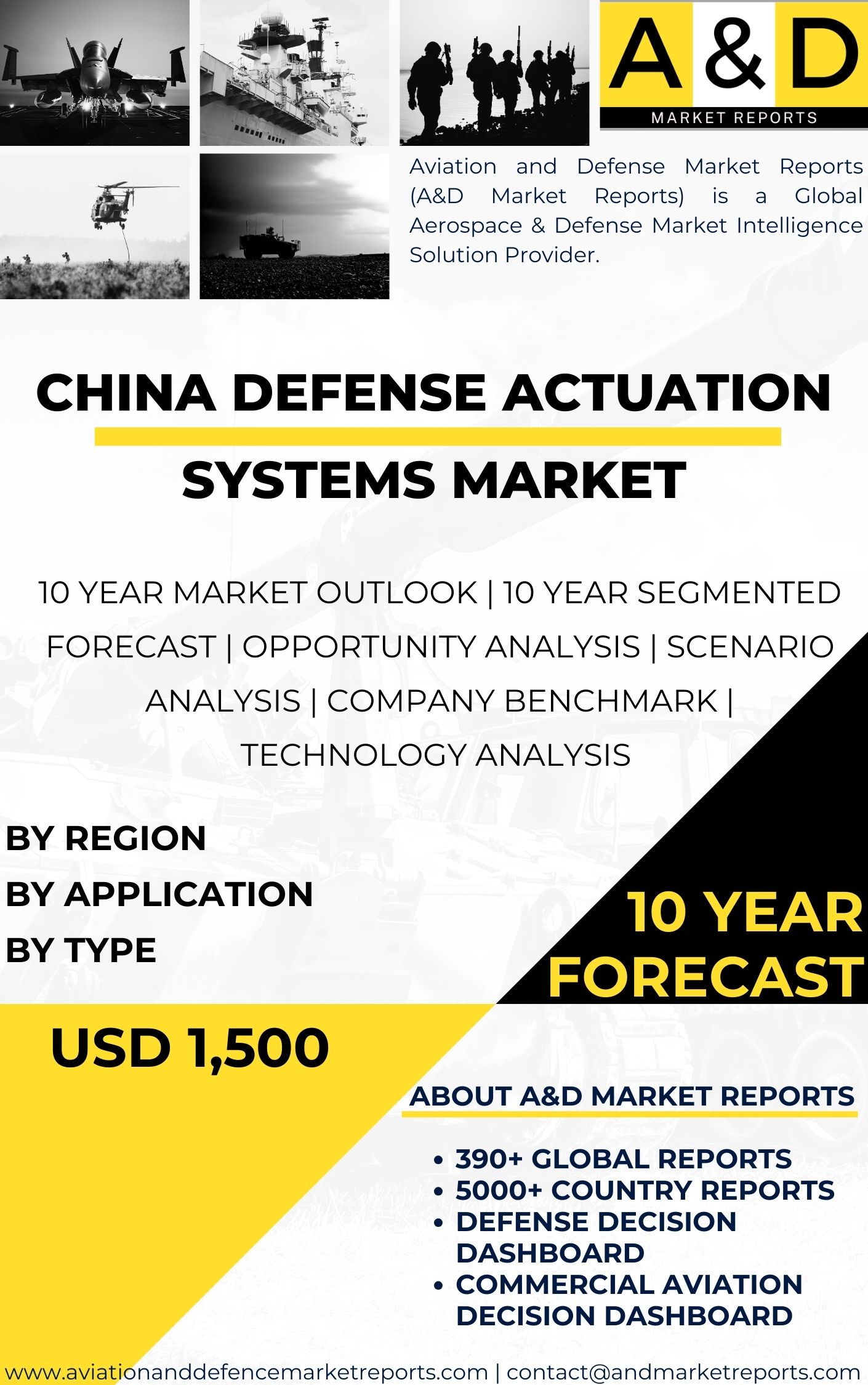
China Defense Actuation Systems Market Overview
The China defense actuation systems market represents a critical segment of the country’s defense industry, supporting the operation and control of a wide range of military platforms. Actuation systems convert electrical, hydraulic, or pneumatic energy into mechanical movement, enabling precise control of aircraft surfaces, missile guidance mechanisms, naval equipment, and ground combat systems. As China’s military modernization efforts continue to accelerate, the demand for advanced actuation technologies has grown significantly. The market is benefiting from increased defense spending, technological advancements, and a strong focus on indigenous manufacturing capabilities. Furthermore, the development of next-generation military platforms is creating new opportunities for actuation system suppliers across the country.
Growing Investments in Defense Modernization
China has consistently increased its defense budget over the past decade to support the modernization of its armed forces. A significant portion of these investments is directed toward the development of advanced military technologies that improve operational effectiveness and combat readiness. Actuation systems are considered essential components in modern defense platforms because they enable precise movement and control under demanding operational conditions. Consequently, government agencies and defense contractors are allocating substantial resources toward enhancing actuation technologies. These investments are helping domestic manufacturers improve production capabilities, expand research programs, and strengthen China’s position in the global defense market.
Focus on Indigenous Technology Development
One of the most important drivers of the China defense actuation systems market is the country’s commitment to technological self-sufficiency. China aims to reduce its reliance on imported defense technologies and establish a strong domestic industrial base capable of supporting national security objectives. To achieve this goal, the government has increased funding for research and development activities related to advanced actuation technologies. Domestic companies are working to design and manufacture high-performance systems that can compete with international alternatives. As a result, China has made considerable progress in developing indigenous solutions that meet the stringent requirements of military applications while supporting long-term defense independence.
Expanding Role Across Defense Platforms
The application of actuation systems has expanded significantly across various military platforms as defense technologies become more sophisticated. Modern fighter aircraft require advanced actuators for flight control surfaces, landing gear operations, and weapon deployment systems. Similarly, missile systems rely on precise actuation mechanisms for guidance and maneuverability during flight. Naval vessels use actuators for steering systems, weapon mounts, and automated equipment, while armored vehicles depend on them for turret movement and other critical functions. As military platforms become more technologically advanced, the need for reliable and efficient actuation systems continues to grow, creating sustained demand across multiple defense sectors.
Key Industry Participants
Several leading Chinese defense companies play a major role in the development and production of actuation systems for military applications. AVIC SAC Commercial Aircraft Company Ltd. (SACC) is actively involved in manufacturing flight control actuators, landing gear actuators, and missile control systems designed for defense platforms. Shenyang Aircraft Corporation (SAC) also contributes significantly to the market through its expertise in aircraft control technologies and advanced aviation systems. These organizations possess extensive engineering capabilities, advanced manufacturing infrastructure, and strong government support. Their continued investment in innovation and product development is helping strengthen China’s domestic defense supply chain and expand technological capabilities.
Diverse Range of Actuation Technologies
The Chinese defense industry produces a wide variety of actuation technologies to meet the diverse requirements of military applications. Electromechanical actuators are increasingly popular because they offer high precision, reduced maintenance needs, and compatibility with digital control systems. Hydraulic actuators remain essential for applications requiring high force output and robust performance under demanding conditions. Pneumatic actuators are commonly used in specialized applications where rapid response and lightweight design are important factors. Additionally, electro-hydrostatic actuators combine the advantages of electric and hydraulic technologies, providing improved efficiency and reliability. The availability of multiple actuation solutions allows defense manufacturers to select the most suitable technology for specific operational requirements.
Advancements in System Performance
Chinese defense companies have achieved significant progress in improving the performance of actuation systems through continuous research and innovation. Manufacturers are developing systems with greater power density, allowing them to generate higher output while occupying less space. Improvements in efficiency are helping reduce energy consumption and extend operational endurance across military platforms. In addition, advances in materials science have enabled the use of lightweight alloys and composite materials that enhance durability while reducing overall system weight. These technological developments contribute to improved platform performance, increased operational flexibility, and enhanced mission effectiveness in a wide range of military environments.
Integration with Advanced Defense Systems
Integration has become a major focus area for the China defense actuation systems market as military platforms increasingly rely on interconnected technologies. Modern actuators are designed to operate seamlessly with flight control computers, onboard sensors, communication networks, and mission management systems. This integration enables real-time monitoring, automated responses, and greater operational precision. For example, advanced aircraft can use integrated actuation systems to adjust control surfaces instantly based on sensor inputs and changing flight conditions. Such capabilities enhance maneuverability, safety, and mission success rates. As military platforms continue to adopt digital architectures, the importance of integrated actuation technologies will continue to increase.
Challenges Related to Reliability and Durability
Despite notable advancements, ensuring long-term reliability and durability remains a significant challenge for the industry. Defense actuation systems must operate effectively in harsh environments that include extreme temperatures, high vibration levels, moisture exposure, and intense mechanical stress. Failures in these systems can have serious consequences during military operations. Therefore, manufacturers must conduct extensive testing and validation procedures to ensure consistent performance under challenging conditions. Continuous investment in material improvements, component quality, and system reliability is essential to meet military standards and maintain customer confidence in domestically produced technologies.
Need for Weight Reduction and Efficiency
Weight reduction continues to be a major priority for military platform designers and actuation system manufacturers. Lighter systems contribute to improved fuel efficiency, greater operational range, enhanced maneuverability, and increased payload capacity. Achieving these benefits requires the development of compact and highly efficient actuation technologies that maintain performance without adding unnecessary weight. Chinese companies are actively exploring advanced materials, innovative engineering designs, and miniaturized components to address this challenge. Furthermore, improvements in energy efficiency can reduce overall power consumption and support the growing adoption of electrically powered military systems.
Intellectual Property and Export Considerations
Intellectual property protection and export compliance play increasingly important roles in the development of China’s defense actuation systems market. As domestic companies create more advanced technologies, protecting proprietary innovations becomes essential for maintaining competitive advantages and encouraging further investment in research and development. Additionally, companies seeking to export defense-related products must comply with national and international regulations governing sensitive technologies. Strong intellectual property frameworks and effective regulatory compliance help build trust among international partners, support technology collaboration, and create opportunities for expansion into global defense markets.
Future Outlook
The future outlook for the China defense actuation systems market remains highly positive due to ongoing military modernization initiatives and technological advancements. Emerging technologies such as smart actuators, artificial intelligence-enabled control systems, predictive maintenance solutions, and advanced digital architectures are expected to transform the industry. These innovations will improve system responsiveness, reduce maintenance costs, and enhance overall operational effectiveness. In addition, continued government support for domestic defense manufacturing will encourage further investment in research, production capabilities, and workforce development. As a result, the market is expected to experience sustained growth over the coming years.
Conclusion
The China defense actuation systems market has become an essential component of the country’s broader defense modernization strategy. Strong government support, increasing defense expenditures, and a commitment to technological self-reliance have created a favorable environment for industry growth. Domestic manufacturers are making significant progress in developing advanced actuation technologies that support a wide range of military applications. Although challenges related to reliability, weight reduction, intellectual property protection, and export regulations remain, ongoing investments in innovation and manufacturing capabilities are helping address these issues. Consequently, China is expected to continue strengthening its position as a major participant in the global defense actuation systems market while supporting the evolving needs of its armed forces.