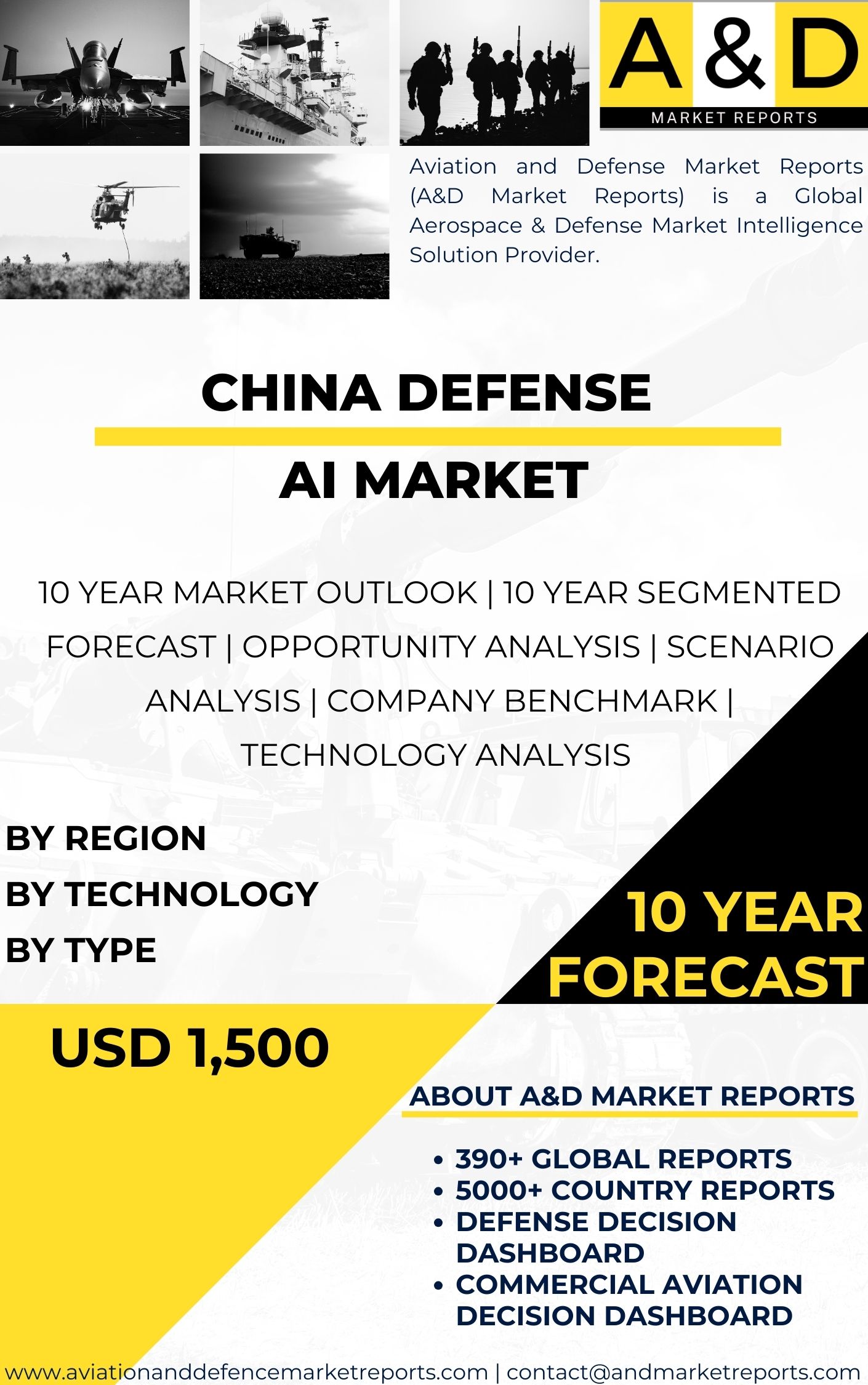

Description
China Defense AI Market Overview
The China Defense AI (Artificial Intelligence) Market is one of the fastest-growing segments of the country’s defense industry. Artificial intelligence is transforming modern military operations by improving decision-making, automating processes, and enhancing operational effectiveness. China has identified AI as a strategic technology that can strengthen national defense capabilities and support long-term military modernization goals. As a result, the country is investing heavily in AI-powered defense solutions across land, air, naval, space, and cyber domains. The market includes applications such as command and control systems, autonomous platforms, surveillance systems, intelligence analysis, cybersecurity, and battlefield management tools.
Growing Importance of AI in Military Modernization
China views artificial intelligence as a critical component of future warfare and military transformation. The government has incorporated AI development into its broader defense modernization strategy and national technology roadmap. Military planners believe that AI can improve combat effectiveness by enabling faster decision-making, greater automation, and improved situational awareness. Consequently, defense organizations are increasingly integrating AI technologies into both existing and next-generation military systems. This focus is accelerating the development of intelligent defense capabilities across multiple operational areas.
Strong Government Support and Strategic Investment
The Chinese government has provided substantial support for AI research, development, and deployment. National policies encourage innovation in artificial intelligence and promote collaboration between government agencies, research institutions, universities, and defense contractors. Significant funding has been allocated to AI-related programs that support military applications. Furthermore, government-backed initiatives are helping create a favorable environment for technological advancement, enabling China to strengthen its position in the global defense AI landscape.
Enhancing Command and Control Capabilities
One of the most important applications of AI in China’s defense sector is command and control modernization. Advanced AI systems can process massive amounts of battlefield data in real time, helping military commanders make faster and more informed decisions. These technologies support threat assessment, mission planning, resource allocation, and operational coordination. As military operations become increasingly complex, AI-driven command systems provide valuable decision-support capabilities that improve efficiency and responsiveness on the battlefield.
Expanding Use of Autonomous and Unmanned Systems
Artificial intelligence is playing a growing role in the development of autonomous and unmanned military platforms. AI-powered systems can support surveillance missions, reconnaissance operations, logistics tasks, and various other defense functions. These platforms are capable of analyzing their environment, navigating complex conditions, and performing missions with limited human intervention. As a result, autonomous technologies are becoming an important area of investment within China’s defense AI market.
Advanced Intelligence, Surveillance, and Reconnaissance Applications
AI technologies are significantly improving intelligence, surveillance, and reconnaissance capabilities. Modern military operations generate enormous amounts of data from sensors, satellites, radar systems, and surveillance platforms. Artificial intelligence can rapidly analyze this information, identify patterns, detect potential threats, and generate actionable intelligence. Consequently, defense organizations can achieve higher levels of situational awareness and respond more effectively to emerging security challenges.
Strengthening Cybersecurity and Cyber Defense
Cybersecurity has become a major focus area within the China Defense AI Market. Military networks and digital infrastructure face increasing threats from sophisticated cyberattacks. AI-powered cybersecurity solutions help detect unusual activities, identify vulnerabilities, and respond to threats more quickly than traditional systems. Additionally, machine learning algorithms can continuously adapt to evolving attack techniques, improving the resilience of defense networks and protecting sensitive military information.
Leveraging China’s Technology Ecosystem
China benefits from a highly developed technology sector that supports defense AI innovation. The country is home to numerous technology companies, research organizations, and academic institutions specializing in artificial intelligence, machine learning, data analytics, and cloud computing. These organizations contribute valuable expertise, infrastructure, and research capabilities that accelerate the development of military AI applications. Furthermore, the availability of large datasets and advanced computing resources provides a strong foundation for AI system training and deployment.
Importance of Data and Computing Infrastructure
Artificial intelligence relies heavily on access to high-quality data and powerful computing resources. China has developed extensive digital infrastructure that supports large-scale AI development. Defense organizations can leverage advanced data processing capabilities, high-performance computing systems, and cloud-based platforms to train sophisticated AI models. This technological foundation enables faster innovation and supports the deployment of increasingly advanced military AI solutions.
Collaboration Between Defense and Technology Sectors
A defining characteristic of China’s defense AI strategy is the close collaboration between military organizations and the technology industry. Public-private partnerships encourage knowledge sharing, resource pooling, and joint research initiatives. These collaborations help accelerate innovation and reduce development timelines for new AI applications. In addition, cooperation between defense agencies, universities, and technology firms supports the creation of advanced solutions tailored to military requirements.
Ethical and Regulatory Considerations
Despite its rapid growth, the Defense AI Market faces important ethical and regulatory challenges. The use of artificial intelligence in military applications raises questions related to accountability, transparency, decision-making authority, and the role of autonomous systems in combat operations. As AI technologies continue to evolve, policymakers and defense organizations must establish clear guidelines to ensure responsible development and deployment. Addressing these concerns will be essential for maintaining public trust and supporting long-term market growth.
Talent Development and Workforce Challenges
The successful adoption of defense AI technologies depends on the availability of highly skilled professionals. While China has a large pool of AI researchers and engineers, defense applications require specialized expertise that combines artificial intelligence knowledge with military operational understanding. Therefore, significant investments are being made in education, training programs, and workforce development initiatives. These efforts aim to create a new generation of professionals capable of designing, operating, and maintaining advanced military AI systems.
Future Outlook for the China Defense AI Market
The future outlook for the China Defense AI Market remains highly positive. Continued government support, increasing defense budgets, and rapid technological progress are expected to drive sustained market expansion. Emerging technologies such as machine learning, deep learning, edge computing, quantum computing, and advanced robotics will further enhance military AI capabilities. Moreover, growing integration between AI systems and defense platforms will create new opportunities for innovation and operational effectiveness across the armed forces.
Conclusion
The China Defense AI Market is becoming a cornerstone of the country’s military modernization strategy. Strong government backing, significant investments in research and development, and a robust technology ecosystem continue to support market growth. Artificial intelligence is enhancing command and control, intelligence gathering, cybersecurity, autonomous operations, and battlefield decision-making. Although challenges related to ethics, regulation, and workforce development remain, the market is well positioned for long-term expansion. As AI technologies continue to evolve, they will play an increasingly important role in strengthening China’s defense capabilities and national security objectives.