
Description
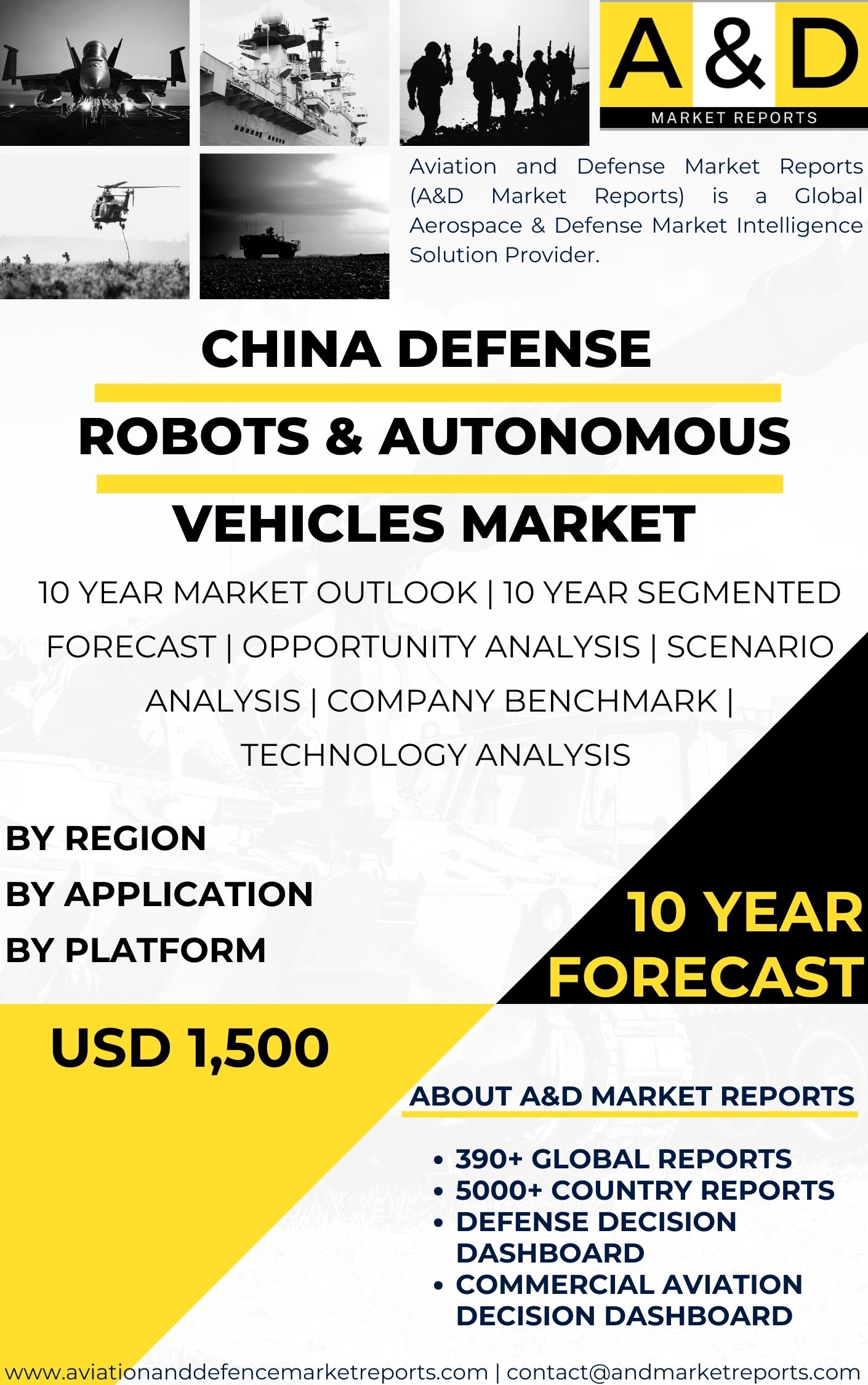
China Defense Robots & Autonomous Vehicles Market Overview
The China Defense Robots & Autonomous Vehicles Market is one of the fastest-growing segments within the country’s defense industry. The market focuses on the development, production, and deployment of robotic systems and autonomous platforms designed for military operations. These technologies support a wide range of missions, including reconnaissance, surveillance, logistics, combat support, explosive ordnance disposal, and border security. As modern warfare increasingly relies on automation and intelligent systems, defense robots and autonomous vehicles have become essential tools for improving operational efficiency and reducing risks to military personnel. China’s commitment to military modernization continues to drive significant growth in this market.
Rising Investments in Robotics and Autonomous Technologies
China has substantially increased investments in defense research and development to accelerate innovation in robotics and autonomous systems. The government views these technologies as critical components of future military capabilities and national security. Consequently, research institutions, defense manufacturers, and technology companies are receiving strong support to develop advanced robotic platforms. These investments have enabled progress in autonomous navigation, machine vision, artificial intelligence, and human-machine collaboration. Furthermore, sustained funding is helping domestic companies accelerate product development and expand production capabilities, strengthening China’s position in the global defense technology landscape.
Focus on Technological Self-Sufficiency
One of the primary drivers of market growth is China’s emphasis on technological independence. The country aims to reduce its reliance on foreign defense technologies while strengthening its domestic industrial base. To achieve this objective, significant resources have been allocated to indigenous robotics and autonomous systems programs. Chinese defense companies are developing advanced unmanned ground vehicles, autonomous aerial systems, robotic combat platforms, and intelligent support vehicles. These efforts not only enhance military readiness but also contribute to the broader goal of establishing self-sufficient defense manufacturing capabilities. As a result, domestic innovation continues to play a central role in market expansion.
Growing Military Demand for Autonomous Platforms
China’s expanding military capabilities have increased demand for advanced robotic and autonomous systems across multiple operational domains. Modern armed forces require platforms capable of performing dangerous, repetitive, or complex tasks with minimal human intervention. Defense robots can conduct surveillance missions, gather intelligence, transport supplies, and operate in hazardous environments where human exposure would be risky. Autonomous vehicles also improve mission efficiency by supporting rapid deployment and persistent operations. As military strategies evolve toward greater automation, demand for intelligent unmanned systems is expected to continue growing throughout the forecast period.
Diverse Applications Across Defense Operations
The range of applications for defense robots and autonomous vehicles continues to expand as technologies mature. Unmanned ground vehicles can support reconnaissance, logistics, and mine-clearing missions, while autonomous aerial systems provide surveillance and intelligence-gathering capabilities. In addition, robotic platforms are increasingly used for explosive ordnance disposal, border patrol, and infrastructure protection. Some systems are designed to operate in challenging environments, including urban combat zones, remote regions, and contaminated areas. This operational flexibility makes robotic systems valuable assets across a broad spectrum of military missions and security operations.
Strong Industrial and Technological Foundation
China benefits from a robust industrial ecosystem that supports the development of advanced robotic technologies. The country possesses extensive expertise in robotics, electronics, artificial intelligence, software engineering, and advanced manufacturing. Numerous state-owned enterprises and private technology firms contribute to the development of innovative autonomous solutions. Furthermore, collaboration among defense organizations, universities, and research institutions accelerates technological progress and supports knowledge sharing. This strong industrial foundation enables China to rapidly develop and deploy next-generation robotic systems while maintaining a competitive position in global markets.
Advancements in Artificial Intelligence Integration
Artificial intelligence has become a key enabler of defense robotics and autonomous vehicle development. Chinese companies are integrating AI technologies into military platforms to improve navigation, decision-making, target recognition, and mission planning capabilities. Advanced machine-learning algorithms allow autonomous systems to process large volumes of data and adapt to changing operational conditions. Furthermore, AI-powered systems can enhance coordination between multiple unmanned platforms, enabling more efficient mission execution. As artificial intelligence technologies continue to evolve, their integration will further expand the capabilities and effectiveness of defense robotics systems.
International Collaborations and Export Opportunities
China’s Defense Robots & Autonomous Vehicles Market has benefited from growing international partnerships and technology collaborations. Chinese defense firms have worked with foreign technology providers to gain access to advanced expertise, manufacturing techniques, and emerging innovations. These collaborations support technology transfer and help improve domestic product capabilities. Additionally, Chinese-made robotic systems and autonomous vehicles are attracting attention in international markets due to their expanding capabilities and competitive pricing. Export opportunities continue to strengthen China’s position as an emerging supplier within the global defense robotics industry.
Challenges Related to Quality and Cybersecurity
Despite strong growth, the market faces several important challenges. Maintaining high levels of quality, reliability, and operational performance remains essential for military applications. Defense systems must function effectively under demanding environmental and operational conditions. Therefore, manufacturers must continue investing in testing, validation, and quality assurance programs. Additionally, cybersecurity has become a critical concern as autonomous systems rely heavily on software, communication networks, and data processing capabilities. Protecting these platforms from cyberattacks, unauthorized access, and electronic interference is essential to maintaining mission effectiveness and user confidence.
Future Outlook and Growth Prospects
The future of the China Defense Robots & Autonomous Vehicles Market remains highly promising. Ongoing military modernization efforts, increasing adoption of artificial intelligence, and continued investments in autonomous technologies are expected to drive sustained market expansion. Emerging technologies such as swarm robotics, collaborative autonomous systems, advanced sensors, and intelligent decision-support platforms will further enhance operational capabilities. In addition, growing demand for unmanned solutions across land, air, and maritime domains will create new opportunities for manufacturers and technology developers. As innovation continues, China is expected to strengthen its position as a major force in the global defense robotics and autonomous systems market.