
Description
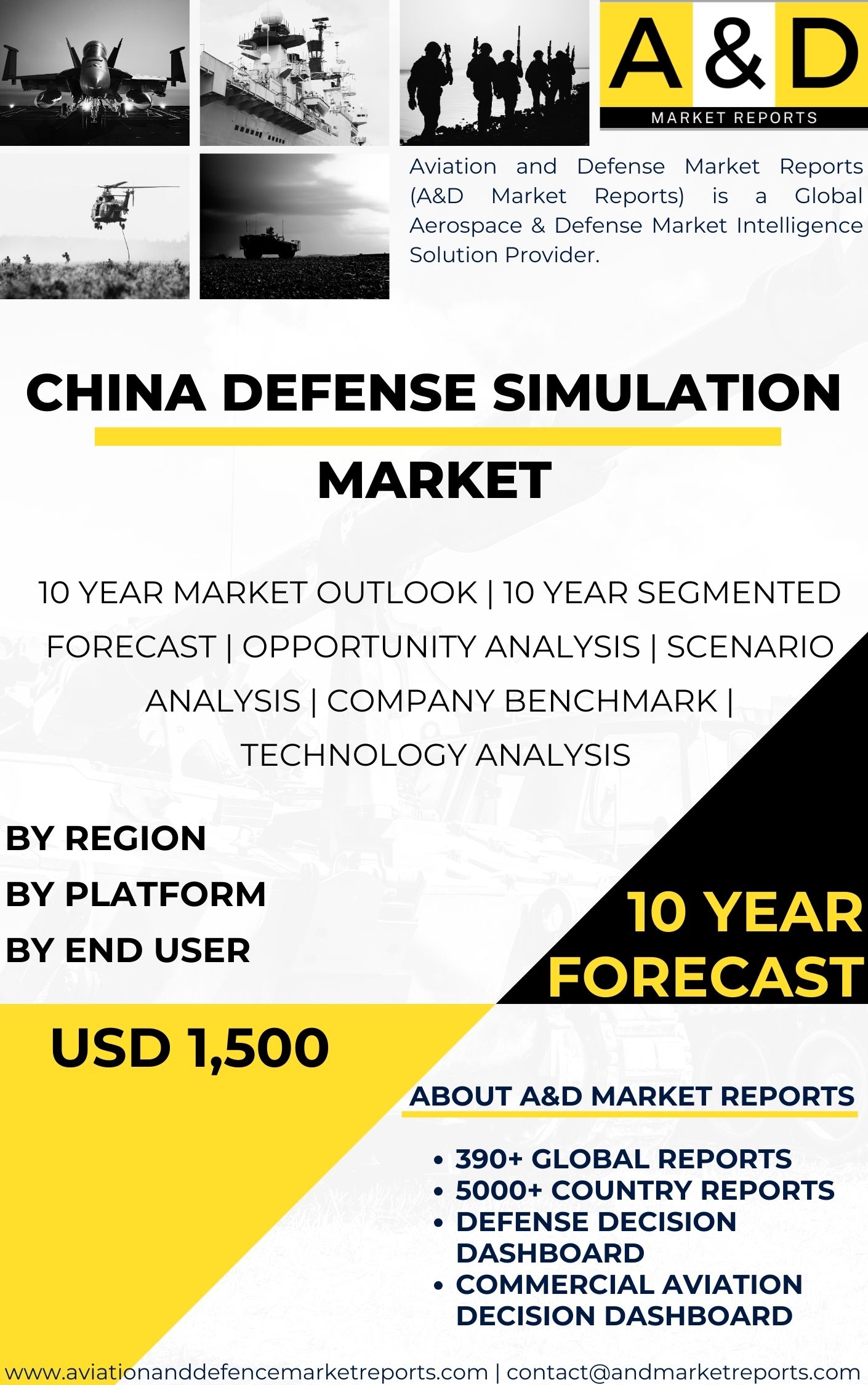
China Defense Simulation Market Overview
The China defense simulation market has become an important segment of the country’s military modernization strategy. Defense simulation technologies support training, mission planning, operational analysis, and research activities across the armed forces. These systems create realistic virtual environments that allow military personnel to practice complex scenarios without the costs and risks associated with live exercises. As China continues to strengthen its defense capabilities, demand for advanced simulation platforms is increasing across land, air, naval, space, and cyber domains. The market is benefiting from government investments, technological innovation, and the growing emphasis on combat readiness and operational efficiency. Simulation technologies are also helping China improve training standards while reducing equipment wear, fuel consumption, and operational expenses. As a result, defense simulation has become a key enabler of military preparedness and force modernization.
Rising Investment in Simulation Technologies
China has significantly expanded its investments in defense research and development, resulting in notable progress in simulation technologies. The government recognizes that modern warfare requires highly trained personnel capable of operating sophisticated weapons and systems under challenging conditions. Consequently, defense organizations and technology firms are focusing on the development of advanced simulation platforms that incorporate virtual reality, augmented reality, artificial intelligence, and digital twin technologies. These innovations provide highly immersive training experiences and improve the accuracy of operational assessments. In addition, simulation systems allow military planners to evaluate tactics, test new doctrines, and assess battlefield scenarios before deployment. This capability helps reduce uncertainty and supports better decision-making across defense operations.
Technological Self-Reliance Driving Market Growth
One of the major drivers of the China defense simulation market is the country’s emphasis on technological self-reliance. China aims to reduce dependence on foreign simulation software, hardware, and training platforms by strengthening domestic capabilities. Significant funding has been directed toward indigenous development programs, enabling local companies and research institutions to create advanced simulation solutions tailored to military requirements. These efforts support the broader goal of building a self-sufficient defense industrial base while ensuring greater control over critical technologies. As domestic expertise continues to improve, Chinese manufacturers are expanding their capabilities in modeling, visualization, artificial intelligence, and real-time battlefield simulation systems. This trend is expected to accelerate innovation and increase the competitiveness of local suppliers.
Growing Demand for Advanced Military Training
The growing complexity of military operations is also driving demand for advanced simulation systems. Modern defense forces require realistic training environments that replicate multi-domain combat scenarios involving land, air, sea, cyber, and space operations. Simulation technologies allow personnel to train repeatedly in complex situations without exposing equipment or troops to unnecessary risks. They also support joint-force exercises by enabling multiple units to participate in synchronized virtual operations. Furthermore, simulation platforms can recreate challenging operational environments, helping commanders evaluate different strategies and improve mission planning. These capabilities enhance readiness, strengthen coordination, and contribute to more effective military operations.
Strong Domestic Technology Ecosystem
China’s strong information technology sector provides a solid foundation for the development of defense simulation systems. The country has a large ecosystem of technology companies, software developers, electronics manufacturers, and research institutions capable of supporting simulation programs. This industrial strength enables the integration of advanced computing, cloud technologies, big data analytics, and artificial intelligence into military training solutions. Collaboration between defense organizations and technology providers has accelerated the development of next-generation simulation platforms. Additionally, access to a skilled workforce and advanced manufacturing infrastructure allows China to scale production and deployment efficiently. These advantages continue to strengthen the country’s position in the defense simulation sector.
International Collaboration and Export Opportunities
International cooperation has also contributed to the evolution of China’s defense simulation market. Chinese companies have engaged with global technology providers, academic institutions, and research organizations to gain access to advanced methodologies and technical expertise. Such collaborations facilitate knowledge exchange and support the adoption of best practices in simulation design and implementation. In addition, Chinese defense firms are increasingly exploring export opportunities for simulation products and training systems. Growing interest from developing nations seeking cost-effective military training solutions may create new growth opportunities for Chinese suppliers. These export activities could further enhance the country’s presence in the international defense simulation industry.
Challenges Related to Realism and Accuracy
Despite strong growth prospects, the market faces several challenges. Ensuring realism and accuracy remains a key concern, as effective simulation systems must closely replicate real-world conditions. Developing high-fidelity models and maintaining up-to-date threat databases require continuous investment and technical expertise. Defense organizations also demand simulation platforms that accurately represent evolving technologies, operational environments, and combat tactics. Meeting these requirements can be complex and resource-intensive. Therefore, sustained research and development efforts are necessary to improve simulation quality and maintain user confidence.
Interoperability and System Integration Challenges
Interoperability is another important challenge within the China defense simulation market. Military organizations often operate multiple simulation platforms from different vendors, creating potential compatibility issues. Seamless integration between training systems is essential for conducting joint exercises and sharing operational data. As a result, industry stakeholders are working to establish common standards and communication protocols that support interoperability across platforms. Improved integration will enhance training effectiveness, reduce system complexity, and enable more comprehensive multi-domain exercises. Addressing these issues will remain a priority as simulation technologies become more widespread throughout the defense sector.
Future Outlook and Emerging Technologies
Looking ahead, the China defense simulation market is expected to experience sustained growth as military modernization efforts continue. Emerging technologies such as artificial intelligence, machine learning, extended reality, cloud computing, and digital twins are expected to transform the capabilities of simulation platforms. These innovations will create more realistic, adaptive, and data-driven training environments. Furthermore, the increasing focus on joint operations and network-centric warfare will drive demand for integrated simulation solutions capable of supporting large-scale exercises. Continued investment, technological advancement, and industrial collaboration will support the market’s long-term expansion.
Conclusion
The China defense simulation market plays a vital role in strengthening military readiness, improving training effectiveness, and supporting defense modernization objectives. Strong government support, technological innovation, and a robust information technology ecosystem continue to drive market growth. The sector benefits from increasing demand for realistic training environments, operational planning tools, and advanced mission rehearsal capabilities. Although challenges related to realism, interoperability, and system complexity remain, ongoing investments and research efforts are expected to address these concerns. As defense requirements evolve, simulation technologies will become increasingly important in shaping the future of China’s military capabilities and defense preparedness.