
Description
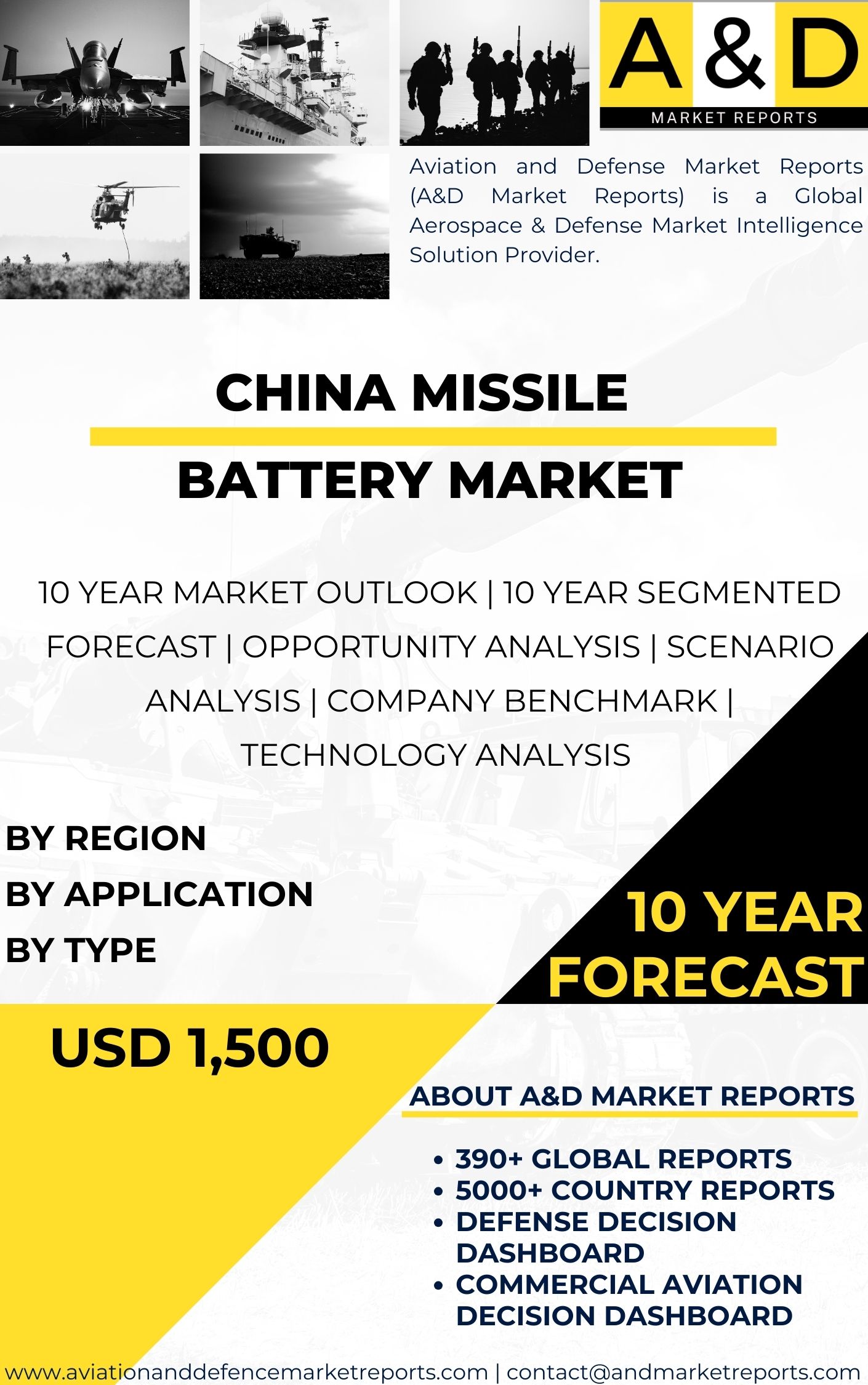
China Missile Battery Market Overview
The China missile battery market has experienced significant growth and development in recent years. With the country’s strong focus on military modernization, strategic deterrence, and national security, demand for advanced missile defense systems continues to rise steadily. Missile batteries are considered a core part of China’s multi-layered defense architecture, supporting both tactical battlefield operations and long-range strategic defense requirements. These systems are deployed across land, naval, and air defense networks to provide rapid response against incoming threats, including aircraft, drones, cruise missiles, and ballistic missiles. Continuous upgrades and large-scale deployment programs have further strengthened the importance of this market within China’s defense ecosystem.
Domestic Industrial Base and Key Players
China’s missile battery market is strongly dominated by powerful state-owned defense enterprises that form the backbone of its military-industrial complex. Key players include China Aerospace Science and Technology Corporation (CASC), China Aerospace Science and Industry Corporation (CASIC), and China Electronics Technology Group Corporation (CETC). These companies are heavily involved in every stage of development, from R&D and system design to manufacturing and deployment. They also play a crucial role in integrating missile batteries with radar networks, command-and-control systems, and early warning platforms, ensuring a coordinated national defense structure.
Strategic Drivers and National Security Needs
A major driver of the market is China’s increasing focus on safeguarding its territorial integrity and expanding its defense preparedness. Rising geopolitical tensions in surrounding regions have accelerated investment in advanced missile defense systems capable of handling multi-directional threats. Missile batteries are essential for protecting critical infrastructure, coastal zones, military bases, and urban centers from potential aerial and missile attacks. China’s defense doctrine increasingly emphasizes rapid interception, layered defense strategy, and high survivability under electronic warfare conditions. As a result, continuous upgrades and expansion of missile defense coverage have become a national priority.
Technological Advancements and Indigenous Development
Technological advancement is a key pillar shaping the China missile battery market. Domestic defense companies are prioritizing indigenous innovation to reduce dependency on foreign technologies and strengthen self-reliance. This has led to major progress in radar-guided missile systems, long-range interception platforms, and high-precision targeting technologies. China has developed advanced systems capable of engaging multiple targets simultaneously while operating in complex electronic warfare environments. In addition, improvements in propulsion systems, guidance algorithms, and real-time tracking have significantly enhanced interception accuracy and operational reliability.
Export Growth and Global Expansion
China is also actively expanding its presence in the global defense export market, offering cost-effective missile battery solutions to partner countries. Through strategic initiatives such as the Belt and Road Initiative (BRI), China has strengthened defense cooperation with multiple regions, increasing opportunities for missile system exports. These exports often include complete air defense packages, training support, and integrated command systems. While export growth enhances China’s global defense influence, it also faces limitations due to international scrutiny, geopolitical concerns, and regulatory restrictions imposed by various countries.
Market Challenges and Strategic Limitations
Despite strong growth, the China missile battery market faces several important challenges. One major issue is the rapid evolution of missile and counter-missile technologies globally, requiring continuous innovation to maintain effectiveness. Integration of multiple missile defense layers into a seamless, real-time operational system also remains technically complex. Additionally, cybersecurity risks and electronic warfare threats pose increasing challenges to system reliability. International geopolitical tensions further restrict collaboration and export opportunities, limiting the market’s global expansion potential in certain regions.
Future Outlook and Emerging Technologies
The future of the China missile battery market is expected to be driven by advanced technological integration and continuous military modernization. Increasing investment in artificial intelligence (AI), machine learning, and autonomous defense systems will significantly enhance targeting accuracy and response speed. Future missile batteries are likely to feature improved automation, network-centric integration, and enhanced multi-domain coordination. Technologies such as hypersonic tracking, space-based sensors, and AI-assisted interception will further redefine operational capabilities. These advancements are expected to strengthen China’s long-term strategic defense posture.
Conclusion
In conclusion, the China missile battery market is evolving rapidly due to strong government support, indigenous innovation, and growing security requirements. Large state-owned defense corporations continue to drive technological development and system deployment across the country’s defense network. While the market shows strong growth potential and increasing global influence, it also faces challenges related to technological competition, integration complexity, and geopolitical constraints. Continued investment in AI, automation, and advanced missile technologies is expected to shape the future direction of this critical defense sector.