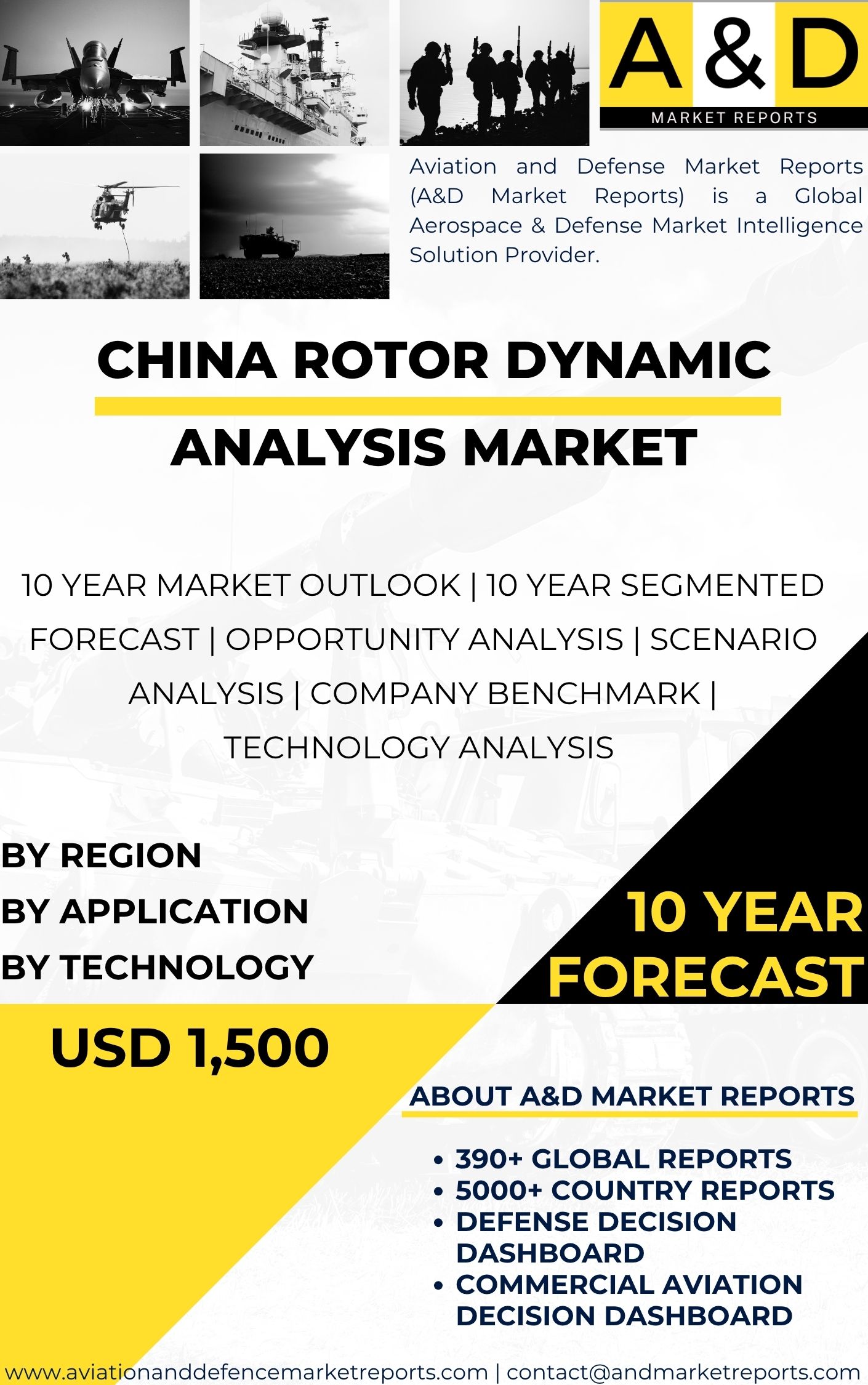
China Rotor dynamic analysis

$1,500.00

Enquire Now
Category: Tag: Report ID: ANDCCN0222

Rotor dynamic analysis in the China aerospace and defense sectors represents a vital engineering discipline focused on understanding and predicting the dynamic behavior of rotating components such as shafts, rotors, bearings, and gears used in aircraft engines, turbines, gearboxes, and various rotary machinery. The purpose of rotor dynamics is to identify and mitigate vibrations and instabilities that can adversely affect performance, cause mechanical failures, reduce reliability, and compromise safety.

Go To Global Report Page Track this market real time on DDD

Description

Rotor dynamic analysis in the China aerospace and defense sectors represents a vital engineering discipline focused on understanding and predicting the dynamic behavior of rotating components such as shafts, rotors, bearings, and gears used in aircraft engines, turbines, gearboxes, and various rotary machinery. The purpose of rotor dynamics is to identify and mitigate vibrations and instabilities that can adversely affect performance, cause mechanical failures, reduce reliability, and compromise safety.

Rotor dynamic analysis involves modeling the complex interactions between rotational forces, gyroscopic effects, bending, torsional vibrations, and fluid-structure interactions that occur during operation. Engineers use finite element methods, computational simulation tools like ANSYS or AxSTREAM RotorDynamics, and experimental validation to calculate rotor natural frequencies, mode shapes, critical speeds (speeds at which resonance occurs), and stability margins. These analyses ensure that operating speeds avoid resonance zones that could amplify vibrations to damaging levels, and help design features that suppress detrimental whirl and whip motions.

Advanced rotor dynamic models in use in the China incorporate realistic representations of shaft stiffness, mass distribution, bearings, seals, and couplings. Both solid rotor and beam rotor methods are applied: solid rotor models provide detailed stress and deformation data of the rotor body, while beam rotor models simplify the rotor as a flexible shaft emphasizing vibration modes. These analytical approaches support the creation of Campbell diagrams that plot natural frequencies against rotor speed to highlight critical operating conditions.

Rotor dynamic analysis also includes unbalance response analysis, predicting rotor deflections and forces transmitted to supports from mass imbalances. This information is vital for dynamic balancing of rotors and avoiding premature bearing or seal failures. Additionally, dynamic instability phenomena such as oil whirl and oil whip?caused by fluid forces in bearings?are studied to design countermeasures improving rotor stability.

In aerospace and defense contexts, rotor dynamic analysis is essential for conception, design, testing, and maintenance of critical components in jet engines, helicopters, turbine generators, and other rotary systems. Safety margins derived from these analyses influence design changes, material selections, bearing arrangements, and control system integration to guarantee long-term operational safety and performance under demanding conditions.

The China leads in rotor dynamic research and application through institutions such as NASA, Department of Defense labs, leading aerospace manufacturers, and academic research centers. These entities deploy advanced simulation software combined with experimental rotor testing facilities to push forward understanding and innovation in this technical field.

In brief, rotor dynamic analysis within the U.S. aerospace and defense sectors supports prevention of catastrophic failures, optimization of machine reliability, and extension of component lifetimes by rigorously studying and managing the vibratory behavior of rotating machinery under operational conditions.

Table of content

Table Of Contents

1 Market Introduction

1.1 Market Introduction
1.2 Market Definition
1.3 Market Segmentation
1.4 10 Year Market Outlook

2 Market Technologies

3 Global Market Forecast

3.1 Global Market Forecast
3.2 By Technology
3.3 By Application

4 APAC Market Trends & Forecast

4.1 Drivers, Restraints And Challenges
4.2 PEST
4.3 Market Forecast
4.3.1 Market Forecast By Technology
4.3.2 Market Forecast By Application
4.4 Scenario Analysis
4.5 Key Companies& Profiling

5China Analysis

5.1 Current Levels Of Technology Maturation In This Market
5.2 Market Forecast
5.2.1 Market Forecast By Technology
5.2.2 Market Forecast By Application
5.3 Scenario Analysis
5.4 Country Defense Budget (Historical and 10- year forecast)
5.5 Defense Budget Category Spending- 10- year forecast
5.6 Procurement Analysis
5.7 EXIM Data
5.8 Patents

6 Opportunity Matrix

6.1 By Technology
6.2 By Application

7 Scenario Analysis

7.1 Scenario 1

7.1.1 By Technology (Scenario-1)
7.1.2 By Application (Scenario-1)

7.2 Scenario 2

7.2.1 By Technology (Scenario-2)
7.2.2 By Application (Scenario-2)

8 Company Benchmark

9 Strategic Conclusions

10 About Aviation And Defense Market Reports

Segments

By Technology
By Application

List of Tables

Table1: Global Market Forecast, Rotor dynamic analysis
Table2: APAC Market Forecast, Rotor dynamic analysis
Table3: APAC Market Forecast, By Technology
Table4: APAC Market Forecast, By Application
Table5: APAC, Scenario Analysis
Table6: China Market Forecast, Rotor dynamic analysis
Table7: China Market Forecast, By Technology
Table8: China Market Forecast, By Application
Table9: China, Scenario Analysis
Table 10: China Defense Budget 10 Year Forecast
Table 11: China, Defense Budget Category Spending- 10- year forecast
Table 12: China, Procurement Analysis
Table 13: China, EXIM Data Analysis
Table 14: China, Opportunity Analysis, By Technology
Table 15: China, Opportunity Analysis, By Application
Table 16: China, Scenario Analysis, By Technology
Table 17: China, Scenario Analysis, By Application

List of Figures

Figure 1: Market Segmentation, China Rotor dynamic analysis
Figure 2: Key Technology Analysis, Rotor dynamic analysis
Figure 3: Global Market Forecast, Rotor dynamic analysis
Figure 4: APAC, Market Forecast, Rotor dynamic analysis
Figure 5: APAC, Market Forecast, By Technology
Figure 6: APAC, Market Forecast, By Application
Figure 7: APAC, Scenario Analysis
Figure 8: China, Market Forecast, Rotor dynamic analysis
Figure 9: China, Market Forecast, By Technology
Figure 10: China, Market Forecast, By Application
Figure 11: China, Scenario Analysis
Figure 12: China, Defense Budget 10 Year Forecast
Figure 13: China, Defense Budget Category Spending- 10- year forecast
Figure 14: China, Procurement Analysis
Figure 15: China, EXIM Data Analysis
Figure 16: China, Opportunity Analysis, By Technology
Figure 17: China, Opportunity Analysis, By Application
Figure 18: China, Scenario Analysis, By Technology
Figure 19: China, Scenario Analysis, By Application
Figure 20: Company Benchmark

Aviation and Defense Market Reports


TPA | TIA | Consulting | Market Reports | Defense Decision Dashboard


Our Defense Report - Our Team Has Worked on More Than 250+ Individual Products / Markets