
Description
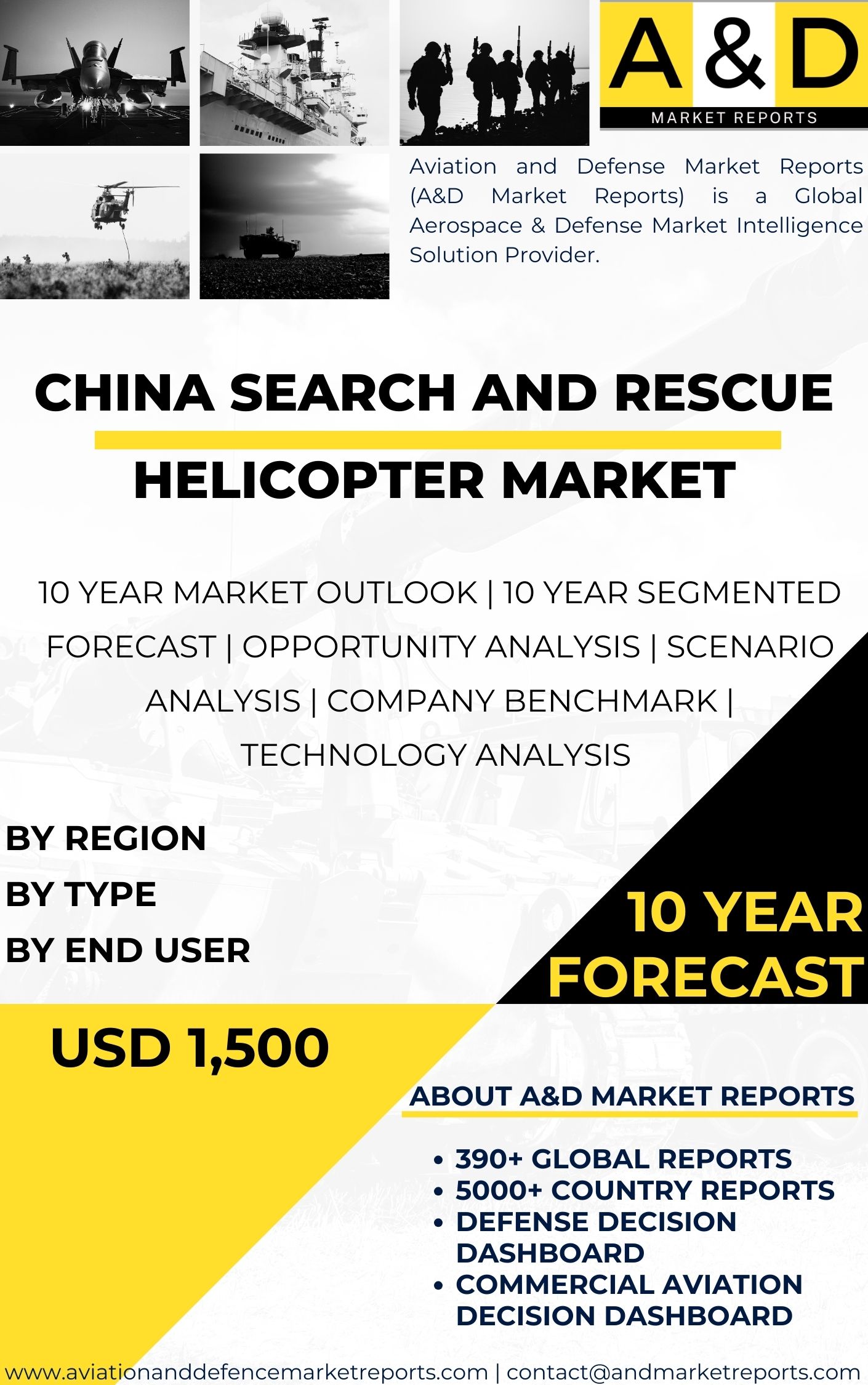
China Search and Rescue (SAR) Helicopter Market Overview
The China search and rescue (SAR) helicopter market has witnessed significant growth and development in recent years. With China’s focus on strengthening emergency response systems, improving disaster management, and ensuring public safety, demand for advanced SAR helicopters has increased steadily. These helicopters are critical for rapid response in earthquakes, floods, maritime accidents, and medical emergencies. The market continues to expand as China enhances its national disaster preparedness and integrates aviation assets into emergency response frameworks.
Market Players and Industrial Base
The China SAR helicopter market is characterized by the presence of both domestic and international players. Domestic manufacturers such as AVIC Harbin Aircraft Industry Group, AVIC Changhe Aircraft Industry Group, and AVIC Helicopter Company have played a key role in developing and supplying SAR platforms. These companies invest heavily in R&D to improve flight endurance, payload capacity, avionics integration, and rescue system efficiency. Their efforts focus on creating helicopters tailored specifically for diverse SAR missions across China’s varied terrain and climate conditions.
International Collaboration and Technology Transfer
International manufacturers including Airbus Helicopters, Leonardo S.p.A., and Bell Textron Inc. have established partnerships and collaborations within China’s aviation sector. These collaborations have enabled technology transfer, training support, and joint development initiatives. They have also helped improve China’s access to advanced rotorcraft technologies such as composite airframes, glass cockpit systems, and advanced navigation suites. However, strategic restrictions and regulatory controls continue to limit full-scale technology integration from foreign suppliers.
Market Drivers and Operational Demand
The market is primarily driven by China’s increasing focus on emergency response capabilities and disaster management systems. SAR helicopters are essential for locating and rescuing individuals in inaccessible or hazardous environments during natural disasters and emergencies. Rising urbanization and infrastructure expansion have further increased the need for fast aerial rescue services. In addition, government initiatives to strengthen public safety infrastructure continue to support procurement of advanced SAR rotorcraft.
Technological Advancements in SAR Helicopters
Technological advancements have played a major role in the growth of the China SAR helicopter market. Domestic manufacturers are developing helicopters with improved endurance, enhanced maneuverability, advanced avionics, and mission-specific rescue systems. These improvements include integration of night vision systems, weather-resistant navigation tools, and advanced communication equipment. China has also expanded its focus on multi-role platforms that can support SAR, medical evacuation, firefighting, and law enforcement missions.
Key Platforms and Operational Capabilities
China has successfully developed and deployed advanced SAR helicopters such as the Z-8 series and AC313. These platforms are capable of operating in extreme weather conditions, high-altitude regions, and offshore environments. They are equipped with rescue hoists, medical evacuation modules, infrared sensors, and advanced communication systems. Additionally, new-generation platforms like the AC332 are being developed to improve operational flexibility and extend mission range, particularly for coastal and mountainous rescue operations.
Export Market and Global Expansion
Another important driver of the China SAR helicopter market is export growth. China has increasingly positioned itself as a supplier of cost-effective SAR helicopter solutions to developing countries. Through the Belt and Road Initiative (BRI), China has expanded its defense and aviation exports to partner nations. These exports support countries seeking to improve disaster response capabilities without the high procurement costs associated with Western manufacturers.
Market Challenges and Development Constraints
Despite strong growth, the SAR helicopter market in China faces several challenges. Continuous investment in research and development is required to meet evolving operational demands such as higher payload capacity, extended flight endurance, and improved safety systems. Additionally, integrating advanced avionics, autonomous systems, and next-generation sensors requires significant technological advancement. High development costs and dependency on advanced aerospace components also pose limitations.
International Competition and Market Access
The global SAR helicopter market is highly competitive, with established manufacturers dominating key regions. China faces challenges in expanding its footprint internationally due to regulatory barriers, certification requirements, and competition from long-established aerospace companies. Market access limitations and geopolitical factors also restrict broader adoption of Chinese SAR platforms in certain regions.
Future Outlook and Emerging Technologies
The future of the China SAR helicopter market appears promising due to continued investment in aerospace innovation and emergency response modernization. China is focusing on integrating advanced digital systems, improved rotorcraft designs, and enhanced mission capabilities. Research is increasingly directed toward hybrid propulsion systems, improved aerodynamics, and multi-mission adaptability to improve efficiency and reduce operational costs.
Autonomous Systems and Smart SAR Platforms
The integration of autonomous systems and advanced sensors is expected to significantly transform SAR operations. Future SAR helicopters may incorporate semi-autonomous flight capabilities, AI-based navigation support, and real-time data processing systems. Advanced sensors such as thermal imaging, LiDAR, and high-resolution cameras will improve detection and situational awareness during rescue missions. These technologies will reduce response time and enhance mission success rates in complex environments.
Conclusion
In conclusion, the China SAR helicopter market has experienced strong growth driven by rising demand for emergency response capabilities and disaster management systems. Domestic innovation, international cooperation, and government support have contributed to the development of advanced SAR platforms. While challenges such as technological complexity, competition, and certification barriers remain, continued investment in autonomous systems, avionics, and multi-role helicopter platforms is expected to drive sustained growth and advancement in China’s SAR helicopter market.