
Description
Market Overview
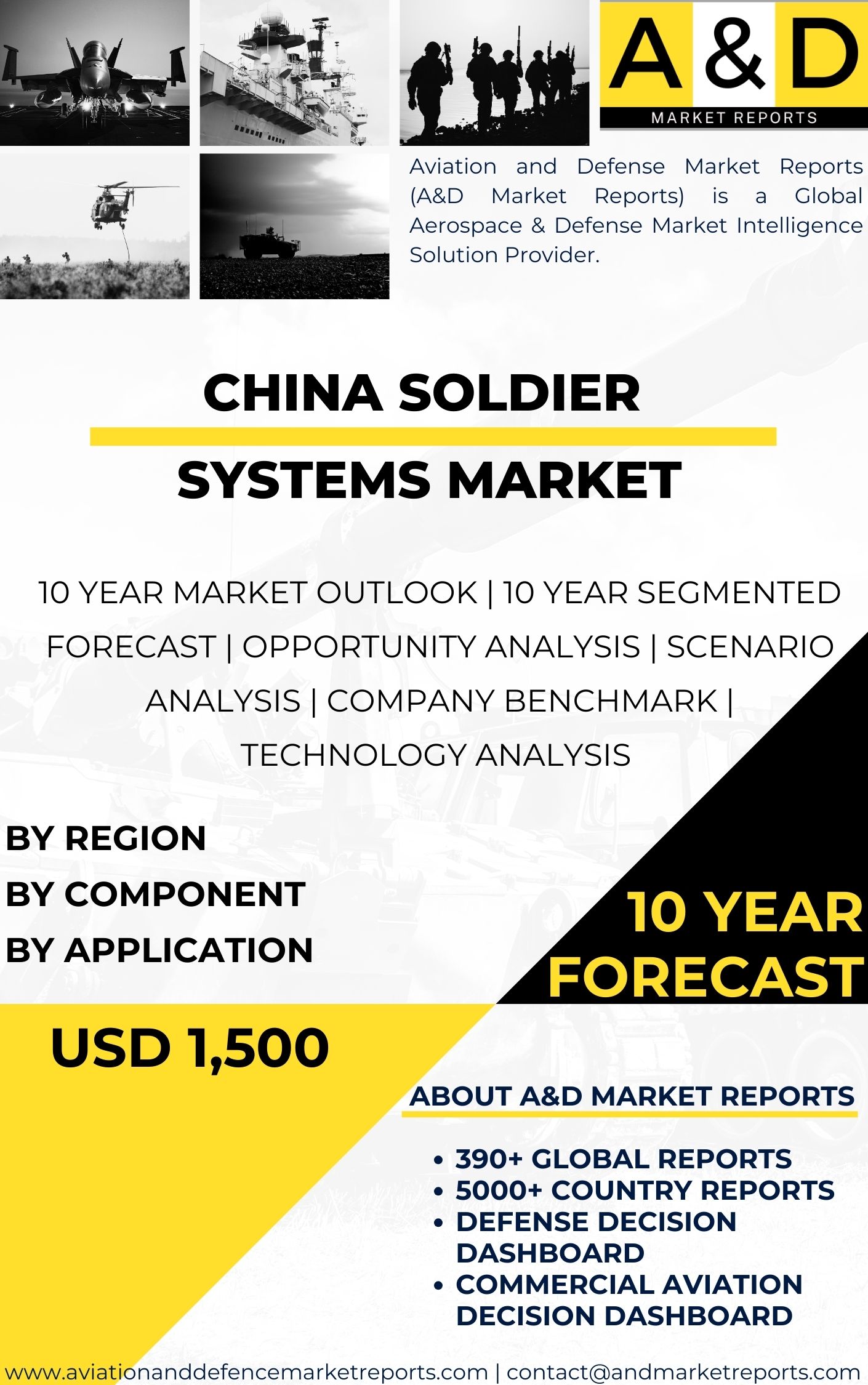
The China soldier systems market has experienced significant growth and development in recent years, driven by the country’s strong focus on military modernization, defense capability enhancement, and improving the welfare and effectiveness of individual soldiers. As modern warfare increasingly emphasizes digitization, mobility, and real-time information sharing, soldier systems have become essential for improving survivability and combat performance on the battlefield. These systems integrate protective gear, communication tools, and situational awareness technologies into a unified soldier platform, enabling better coordination and operational efficiency. With continuous investment in defense innovation, China is steadily advancing toward fully integrated digital soldier ecosystems.
Key Players and Industry Structure
The China soldier systems market is characterized by the presence of both domestic and international players, with domestic defense giants such as Norinco Group, China South Industries Group Corporation (CSGC), and China Ordnance Industries Group Corporation Limited (COIGC) playing a central role in design, production, and deployment of advanced soldier equipment. These companies are heavily supported by government-backed research programs and focus on developing integrated systems that combine protection, communication, and battlefield awareness. International companies such as Lockheed Martin, BAE Systems, and General Dynamics also contribute through partnerships, technology transfer, and collaborative defense programs, helping to introduce advanced materials, ergonomic designs, and global best practices into China’s soldier systems development ecosystem.
Market Drivers: Modernization and Soldier Welfare
The market is primarily driven by China’s ongoing military modernization initiatives and the increasing emphasis on improving soldier effectiveness, protection, and operational readiness. Soldier systems play a crucial role in enhancing individual combat performance by integrating essential battlefield technologies into wearable and portable systems. These include communication devices, ballistic protection, navigation tools, and situational awareness equipment that collectively improve mission success rates. Additionally, growing attention to soldier welfare and survivability has further increased demand for advanced protective gear and integrated systems that reduce fatigue, improve comfort, and enhance battlefield safety in high-risk environments.
Technological Advancements and System Development
Technological advancements have significantly influenced the growth of the China soldier systems market, with domestic companies focusing on improving protection levels, system integration, lightweight design, and digital connectivity. China has developed a wide range of advanced soldier systems, including next-generation body armor, smart helmets, wearable communication devices, and integrated battlefield kits that enhance coordination and awareness. Examples include systems like the Norinco 04A multi-purpose body armor designed for improved ballistic protection and mobility, the CSGC GA-PASGT helmet with enhanced protection and communication integration, and COIGC’s B-Tactical Integrated System, which combines multiple soldier functions into a unified operational platform for improved battlefield efficiency.
Export Growth and Global Market Expansion
Another important driver of the China soldier systems market is the export potential of domestically developed equipment, as China has become an emerging exporter of cost-effective soldier systems to countries seeking to upgrade their infantry capabilities. These exports are often attractive due to competitive pricing and increasingly advanced technological features, making them suitable for developing defense markets. The Belt and Road Initiative (BRI) has further supported this expansion by strengthening defense cooperation with partner countries and opening new opportunities for military equipment trade, thereby expanding China’s global footprint in soldier system technologies.
Market Challenges and Constraints
Despite strong growth, the China soldier systems market faces several challenges, including the need for continuous investment in research and development to keep pace with evolving battlefield threats and rapidly advancing military technologies worldwide. Modern warfare demands highly adaptive systems capable of integrating new sensors, communication protocols, and protection technologies, requiring constant innovation. Additionally, challenges related to standardization and interoperability remain significant, as soldier systems must be compatible with other military equipment and allied systems to ensure seamless communication and operational coordination in joint missions and multi-domain operations.
Future Prospects and Emerging Technologies
The future of the China soldier systems market appears highly promising, supported by ongoing military modernization programs and increasing integration of advanced technologies such as artificial intelligence, augmented reality, wearable sensors, and next-generation materials. These innovations are expected to transform soldier systems into highly intelligent platforms capable of real-time decision support, enhanced situational awareness, and improved battlefield adaptability. Advanced materials such as lightweight composites and smart textiles will further improve comfort and protection, while AI-powered systems will enable faster data analysis and more efficient mission execution, significantly enhancing individual soldier effectiveness.
Conclusion
In conclusion, the China soldier systems market is experiencing strong and sustained growth driven by military modernization, technological advancement, and increased focus on soldier protection and performance enhancement. Domestic defense companies supported by government initiatives are actively developing integrated and intelligent soldier systems, while international collaborations continue to contribute advanced expertise and technology transfer. Although challenges such as interoperability, evolving threats, and continuous innovation requirements remain, the market’s long-term outlook is highly positive. With ongoing research, adoption of emerging technologies, and expanding global partnerships, China’s soldier systems market is expected to achieve significant advancements and broader international influence in the coming years.