France Cruise Missiles Market

$1,500.00

Enquire Now

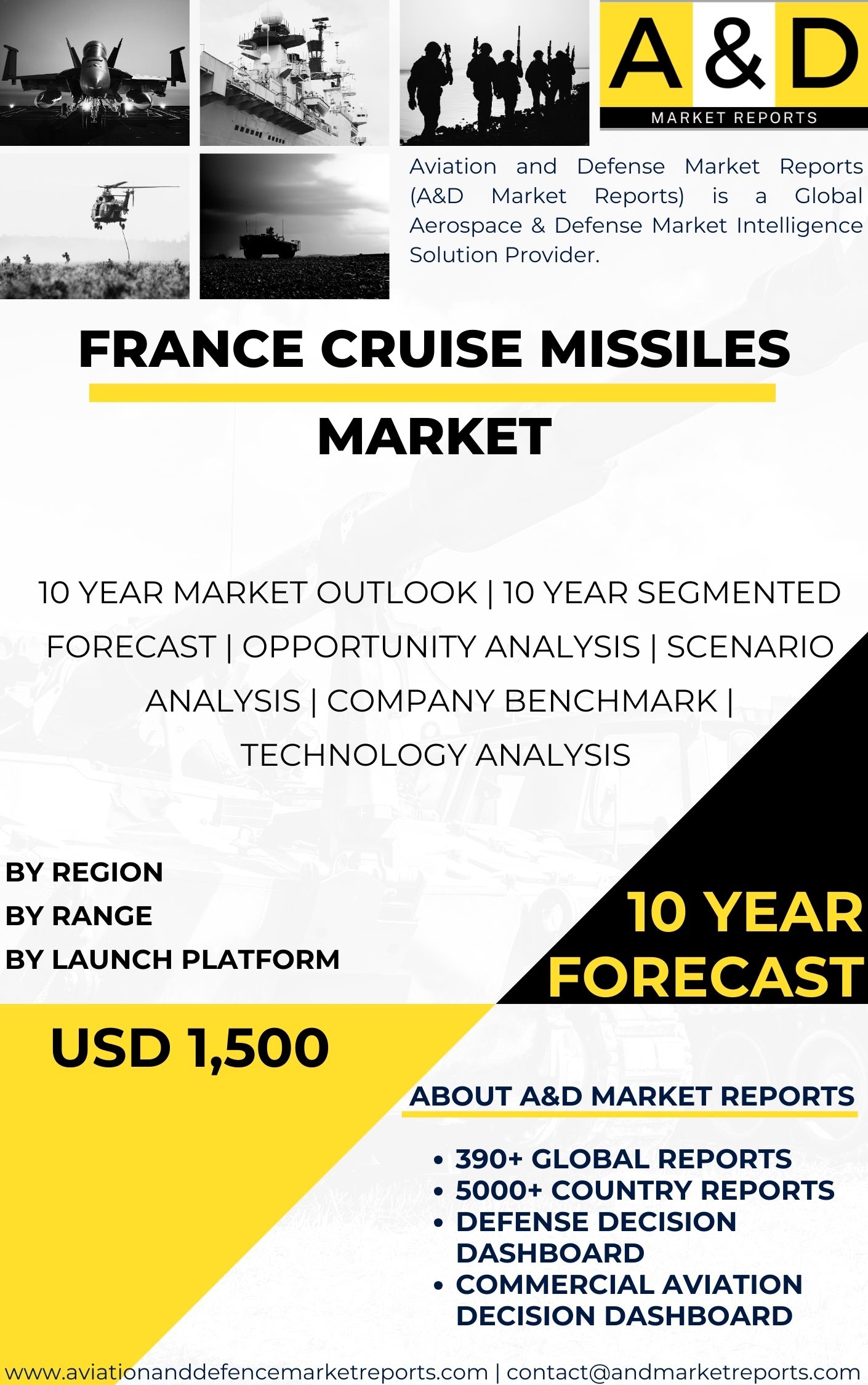
Cruise Missiles Market in France holds a distinctive place within the country?s broader defense framework, shaped by decades of doctrinal evolution, technological mastery, and strategic ambition. As one of the few nations in the world with a fully developed cruise missile capability, France has consistently treated this domain as an essential pillar of national security and international influence. Cruise missiles are not only weapons in the conventional battlefield sense but also instruments of deterrence, power projection, and political signaling. The French approach to their development and integration into military strategy is rooted in a philosophy of strategic autonomy that has been nurtured since the post-war period when France charted an independent path in nuclear policy, defense industrial sovereignty, and aerospace innovation.

Go To Global Report Page Track this market real time on DDD

Description

Cruise Missiles Market in France holds a distinctive place within the country?s broader defense framework, shaped by decades of doctrinal evolution, technological mastery, and strategic ambition. As one of the few nations in the world with a fully developed cruise missile capability, France has consistently treated this domain as an essential pillar of national security and international influence. Cruise missiles are not only weapons in the conventional battlefield sense but also instruments of deterrence, power projection, and political signaling. The French approach to their development and integration into military strategy is rooted in a philosophy of strategic autonomy that has been nurtured since the post-war period when France charted an independent path in nuclear policy, defense industrial sovereignty, and aerospace innovation.

The historical background of the cruise missile market in France begins with its nuclear deterrence posture and the need to equip its forces with flexible strike capabilities that could complement and reinforce ballistic missile systems. French leaders recognized that cruise missiles offered advantages in adaptability, precision, and survivability. They could be launched from multiple platforms, follow unpredictable trajectories, and strike with surgical accuracy at heavily defended targets, thereby complicating the adversary?s defenses. Over decades, this investment produced programs that not only sustained domestic self-sufficiency but also positioned France as a global exporter of advanced missile systems. This developmental trajectory is inseparable from the activities of a key industrial player, MBDA, which has evolved as a European leader in guided missile solutions and is central to nearly every major cruise missile program in France.

The characteristics of the French cruise missile market are defined by a combination of technological sophistication, emphasis on multi-platform interoperability, and close coordination with strategic doctrine. French cruise missiles are designed to be compatible with air, sea, and under certain conditions, land platforms, providing flexibility in deployment. Air-launched systems are typically associated with strike aircraft such as the Rafale, ensuring long-range precision capability for tactical and strategic missions. Sea-launched variants are integrated within attack submarines or surface ships, extending France?s reach with platforms that can patrol undetected or project power far from national borders. By embedding these capabilities across domains, the French armed forces guarantee redundancy, resilience, and adaptability in both deterrence and expeditionary contexts.

The industrial ecosystem supporting this market is strongly concentrated yet collaborative. MBDA serves as the anchor company, but behind it lies an extensive network of subcontractors specializing in propulsion, guidance, avionics, and warhead technologies. French research establishments and government laboratories contribute cutting-edge innovations, while cross-European industrial collaboration, especially within projects co-developed with the United Kingdom or under European defense frameworks, expands the scope of technical resources. Through intensive collaboration, France ensures continuous modernisation cycles that sustain operational relevance against evolving security threats. Each generation of cruise missiles incorporates improvements in stealth characteristics, electronic counter-countermeasures, guidance precision, and interoperability with evolving command-and-control systems. These incremental advances preserve French systems as among the most capable in the world.

Economic significance is another central dimension of the French cruise missiles market. The development, production, and export of such high-value defense systems strengthen France?s defense-industrial base and generate long-term opportunities for employment and technological spillover. The financial gravity of cruise missile programs is amplified by the life-cycle services associated with them, as exported and domestic missiles require logistical support, upgrades, and mid-life refurbishments. In diplomatic terms, such programs solidify strategic partnerships. Export customers of French missiles not only secure advanced military capabilities but also buy into a broader strategic relationship with France, which often acts as guarantor of mutual security cooperation. This intertwining of defense industry and foreign policy enhances France?s leverage in global affairs and underlines the unique role of its cruise missile sector.

Trends in the French cruise missile market are heavily influenced by the evolving character of warfare. With adversaries investing in advanced air defenses, the push for stealthier, low-observable designs has gained momentum. Guidance systems increasingly rely on multi-sensor fusion, integrating satellite navigation, terrain-matching, and advanced infrared seekers to defeat jamming and deception attempts. There is also an emphasis on extending ranges so that platforms can strike targets from safer standoff distances, minimizing the risk to pilots or vessels. Another trend is the growing role of modularity, where missile structures are engineered to accept different warhead types or propulsion configurations depending on mission needs. This ensures greater cost-effectiveness and adaptability, enabling operators to tailor their strike capability without developing completely new systems each time.

An important aspect of the French cruise missile strategy is its integration with nuclear deterrence. Certain systems are designed to carry nuclear payloads, forming a critical component of France?s strategic strike force. This encapsulates the dual nature of the market, which subsists at the junction of conventional warfare applications and strategic deterrence imperatives. The coexistence of these two roles magnifies the centrality of cruise missiles in national defense planning, and explains why the French state is consistently committed to funding modernization programs despite fiscal pressures. The continuous enhancement of these capabilities sends a clear message to potential adversaries that France retains a robust, versatile, and survivable strike option.

The operational philosophy surrounding French cruise missiles also reveals a distinctive pattern. Because France often engages in international operations to project stability, protect allies, and pursue strategic objectives in regions beyond Europe, its armed forces require strike systems that are expeditionary in nature. Cruise missiles provide the very capability to enforce no-fly zones, neutralize adversary air defenses, and counter hardened targets without deploying large ground contingents. This capacity was demonstrated in coalition operations across multiple theaters where French systems were employed to deliver precision strikes. Such experiences continue to reinforce domestic confidence in these weapons, while also highlighting their credibility as export products.

Challenges do arise, however, within the market. Geopolitical constraints, such as balancing independence with cooperative European programs, can create friction over intellectual property or program prioritization. France also faces competition in the global missile export arena, with rivals from the United States, Russia, and new entrants providing alternative options for international customers. Strategic arms control considerations further shape the environment surrounding cruise missile development, requiring France to balance transparency with the need for secrecy in sustaining technological advantages. Additionally, as warfare gradually incorporates cyber and space domains, the French must ensure that their missiles remain hardened against digital exploitation or satellite denial tactics.

Another dynamic reshaping the cruise missile market experience in France is the broader push for future technologies. Research insiders point toward incorporation of artificial intelligence for advanced target recognition, adaptive flight profiles for greater survivability, and reusable propulsion technologies that may one day alter the economics of standoff weapons. French institutions are deeply engaged in exploring these next-generation solutions while balancing them with the requirement to maintain proven and reliable systems in service. This reflects an ongoing French ability to blend revolutionary leaps in technology with evolutionary continuity, ensuring the sustainability of operational effectiveness.

Culturally and strategically, the French cruise missile market symbolizes more than a military inventory. It represents the embodiment of France?s enduring doctrine of independence in defense, of its intent to shape European defense cooperation, and of its desire to exert strategic influence on the global stage. From the earliest conceptualizations of standoff strike options to the highly advanced systems deployed today, the French cruise missile journey tells a story of resilience, innovation, and ambition. As adversaries develop increasingly sophisticated defenses and geopolitical landscapes continue to shift, France?s commitment to sustaining its premier position in the cruise missile domain assures that this market will continue to be a defining feature of both its industrial strength and its strategic posture for many years to come.

Table of content

Table Of Contents

1 Market Introduction

1.1 Market Introduction
1.2 Market Definition
1.3 Market Segmentation
1.4 10 Year Market Outlook

2 Market Technologies

3 Global Market Forecast

3.1 Global Market Forecast
3.2 By Technology
3.3 By Type

4 Europe Market Trends & Forecast

4.1 Drivers, Restraints And Challenges
4.2 PEST
4.3 Market Forecast
4.3.1 Market Forecast By Technology
4.3.2 Market Forecast By Type
4.4 Scenario Analysis
4.5 Key Companies& Profiling

5 France Analysis

5.1 Current Levels Of Technology Maturation In This Market
5.2 Market Forecast
5.2.1 Market Forecast By Technology
5.2.2 Market Forecast By Type
5.3 Scenario Analysis
5.4 Country Defense Budget (Historical and 10- year forecast)
5.5 Defense Budget Category Spending- 10- year forecast
5.6 Procurement Analysis
5.7 EXIM Data
5.8 Patents

6 Opportunity Matrix

6.1 By Technology
6.2 By Type

7 Scenario Analysis

7.1 Scenario 1

7.1.1 By Technology (Scenario-1)
7.1.2 By Type (Scenario-1)

7.2 Scenario 2

7.2.1 By Technology (Scenario-2)
7.2.2 By Type (Scenario-2)

8 Company Benchmark

9 Strategic Conclusions

10 About Aviation And Defense Market Reports

Segments

By Launch Platform
By Range

List of Tables

Table1: Global Market Forecast, Cruise Missiles Market
Table2: Europe Market Forecast, Cruise Missiles Market
Table3: Europe Market Forecast, By Launch Platform
Table4: Europe Market Forecast, By Range
Table5: Europe, Scenario Analysis
Table6: France Market Forecast, Cruise Missiles Market
Table7: France Market Forecast, By Launch Platform
Table8: France Market Forecast, By Range
Table9: France, Scenario Analysis
Table 10: France Defense Budget 10 Year Forecast
Table 11: France, Defense Budget Category Spending- 10- year forecast
Table 12: France, Procurement Analysis
Table 13: France, EXIM Data Analysis
Table 14: France, Opportunity Analysis, By Launch Platform
Table 15: France, Opportunity Analysis, By Range
Table 16: France, Scenario Analysis, By Launch Platform
Table 17: France, Scenario Analysis, By Range

List of Figures

Figure 1: Market Segmentation, France Cruise Missiles Market
Figure 2: Key Technology Analysis, Cruise Missiles Market
Figure 3: Global Market Forecast, Cruise Missiles Market
Figure 4: Europe, Market Forecast, Cruise Missiles Market
Figure 5: Europe, Market Forecast, By Launch Platform
Figure 6: Europe, Market Forecast, By Range
Figure 7: Europe, Scenario Analysis
Figure 8: France, Market Forecast, Cruise Missiles Market
Figure 9: France, Market Forecast, By Launch Platform
Figure 10: France, Market Forecast, By Range
Figure 11: France, Scenario Analysis
Figure 12: France, Defense Budget 10 Year Forecast
Figure 13: France, Defense Budget Category Spending- 10- year forecast
Figure 14: France, Procurement Analysis
Figure 15: France, EXIM Data Analysis
Figure 16: France, Opportunity Analysis, By Launch Platform
Figure 17: France, Opportunity Analysis, By Range
Figure 18: France, Scenario Analysis, By Launch Platform
Figure 19: France, Scenario Analysis, By Range
Figure 20: Company Benchmark

Aviation and Defense Market Reports


TPA | TIA | Consulting | Market Reports | Defense Decision Dashboard


Our Defense Report - Our Team Has Worked on More Than 250+ Individual Products / Markets